
Introduction
When a roofing project requires a contractor who carries both a California state license and CertainTeed manufacturer approval, understanding what each credential covers — and what it does not — prevents costly mismatches between the work authorized and the work performed. The state license establishes that the contractor meets statutory experience, examination, and bonding requirements under California Business and Professions Code Division 3, Chapter 9. The manufacturer approval establishes that the contractor has completed additional training, maintains insurance limits the manufacturer specifies, and agrees to installation protocols that protect the product warranty.
In my work reviewing service agreements and compliance documentation, situations arise where reading a cited provision in full reveals alternative remedies that summaries often omit. For instance, Cal. Bus. & Prof. Code § 7065.3 permits a licensee to add a classification without further examination when the qualifying individual demonstrates four years of experience in a closely related classification and meets specific personnel-of-record requirements. This provision matters when a general building contractor seeks to add a roofing classification or when a roofing contractor seeks to add a solar classification — the statute provides a pathway that avoids re-examination, but only when the experience and affiliation criteria are satisfied. Comparing different editions of standards is equally vital, as changes in intervals can affect which version governs a particular project, especially when local adoption questions arise.
The distinction between a state-issued contractor license and a manufacturer approval also affects who is obligated under a service agreement and what documentation closes a code violation. A contractor may hold a valid California license but lack current manufacturer approval, or may hold manufacturer approval under one classification while the work requires a different classification. Understanding mechanics liens and contractor obligations provides additional context on how license classifications interact with payment and lien rights on commercial and residential projects.
Before you authorize work, ask for documentation of both credentials in writing. The state license is verifiable through the California Contractors State License Board online lookup; the manufacturer approval is verifiable through CertainTeed's contractor locator or by requesting a current certificate from the contractor. Retain both documents with the contract and any warranties — regulators and insurers expect serialized proof of credentials when a warranty claim or a compliance question arises later.
Problem Statement
Selecting a contractor for a roofing project presents a verification problem. A contractor may claim to meet a manufacturer's requirements, but the property owner rarely sees the document that confers that status. The claim arrives in a quote or a conversation, and the owner must decide whether to accept it, ask for proof, or look elsewhere.
The difficulty compounds when the manufacturer's program has more than one tier, or when the contractor holds credentials from multiple programs. A contractor licensed by the state to perform roofing work is not automatically approved by a specific manufacturer. California defines a contractor as any person who undertakes to construct, alter, repair or improve any structure, including roofing, and requires a state license for that work. Manufacturer approval is a separate credential, issued under the manufacturer's own criteria, and it does not replace the state license requirement.
When a contractor presents both credentials, the owner must verify both independently. The state license confirms legal authority to perform construction work in California. The manufacturer approval confirms that the contractor has met the manufacturer's training, insurance, or volume requirements and is authorized to install products under the manufacturer's warranty program. Neither credential implies the other, and a lapse in one does not automatically revoke the other.
A second problem emerges when the approval status changes between the time a quote is issued and the time work begins. Manufacturer directories update periodically, and a contractor who was approved when the quote was signed may not be approved when materials arrive. The owner who does not check the directory at both points may discover the discrepancy only when a warranty claim is denied.
The third challenge is distinguishing between contractor categories within a manufacturer's program. Some manufacturers maintain a standard approved-contractor list and a separate credentialed-installer or master-installer tier. The higher tier may carry additional warranty coverage or extended labor guarantees, but it also requires higher insurance limits, more training hours, or a minimum annual volume. A contractor who holds the standard approval may quote a project as though the higher tier applies, and the owner may not learn the difference until the warranty documentation arrives.
The approval tier matters when the warranty is tested, not when the quote is signed.
Reading the manufacturer's published program requirements in full reveals which tier the contractor holds and what that tier entitles the owner to receive. Summaries and marketing materials frequently omit the distinctions, and a contractor's verbal assurance does not bind the manufacturer. The warranty document itself names the tier, the coverage period, and the exclusions. If the document does not match the quote, the document controls.
Finally, the owner must establish who is obligated on the installation agreement. A contractor may operate under a business name, a doing-business-as filing, or a corporate entity. The state license is issued to a specific licensee, and the manufacturer approval is issued to a specific business entity. If the quote names one entity and the license or approval is held by another, the owner should ask for clarification in writing before authorizing work. The entity that signs the contract is the entity the owner can pursue if the work fails, and verifying that entity's credentials at the outset prevents confusion later.
Steps to Find CertainTeed Approved Contractors
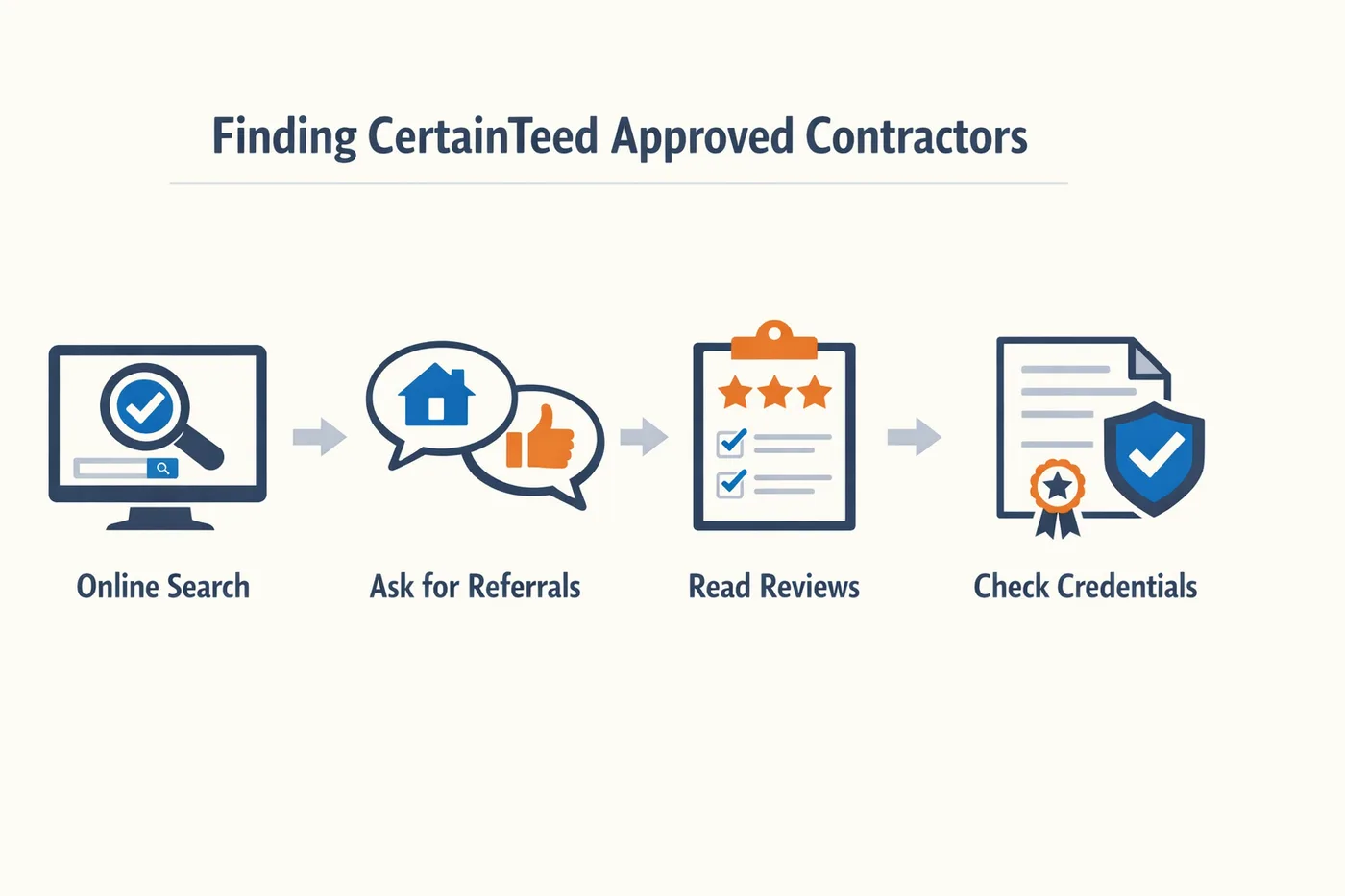
The manufacturer maintains a directory, but the directory alone does not establish what the law requires of a licensed contractor. Before you authorize work, verify that the individual or entity holds an active California contractor license in the classification that governs roofing installation. The Contractors State License Board maintains a public search function that permits you to search by ZIP Code or geographic location, as provided in Cal. Bus. & Prof. Code § 7018. Use that function first.
Confirm the Licensure Status and Personnel Record
Every contractor license application must list a qualifying individual who passed the written examination for the classification being applied for, or who served as the qualifying individual for a licensee in good standing within the preceding five years, per Cal. Bus. & Prof. Code § 7065. When you receive a bid, ask for the license number in writing and confirm that the qualifying individual appears on the personnel record. The board's online search shows the license status, classification, and personnel. If the contractor is a corporation or limited liability company, the application must list every officer, member, responsible manager, or director as part of the personnel of record.
Navigate to the Contractors State License Board website and enter either the ZIP Code of your property or a geographic descriptor. The search returns active licenses by classification. Record the license number, business name, and qualifying individual's name for each candidate.
Open the detailed license record for each candidate. Confirm that the classification covers roofing work and that the personnel record includes a qualifying individual who passed the examination or served in that role within the past five years. If the license is held by a corporation, limited liability company, or partnership, confirm that all required officers, members, or partners appear on the personnel record.
Before the contractor begins work, obtain the name and address of the property owner and the construction lender, if any. Cal. Civ. Code § 8208 requires the direct contractor to make this information available to any person seeking to give preliminary notice. Ask for it in writing and retain the document.
Check for Additional Classifications and Experience
A contractor may add a classification without further examination if the qualifying individual possesses satisfactory experience and meets the conditions set forth in Cal. Bus. & Prof. Code § 7065.3. The statute requires that the qualifying individual was listed on an active license for five of the seven years immediately preceding the application, and had at least four years of experience as a journeyman, foreman, supervising employee, or contractor in the classification within the last ten years. When a contractor lists multiple classifications, verify that the roofing classification appears on the license and that the application for that classification satisfied the experience requirement. The registrar investigates no less than 3 percent of applications filed under this section, but you remain responsible for confirming the contractor's qualifications before you sign the agreement.
The manufacturer's directory may list contractors who completed training or certification programs, but those programs do not substitute for the statutory licensing requirements. Use the directory as a starting point, then verify the license, classification, and personnel record through the board's public search. For additional guidance on verifying contractor credentials and understanding lien procedures, see Mechanics Lien California: Mechanics Liens in California: Deadlines.
Tips and Tricks for Choosing the Right Contractor
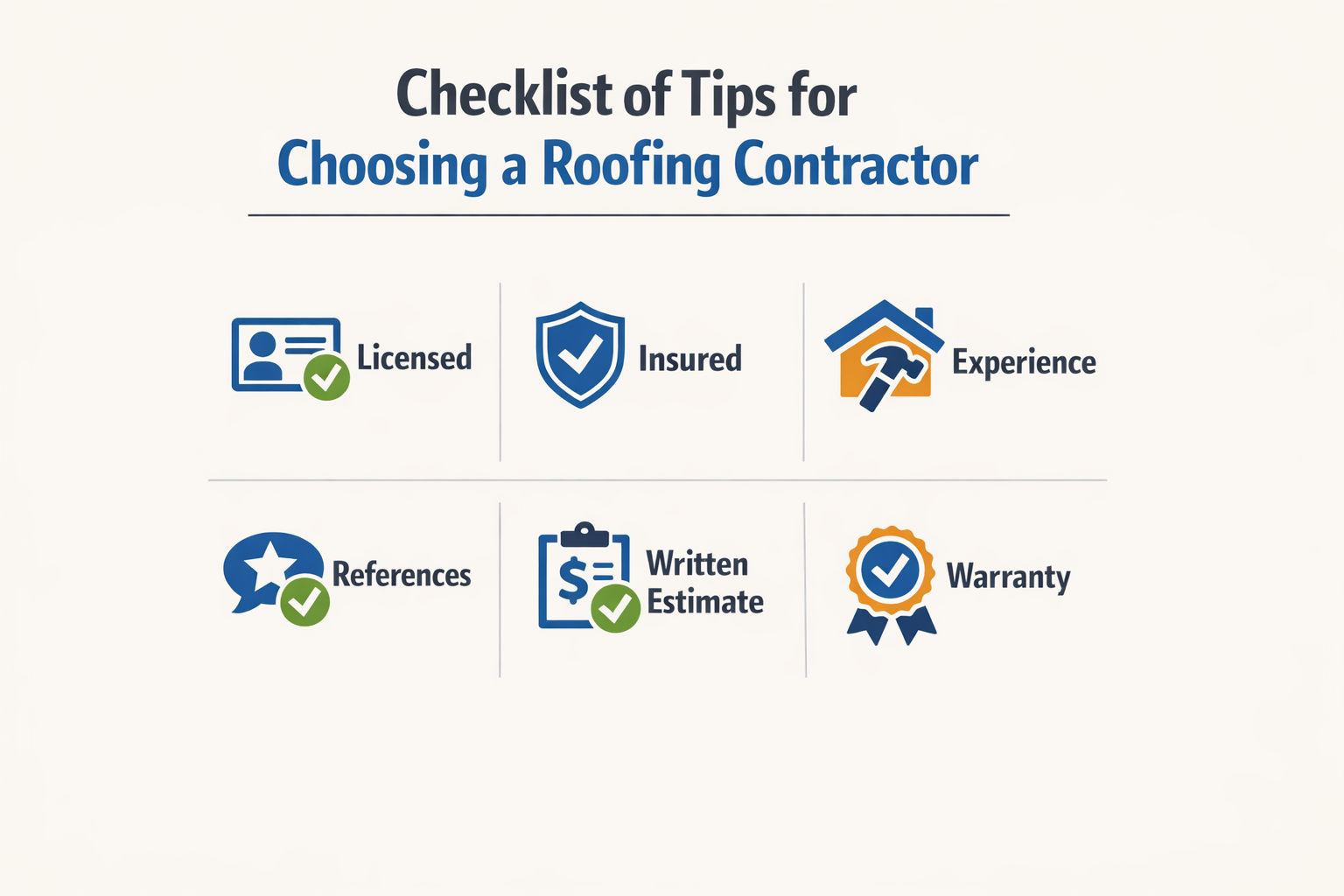
Once you have identified CertainTeed approved contractors, the next step is evaluating which one best serves your project. The approval itself establishes that the contractor meets the manufacturer's training and credential requirements, but it does not resolve questions about contract terms, payment structure, or lien exposure. These elements require separate attention.
Verify What the Contract Actually Provides
California Business and Professions Code section 7164 requires that every contract for single-family dwelling construction include specific information: the contractor's name, address, and license number; approximate start and completion dates; a legal description of the work location; and a mechanics lien warning statement. The statute also requires a disclosure about whether the contractor carries commercial general liability insurance, including the insurer's name and telephone number if coverage exists.
Read the contract to confirm these elements are present. The mechanics lien warning is not decorative — it describes how unpaid subcontractors and suppliers can record a claim against your property even when you have paid the prime contractor in full. If the required disclosures are missing or incomplete, ask for a corrected version before you authorize work.
Request a Subcontractor and Supplier List
The mechanics lien warning in section 7164 includes specific advice: request from your contractor a list of all subcontractors and material suppliers who will work on your project, and confirm when each one started work or delivered materials. Preliminary notices from these parties can arrive up to twenty days after work begins. Paying the prime contractor before that window closes can leave you exposed to liens from parties you never contracted with directly.
Ask for the list in writing before the first payment is due. Compare it against the preliminary notices you receive, and track the dates. This is not a negotiation — the statute describes the exposure, and the list is the tool that lets you manage it. For additional guidance on how mechanics liens operate and what triggers the filing deadlines, see Mechanics Lien California: Mechanics Liens in California: Deadlines.
Request the list before any payment is due, not after work has started. The twenty-day preliminary notice window begins when a subcontractor starts work or a supplier delivers materials, and you need the list to know when those dates fall.
Consider Joint-Check Payments
Section 7164 permits an alternative payment structure: when a subcontractor or supplier has provided you with a preliminary notice, you may issue a joint check payable to both the prime contractor and that subcontractor or supplier. This ensures the party who performed the work or delivered the materials is compensated directly, reducing the risk that they will record a lien.
Joint checks are not required, but they are one remedy the statute names. If your contractor objects to joint checks, ask why. The objection may be administrative, or it may signal a payment dispute you were not aware of. Either way, the conversation clarifies the arrangement before you release funds.
The statute names joint checks as one way to protect yourself from liens — it is not experimental, and it is not an accusation.
Confirm Insurance Status Independently
The contract discloses whether the contractor carries commercial general liability insurance, but the disclosure is a snapshot. Policies lapse, and coverage can be suspended or canceled mid-project. Before work begins, contact the insurer named in the contract and confirm that the policy is active. Ask for the policy period and the coverage limits. Retain that confirmation in your project file.
If the contractor disclosed that no commercial general liability insurance is carried, decide whether you are willing to proceed without it. The statute does not prohibit contracting with an uninsured contractor, but it requires the contractor to disclose the absence of coverage. What you do with that information is your decision, not the statute's.
Review the Timeline and Completion Date
The contract must state approximate dates when work will begin and be substantially completed. "Approximate" does not mean unenforceable, but it does mean the contractor is not in breach the day after the stated completion date if weather or a supply delay caused a short overrun. What it does establish is a baseline expectation. If the contractor proposes a timeline that seems unusually long or unusually short for the scope of work, ask what drives it. Compressed schedules can indicate the contractor is stacking jobs; extended schedules can indicate limited crew availability.
Compare the proposed timeline against the scope of work and the contractor's explanation. If the explanation is vague or the timeline shifts during negotiation without a corresponding change in scope, that is a signal to ask more questions before you sign.
Retain the Signed Contract and All Notices
Section 7164 requires that the owner be furnished a copy of the written agreement, signed by the contractor, prior to commencement of any work. Retain that signed copy, every preliminary notice you receive, every payment record, and every change order. These documents establish what was agreed, what was disclosed, and what was paid. If a lien is recorded or a dispute arises, the authority having jurisdiction will ask for them. Produce them from your file, not from memory.
Conclusion
Selecting a contractor for a roofing project requires attention to the documents that establish who is permitted to perform the work and what obligations attach to the agreement. The standard requires certain intervals for inspection and service, and the contractor you authorize must hold the classification the standard names. Before you sign, verify that the entity on the signature block matches the entity on the license, and ask for the record retention terms in writing. What the agreement provides governs the dispute window, the default remedy, and the acceleration clause — read the provision to the end before you authorize.
In my work, situations arise where reading a cited provision in full reveals alternative remedies that summaries omit. Comparing different editions of standards is vital, as changes in intervals can affect which version governs a particular project. By understanding these intricacies, property owners can make more informed decisions when selecting contractors whose credentials align with the requirements that apply to their building. Retain the record, check the date on the license, and confirm that the obligated party is the one you intend to hold accountable.
The agreement you sign today determines what documentation you produce tomorrow. The provision permits either remedy; choose the one you can document, and ensure your fire safety compliance intervals are correct before the authority having jurisdiction opens a failure. The contractor's license classification, the edition adopted locally, and the interval the standard requires are not negotiable — they are what close the violation when the inspector returns.