
Introduction
A denied home insurance claim is a notice of claim that the insurer investigated and declined to pay. The denial itself is not a paid loss, but it remains in the carrier's file as evidence that a condition was reported and a determination was made. The question property owners ask is whether that record counts against them when they renew coverage or seek a new policy.
The answer turns on what the insurer's underwriting guidelines treat as adverse information. Some carriers weigh only paid claims; others consider any notice of claim, regardless of outcome, as an indicator of risk. California regulations define a notice of claim as any communication that reasonably apprises the insurer that the claimant wishes to make a claim and that a condition giving rise to the insurer's obligations may have arisen. A denial means the insurer concluded no such obligation existed under the policy terms, but the notice itself is part of the permanent record.
What the record shows matters more than the label. If the denial letter states that the loss was excluded under a specific provision, that documentation may carry less weight in underwriting than a denial based on insufficient proof of loss. If the denial was later reversed on appeal or through the California Department of Insurance complaint process, the updated determination supersedes the original decision in the file. Before you accept a denial as final, establish what the letter actually says and whether the insurer's reasoning aligns with the policy language you signed.
The record an insurer retains includes the notice of claim, the proof of claim submitted by the policyholder, and the determination letter. Proof of claim is defined as any evidence or documentation in the insurer's possession that provides evidence of the claim and reasonably supports the magnitude or amount of the loss. A denial does not erase those documents; it closes the claim without payment. If you later dispute the denial, the documentation you retained at the time of the original submission determines whether you can reopen the matter within the policy's dispute window.
Understanding what a denied claim represents in the insurer's file, and what documentation you must produce to challenge it, is the first step in managing its impact on your coverage. The sections that follow explain how denials are recorded, how they affect renewal and future claims, and what steps you can take when a denial appears in your file.
Learn if a denied home insurance claim counts against you and how it affects your insurance record. Explore key insights here.
What Is a Denied Home Insurance Claim?
A denied home insurance claim is a formal rejection by the insurer of a policyholder's request for coverage under an existing policy. The denial means the insurer has determined that the loss or damage does not qualify for payment under the terms, conditions, or exclusions stated in the policy. Under California regulations, the insurer must communicate this decision in writing within forty calendar days of receiving proof of claim, unless additional time is required and documented.
When a Denial Becomes Official
The denial is not official until the insurer provides written notice. According to 10 CCR § 2695.7(b), the written denial must list all bases for the rejection and the factual and legal reasons supporting each basis. Where the denial references a specific statute, law, or policy provision, the insurer must include that reference and explain how it applies to the claim. A verbal statement or an adjuster's opinion does not constitute a formal denial—only the written notice closes the matter from the insurer's perspective.
If the insurer needs more time to investigate, it must provide written notice within the initial forty-day window and then continue to update the claimant every thirty days until a determination is made. The regulation permits delays when the determination depends on a future event, but the insurer must estimate when the decision will occur.
Common Grounds for Denial
Denials typically arise from one of three categories: policy exclusions, failure to meet a condition precedent, or insufficient documentation. An exclusion denial occurs when the policy explicitly does not cover the type of loss—for example, flood damage under a standard homeowner's policy. A condition-precedent denial happens when the policyholder did not satisfy a requirement, such as timely notice of the loss or cooperation with the investigation. A documentation denial occurs when the insurer concludes that the claimant has not provided adequate proof of the loss or has refused reasonable requests to exhibit damaged property, as permitted under 10 CCR § 2695.4(c).
When a denial rests on multiple grounds, the written notice must address each one separately. The regulation does not permit a blanket rejection without enumerated reasons. If you receive a denial letter that lacks specific factual and legal bases, the denial may not satisfy California's regulatory requirements. For guidance on what to do next, see Filing a Complaint With the California Department of Insurance.
Why Does It Matter?
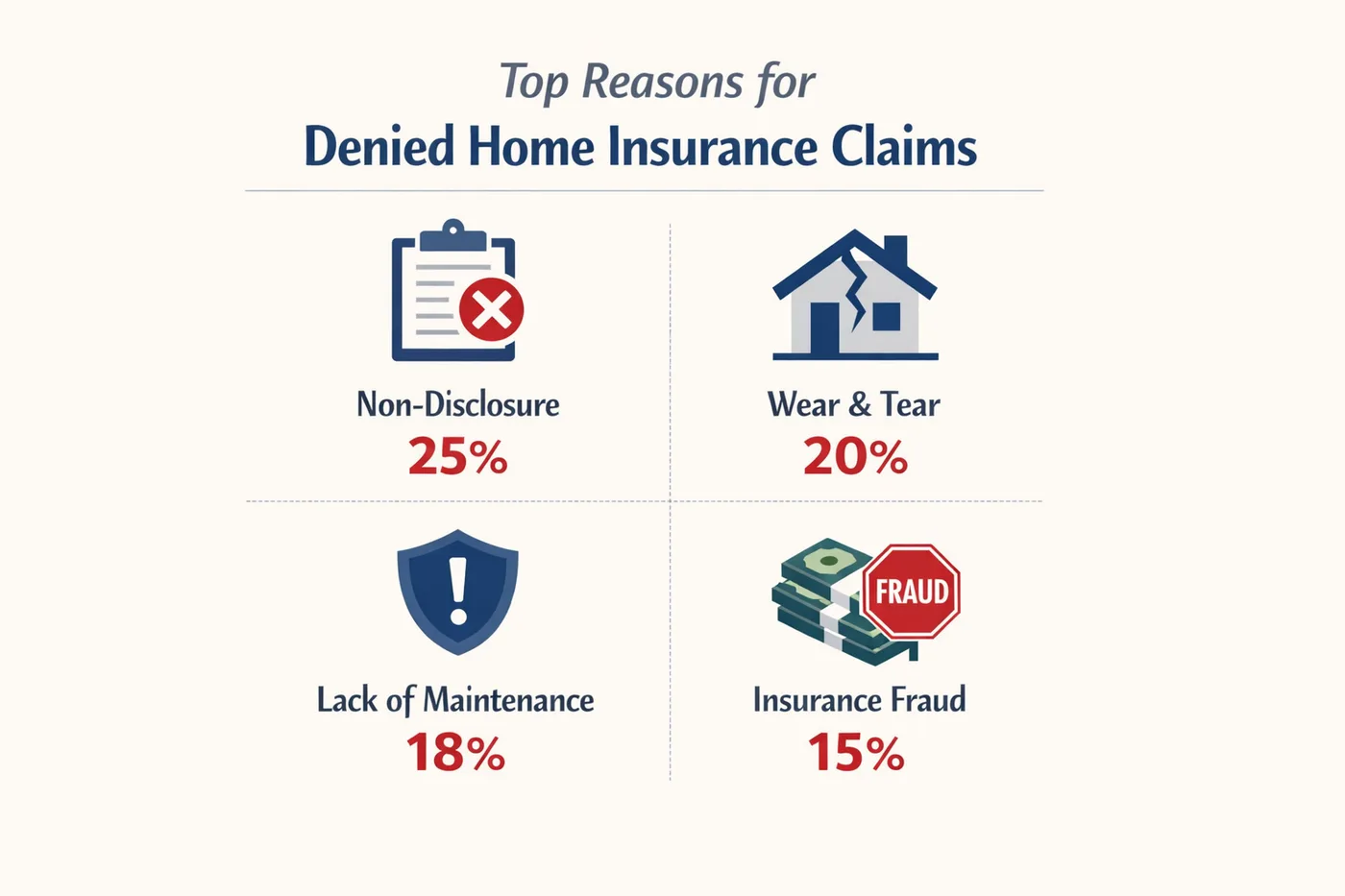
A denied claim triggers obligations the carrier must meet within fixed intervals. Under 10 CCR § 2695.7(b), the insurer accepts or denies the claim within forty calendar days of receiving proof of claim, and the written denial must list all bases and the factual and legal reasons for each. That forty-day window closes the first decision; if the carrier needs more time, subsection (c)(1) requires written notice every thirty days until determination. The interval matters because it defines when the record is complete and when the policyholder may escalate.
The denial itself does not create a permanent mark on the policyholder's file in the way a paid claim does. What matters is the documentation the carrier retains and what it reports when underwriting the next policy. If the denial rested on a policy exclusion—wear and tear, earth movement, flood—the event that prompted the claim may appear in loss-run reports, but the denial as such does not count as a loss paid. Underwriters reviewing the file see the date of loss, the peril, and the disposition; a denial for lack of coverage carries different weight than a denial for insufficient proof.
When a policyholder applies for new coverage, the application typically asks about prior losses or claims, not about denials. Carriers pull loss histories from databases that track incidents reported under a policy, and a denied claim may appear there as a reported event with zero payout. The question on the application determines what must be disclosed; if it asks only about paid claims, a denial may fall outside that scope. If it asks about "claims or losses," the denied claim is responsive. The distinction turns on the exact wording, and the policyholder's obligation is to answer what the form asks.
For more information on the timeline insurers must follow after a claim is filed, see Insurance Adjuster Contact Timeline: California Regulations.
Impact on Renewal and Underwriting
At renewal, the current carrier already knows the claim history. A single denied claim for a covered peril—where the carrier determined the damage did not meet the deductible or did not reach the threshold for payment—may have no effect on renewal pricing. Multiple denied claims in a short period, or a pattern of claims that suggest higher risk, can influence the carrier's willingness to renew or the premium it quotes. The underwriting file includes the adjuster's notes, the proof of claim submitted, and the basis for denial; that record persists through the policy term and informs the renewal decision.
A denial based on fraud or material misrepresentation carries separate consequences. Subsection 2695.7(b)(2) permits the carrier to withhold information that would alert the claimant to a fraud investigation, and a finding of fraud can lead to rescission or non-renewal independent of the claim outcome. The denial letter in that scenario may cite policy conditions without detailing the investigation, and the policyholder's record will reflect the finding if the carrier proceeds to rescission.
Does a Denied Claim Count Against You?
A denied home insurance claim does not automatically count against you in the way that a paid claim does. The standard requires insurers to document the denial in writing, listing all bases for the rejection and the factual and legal grounds for each reason, but the denial itself does not appear on your insurance record as a mark against your eligibility or character. What the insurer records is the claim submission and the outcome — not a notation that you acted improperly or filed frivolously.
The distinction matters because the regulatory framework treats denials as part of the claims-handling process, not as disciplinary events. Under 10 CCR § 2695.7(b)(1), when an insurer denies a first-party claim in whole or in part, it must provide a written statement referencing the specific statute, applicable law, or policy provision that supports the denial, along with an explanation of how that provision applies to your claim. The denial is a procedural determination, not a finding of fault on your part.
What the Record Actually Shows
The claim file contains the notice of claim, the proof of claim, the insurer's investigation notes, and the denial letter. These documents remain with the insurer and are not shared with industry-wide databases unless the claim involved suspected fraud or a pattern of abuse. The file reflects that you submitted a claim and that the insurer declined to pay it, along with the reason. It does not reflect a judgment about your credibility or your future risk profile unless the denial was accompanied by a finding of material misrepresentation or intentional concealment.
If the denial was based on a straightforward policy exclusion — for example, damage from an event not covered under your policy — the record simply shows that the loss fell outside the scope of coverage. The insurer cannot later cite that denial as evidence of risk unless the underlying facts support a separate underwriting concern, such as a property condition that increases future exposure.
How Insurers View Denied Claims
Insurers distinguish between claims denied for coverage reasons and claims denied for fraud or misrepresentation. A denial based on a policy provision, insufficient documentation, or failure to meet a condition precedent does not carry the same weight as a denial accompanied by a fraud investigation or a finding of intentional nondisclosure. The former is a routine claims determination; the latter may trigger reporting to industry databases and affect your ability to obtain coverage elsewhere.
Under 10 CCR § 2695.7(c)(1), if the insurer needs additional time to determine whether a claim should be accepted or denied, it must provide written notice within the initial timeframe and specify any additional information required. This continuing notice requirement ensures that the denial, when it comes, is based on a complete investigation — not a hasty judgment. The standard does not permit the insurer to deny a claim and then retroactively characterize the submission as problematic unless the file supports that conclusion at the time of denial.
The denial is a procedural determination, not a finding of fault on your part.
Denied Claims and Future Applications
When you apply for new coverage or renew an existing policy, the insurer may ask whether you have filed claims in the past and whether any were denied. The question is designed to elicit information about your claims history, not to penalize you for denials. If you disclose a denied claim, the insurer will evaluate the reason for the denial and the circumstances of the loss. A denial based on a policy exclusion or a timing issue — such as filing after the notice deadline — does not typically affect your eligibility, though it may prompt questions about the condition of the property or your understanding of the policy terms.
A denial based on suspected fraud or material misrepresentation is different. If the insurer documented concerns about the accuracy of your claim or the legitimacy of the loss, that information may be shared with industry databases and considered by other carriers. The standard requires the insurer to disclose its intent to pursue subrogation or report the claim to a database, but it does not require the insurer to notify you before sharing information about a fraud investigation. The distinction between a routine denial and a fraud-related denial is critical, and the written denial letter should make clear which category applies.
For more information on how insurers must communicate with claimants, see Insurance Adjuster Contact Timeline: California Regulations.
What Closes the Record
The denial letter closes the claim file unless you appeal the decision or the insurer reopens the investigation. Once the denial is final, the insurer cannot later change the basis for the denial or introduce new reasons unless it discovers additional facts that were not available at the time of the original determination. The written denial must include a statement that if you believe the claim was wrongfully denied, you may have the matter reviewed by the California Department of Insurance, along with the address and telephone number of the unit that reviews claims practices. That statement establishes the dispute window and the process for challenging the denial.
If you do not appeal within the dispute window, the denial becomes final, and the claim file is retained according to the insurer's record retention policy. The file remains available for review by regulators and may be produced in the event of a subsequent dispute, but it does not circulate as a negative mark on your insurance record unless the denial involved fraud or misrepresentation.
How Denied Claims Affect Future Claims
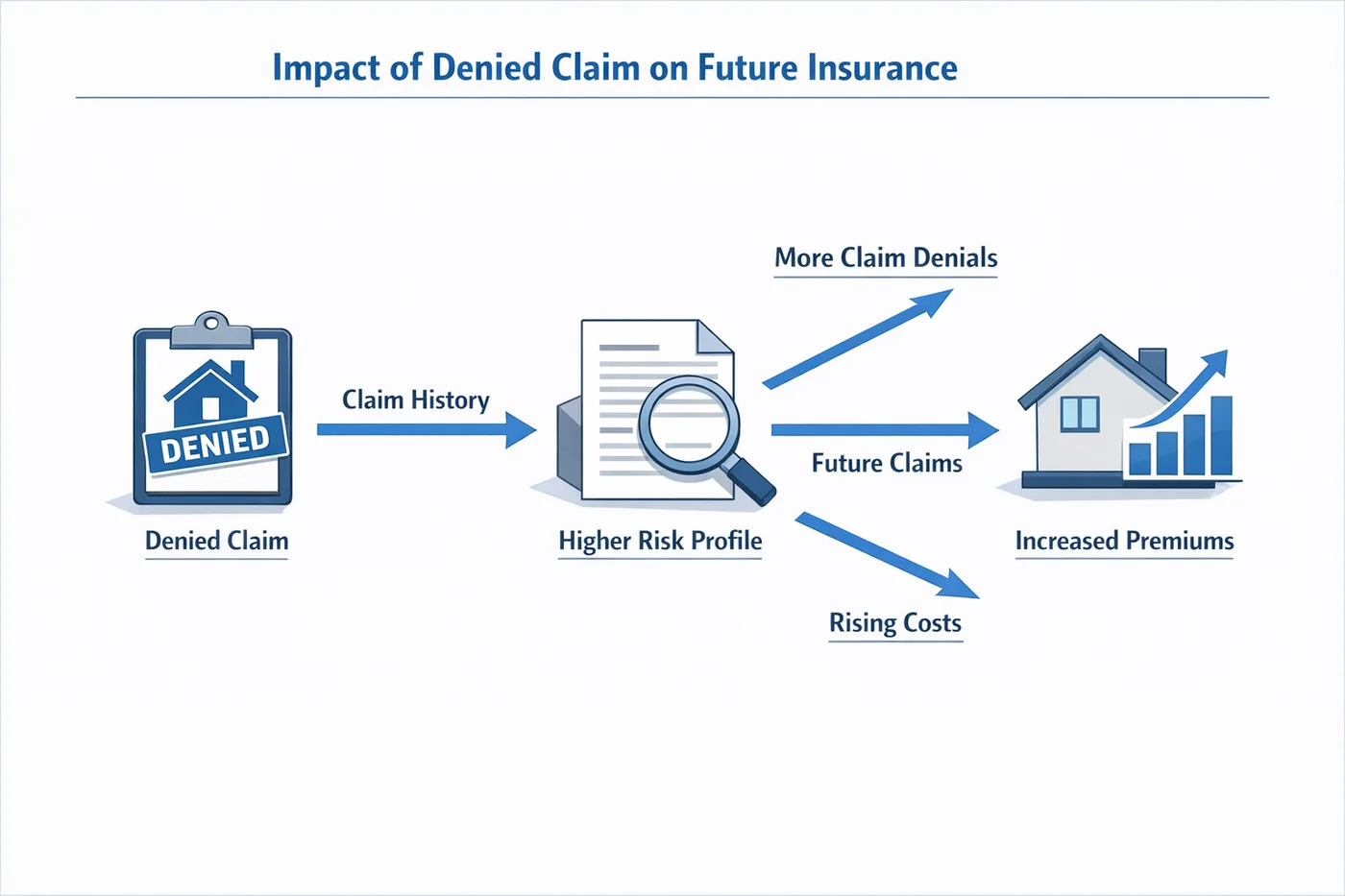
A denial does not typically appear as a permanent mark against a policyholder in the way a paid claim does. The insurer's file contains the denial letter and the reason given, but the record of a denied claim rarely flows to industry databases that track loss history. What matters more is the pattern: repeated denials for the same type of loss, or denials that reveal misrepresentation at application, can influence how future claims are assessed.
What the Record Actually Says
When an insurer denies a claim, the file must include a written statement listing all bases for rejection and the factual and legal foundation for each reason. Where the denial references a specific policy exclusion or condition, the letter must explain how that provision applies to the claim. This documentation stays in the insurer's claim file, but it is not automatically shared with third-party reporting services unless the claim involved fraud or misrepresentation that triggers a different reporting obligation.
The denial itself does not count as a "claim" in the sense of a loss event that increases risk. If the denial was based on a coverage exclusion — the loss was not covered under the policy terms — the insurer's underwriting file may note the incident, but it does not weigh as heavily as a paid claim when renewal or future underwriting decisions are made.
How Insurers View Repeated Denials
Multiple denied claims for similar losses can signal to an underwriter that the policyholder either misunderstands the coverage or is attempting to recover for losses the policy does not cover. If the pattern suggests intentional misrepresentation or an elevated risk profile, the insurer may decline to renew the policy or may adjust terms at renewal. The denial record alone does not trigger premium increases, but the underlying facts that led to the denial — such as deferred maintenance or hazardous conditions — may be noted and factored into future underwriting.
If a claim is denied and the policyholder later files a complaint with the California Department of Insurance, the insurer must respond within a specified timeframe and may be required to provide additional documentation. A finding against the insurer can result in the claim being reopened, but the complaint itself does not automatically create a negative mark against the policyholder.
Impact on Future Claims Assessment
When a new claim is filed, the adjuster reviews the claim history on file with the insurer. A prior denial may prompt additional questions or closer scrutiny, particularly if the new claim involves similar circumstances. The adjuster is not required to accept the new claim simply because a prior one was denied, nor is the adjuster required to deny it because a pattern exists. Each claim is evaluated on its own merits, against the policy terms in effect at the time of the loss.
If the prior denial was based on a coverage gap that has since been corrected — for example, the policyholder added an endorsement or changed policy limits — the new claim may proceed without reference to the earlier denial. If the prior denial was based on disputed facts and those facts remain unresolved, the new claim may be subject to the same scrutiny.
Each claim is evaluated on its own merits, against the policy terms in effect at the time of the loss.
The Insurer's Obligation on Continuing Notice
If an insurer requires additional time to assess a claim, it must provide written notice within the initial timeframe and specify any additional information needed. Thereafter, the insurer must provide written notice every thirty days until a determination is made. This continuing notice requirement applies whether the claim is ultimately accepted or denied, and it ensures that the policyholder is not left without information while the file remains open.
The requirement to provide reasons for delay applies to all claims, including those that may later be denied. If the insurer is investigating whether a policy exclusion applies, the notice must state that investigation is ongoing and provide an estimate of when a determination will be made. The notice does not constitute an acceptance of the claim, but it does establish a timeline that the insurer must follow.
For more on the timeline requirements that govern insurer response, see Insurance Adjuster Contact Timeline: California Regulations.
Impact on Insurance Renewal
A denied claim does not automatically trigger non-renewal, but it places the claim on record. The insurer's file now contains the notice of claim, the documentation submitted, and the written denial citing the provision, condition, or exclusion that barred coverage. That record remains visible at renewal. Whether the carrier chooses to renew, and at what premium, depends on underwriting guidelines that evaluate the claim history as a whole — not the denial in isolation.
Renewal decisions rest on the insurer's assessment of risk. A denied claim demonstrates that the policyholder filed for coverage, which signals an event occurred. The fact that the event fell outside the policy's scope does not erase the filing. Underwriters review the nature of the event, the frequency of claims (approved or denied), and the policyholder's overall loss history. A single denied claim for a non-covered peril rarely moves the needle. Multiple filings — regardless of outcome — can prompt a rate adjustment or a decision to non-renew at the policy's expiration.
Renewal Notice and Premium Adjustment
When an insurer intends to non-renew or increase the premium, it must provide advance written notice. The notice period and content requirements vary by jurisdiction and policy type, but the carrier is obligated to state the reason for the change. If the reason cites claim activity, the policyholder can request the specific file entries that informed the decision. A denied claim appears in that file alongside approved claims, but the denial letter itself documents that no payment was made and no coverage was triggered.
Premium increases tied to claim frequency may apply even when claims are denied. Insurers price policies based on the likelihood of future loss. Frequent filings — whether paid or denied — indicate that the insured property or the policyholder's behavior presents higher exposure. The underwriting model does not distinguish sharply between a claim denied for lack of coverage and one that was never filed; both are factored into the risk profile. The difference is that a denied claim generates a paper trail, while an unreported event does not.
Non-Renewal vs. Cancellation
Non-renewal occurs at the policy's natural expiration. The insurer declines to issue a new term, and the policyholder must secure coverage elsewhere. Cancellation, by contrast, terminates the policy before its expiration date and is permitted only under specific circumstances — typically non-payment of premium, material misrepresentation, or a substantial increase in hazard. A denied claim does not, on its own, justify mid-term cancellation. It may, however, contribute to a non-renewal decision if it forms part of a pattern the underwriter views as unfavorable.
When a policy is non-renewed, the carrier must comply with notice requirements. The policyholder receives written notification within the timeframe specified by statute or regulation, and that notice must state the reason for non-renewal. If the reason is claim activity, the policyholder can review the file to confirm which claims were counted. A denied claim will appear in that count, even though no indemnity was paid. The distinction between denial and payment is relevant to the insurer's loss ratio but less so to the underwriter's assessment of filing behavior.
Shopping for New Coverage After a Denial
When applying for new coverage, applicants typically answer questions about prior claims. The standard application asks whether the applicant has filed a claim within a specified period — often three to five years. A denied claim is a filed claim. Answering the question accurately requires disclosing the denial, along with any approved claims. Failure to disclose can be treated as material misrepresentation, which may void coverage or provide grounds for denial of a future claim.
The new insurer will request a claims history report, often through a database that aggregates filings across carriers. Denied claims appear in that report. The applicant's explanation of the denial — what event occurred, why it was denied, and what documentation supports the denial — helps the underwriter assess whether the risk profile has changed. A denial for a non-covered peril (such as flood damage under a standard homeowners policy) carries different weight than a denial for failure to maintain the property. The underwriter evaluates the substance, not merely the outcome.
For guidance on how to address disputes or concerns about claim handling, see Filing a Complaint With the California Department of Insurance.
What the Regulation Requires
California's claims-handling regulations specify that an insurer must accept or deny a claim within forty calendar days of receiving proof of claim. When a claim is denied, the insurer must provide a written statement listing all bases for the denial and the factual and legal foundation for each reason. Where the denial rests on a statute, law, or policy provision, the notice must reference that authority and explain its application. The denial letter becomes part of the claim file and is retained for the period specified by the insurer's record-retention policy and applicable regulatory requirements.
The regulation does not require the insurer to expunge a denied claim from its records. The file remains intact, and the claim is counted as activity for underwriting purposes. The policyholder's recourse, if the denial is disputed, is to request internal review, file a complaint with the Department of Insurance, or pursue legal action. A successful challenge may result in payment, but until the denial is overturned, it stands as the insurer's final determination. The record of the filing, and the denial, persists.
Myths and Facts about Denied Claims

Homeowners frequently encounter conflicting information about what happens after a carrier denies a claim. Some statements circulate as settled fact when the underlying regulation says something narrower; others present a partial rule as though it were the whole provision. The following distinctions separate what the record shows from what informal sources commonly assert.
Myth: A Denied Claim Always Appears on Your Insurance Record
No centralized database automatically logs every denial. California regulations require the carrier to document the denial in its own claim file and to provide written notice to the claimant listing all bases for the decision, but they do not mandate reporting the denial to a shared registry that all insurers consult. Whether a denial appears in subsequent underwriting depends on the carrier's internal record-keeping and on whether the policyholder files a new application that asks about prior claims—denied or paid.
Myth: Asking Questions About Coverage Counts as Filing a Claim
The regulation defines "notice of claim" as communication that reasonably apprises the insurer that the claimant wishes to make a claim and that a covered condition may have arisen. A purely informational inquiry—"Does my policy cover wind damage to a fence?"—without an assertion that such damage has occurred does not trigger the formal claim-handling timeline. The line between an incident report and a claim depends on whether the communication expresses intent to seek payment under the policy.
Myth: You Can Withdraw a Claim Before the Carrier Denies It
Once the carrier receives proof of claim, the 40-calendar-day clock under 10 CCR § 2695.7(b) begins. The regulation requires the insurer to accept or deny the claim within that window; it does not provide a mechanism for the claimant to retract the submission and erase the record. If you decide not to pursue the matter, the carrier may close the file administratively, but the claim itself remains documented.
Myth: A Denial Automatically Raises Your Premium at Renewal
The regulation does not tie premium adjustments directly to denials. Carriers price renewals based on loss history, risk factors, and underwriting guidelines. A denied claim that involved no payout does not create a paid loss, but the underlying condition—storm damage, water intrusion, or another event—may signal increased risk. The renewal decision reflects the carrier's assessment of that risk, not a penalty for having filed.
Fact: The Carrier Must State Every Basis for the Denial
When an insurer denies a first-party claim in whole or in part, 10 CCR § 2695.7(b)(1) requires written notification listing all bases for the rejection and the factual and legal foundation for each reason. If the denial references a specific statute, policy provision, condition, or exclusion, the notice must explain how that provision applies to the claim. This requirement ensures that the claimant understands precisely why the carrier declined coverage, which is essential for evaluating whether to dispute the decision.
Fact: You May Request Review by the California Department of Insurance
The written denial must include a statement that if the claimant believes the claim was wrongfully denied, the matter may be reviewed by the California Department of Insurance, along with the address and telephone number of the unit that reviews claims practices. This disclosure is mandatory. If you receive a denial that omits this information, ask for it in writing—the regulation requires its inclusion. For detailed steps on how to proceed, see our guide on Filing a Complaint With the California Department of Insurance.
Fact: Regulatory Changes Have Shaped Current Practice
The claims-handling regulations have undergone multiple amendments since their initial adoption in 1992. Provisions approved in 2003 were later enjoined and then selectively reinstated following a court-approved settlement in 2004. Subsequent amendments in 2006 and 2021 refined definitions and timelines. The edition matters: a denial issued under an earlier version of the regulation may not reflect current notice requirements, and any dispute over compliance must reference the regulation in effect at the time the claim was filed.
Best Practices Following a Denied Claim
A denial arrives in writing. The insurer must provide the factual and legal bases for each reason given, and where the denial references a policy provision or exclusion, the letter must explain how that provision applies to your claim. Read the denial to the end — the letter specifies what the insurer says happened, what the policy says about it, and which provision controls.
Retain the denial letter and every document you submitted with the claim. If the denial cites a specific policy section, locate that section in your policy and confirm the language matches what the letter describes. Insurers must reference the provision by name and explain its application; a denial that omits either element does not satisfy the regulatory standard.
Review the Timeline
The insurer must accept or deny the claim within forty calendar days of receiving proof of claim. If more time is required, the insurer must notify you in writing within that forty-day window, specify what additional information is needed, and provide updated notice every thirty days until a determination is made. Check the dates on the denial letter and on your proof-of-claim submission. A denial issued outside the regulatory window does not invalidate the denial, but it documents a procedural lapse that may be relevant if you escalate the matter.
Confirm What the Denial Actually Says
A denial may reject the entire claim or only a portion of it. The letter must state which amounts are denied and on what basis. If the denial is partial, the insurer must document the accepted amounts separately. Before you respond, establish whether the denial is total or whether part of the claim remains open.
If the denial references an exclusion, verify that the exclusion language in your policy matches the language in the denial letter. Exclusions are interpreted narrowly; if the denial letter generalizes the exclusion or applies it to facts not covered by the policy text, that discrepancy is material.
Understand Your Escalation Options
The denial letter must include a statement that you may have the matter reviewed by the California Department of Insurance, along with the address and telephone number of the unit that reviews claims practices. This is not optional language — the regulation requires it. If the denial letter omits this disclosure, the insurer has failed to comply with the notification standard.
You are not required to accept the denial. If you believe the claim was wrongfully denied, you may request internal review by the insurer, file a complaint with the Department of Insurance, or consult an attorney. Each path has different documentation requirements and different timelines. For guidance on the Department of Insurance complaint process, see Filing a Complaint With the California Department of Insurance.
Document What You Retain
Retain the denial letter, your proof of claim, all correspondence with the insurer, and any third-party reports or estimates you obtained. If you requested additional time or information from the insurer, retain those requests and the insurer's responses. If the denial is later reversed or modified, the original denial and your response establish the record.
A denial does not close the conversation unless you accept it. The regulation establishes what the insurer must provide and by when; if the insurer's denial does not meet that standard, the deficiency is part of the record.
Frequently asked questions
Does filing a claim automatically count against me?
Filing a claim creates a record in industry databases, regardless of the outcome. The insurer reports the claim when you submit proof of loss, not when they accept or deny it. A denial does not erase the record of the filing. Whether the carrier paid or denied, the claim appears in the shared loss history.
What documentation should I retain after a denial?
Retain the written denial letter that lists all bases for the rejection and the factual and legal reasons for each one. Where the denial references a specific policy provision, condition, exclusion, or statute, the letter must explain how that provision applies to your claim, per 10 CCR § 2695.7(b)(1). Keep all correspondence that shows when the insurer received your proof of claim and when they issued the denial. If the denial came more than forty calendar days after proof of claim, document the date gap and any interim notices.
Can an insurer deny a claim without giving a reason?
No. When an insurer denies a first-party claim in whole or in part, they must provide a written statement listing all bases for the denial and the factual and legal reasons for each one that are within their knowledge at that time. The written denial must reference any statute, applicable law, policy provision, condition, or exclusion on which the denial rests, and explain how it applies to your claim. A bare denial with no explanation does not satisfy California regulations.
How long does an insurer have to accept or deny my claim?
Upon receiving proof of claim, the insurer must accept or deny the claim, in whole or in part, within forty calendar days, per 10 CCR § 2695.7(b). If they need more time, they must provide written notice within that forty-day window specifying any additional information required and stating the continuing reasons for their inability to decide. Thereafter, they must send a status notice every thirty calendar days until they make a determination or legal action is served.
What is "proof of claim" under California regulations?
Proof of claim means any evidence or documentation in the insurer's possession—whether submitted by the claimant or obtained during the insurer's investigation—that provides evidence of the claim and reasonably supports the magnitude or amount of the claimed loss, per 10 CCR § 2695.2(s). The definition is broad: it includes anything that demonstrates the loss occurred and its scale.
Can I appeal a denied claim directly to the California Department of Insurance?
The written denial must include a statement that if you believe all or part of the claim was wrongfully denied, you may have the matter reviewed by the California Department of Insurance, along with the address and telephone number of the unit that reviews claims practices. This disclosure is required by 10 CCR § 2695.7(b)(3). For step-by-step guidance on the complaint process, see Filing a Complaint With the California Department of Insurance.
Does a denial affect my ability to file future claims?
A denial does not legally bar you from filing subsequent claims. The policy remains in force unless the carrier cancels or non-renews it. However, the record of the denied claim persists in industry databases and may influence underwriting decisions at renewal or when you seek coverage elsewhere. Carriers review claim history—including denials—when assessing risk and setting premiums.
What if the insurer delays the denial beyond the regulatory deadline?
If the insurer fails to accept or deny the claim within forty calendar days of receiving proof of claim, and does not provide the required written notice of need for additional time, they may be in violation of 10 CCR § 2695.7(b) and (c). Document the date you submitted proof of claim, the date the insurer received it, and the absence of any timely decision or status notice. That record supports a regulatory complaint.
Conclusion
A denied home insurance claim does not automatically count against you in the same way a paid claim does, but the record of the denial remains visible to insurers and can influence future underwriting decisions. The denial itself signals that you submitted a claim the insurer deemed invalid, and that fact appears in claims-history databases alongside approved and paid claims. What matters is the pattern: a single denial rarely triggers adverse action, but multiple denials or a mix of denied and paid claims can prompt an insurer to decline renewal or raise premiums at the next policy term.
The key distinction is between the claim event and the claim outcome. Insurers track both. When you file a claim, the insurer records the notice of claim regardless of whether it later approves or denies coverage. That record persists even if the insurer ultimately pays nothing. The outcome—denial versus payment—affects how the next underwriter interprets your risk profile, but the filing itself is the event that enters your claims history.
Retain the denial letter and any supporting documentation the insurer provided. If the denial rested on a coverage exclusion or a failure to meet a policy condition, that documentation establishes the basis for the decision. When a future insurer asks about prior claims, you can explain the denial with reference to the specific provision the original carrier cited. The record you keep is the record you control; without it, you rely on the insurer's characterization alone.
Before you accept a denial, confirm that the insurer cited the correct policy provision and that the provision applies to your loss. If the denial letter references a clause that does not match the facts of your claim, or if the insurer failed to investigate adequately, you have grounds to dispute the decision within the timeframe the denial letter specifies. Once that window closes, the denial stands as written, and the record reflects an uncontested adverse determination.
Understanding how denied claims appear in your insurance record helps you manage future coverage decisions with clarity. The denial does not disappear, but it also does not carry the same weight as a paid claim unless it forms part of a larger claims pattern. For further guidance on insurer obligations and dispute procedures, see Filing a Complaint With the California Department of Insurance. The record is what the documentation says it is—keep the documentation, and you keep the ability to explain it accurately when the next underwriter asks.