
Learn about fire extinguisher service cost, factors influencing pricing, and how to prepare for the service.
Introduction
Fire extinguisher service cost typically ranges from base visit charges plus per-unit fees, depending on the interval being performed, the number of units, and whether the work includes inspection, maintenance, recharge, or hydrostatic testing. Understanding what the standard requires at each interval helps separate mandated work from optional upgrades and prevents paying for services not yet due.
Understanding Fire Extinguisher Service Requirements
The standard requires fire extinguishers to be inspected, maintained, and tested at specified intervals. NFPA 10 establishes these intervals by edition, and the edition adopted locally determines what the authority having jurisdiction expects to see in the record. Annual maintenance, six-year internal examination, and twelve-year hydrostatic testing are separate line items, each with distinct requirements and different scopes of work.
Many service agreements bundle multiple intervals into a single quoted price, which makes it difficult to identify what portion of the cost satisfies which provision. Before you authorize work, ask for the line items separately priced. The agreement should state which interval is being performed, which edition of the standard applies, and what documentation will be provided to close the inspection.
What Influences Fire Extinguisher Service Cost
Fire extinguisher service cost depends on the interval being performed, the number of units in service, and whether the work includes only inspection or extends to maintenance, recharge, or hydrostatic testing. The standard permits the owner to perform monthly visual checks, but annual maintenance and internal examinations require a licensed agency with the proper equipment and training.
Service agreements frequently include a base visit charge plus per-unit fees. The base charge covers the technician's arrival and setup; the per-unit fee covers the inspection, tag replacement, and documentation for each extinguisher. If the visit uncovers a deficiency—such as low pressure, damaged hose, or missing tamper seal—the remedy is a separate line item. Some agreements include minor repairs in the annual fee; others price every remedy individually. The agreement should specify what is included in the base interval and what triggers an additional charge.
For commercial properties subject to regular fire district inspections, understanding insurance adjuster contact timeline requirements can help coordinate service visits with compliance deadlines and avoid overlap between the fire district's inspection schedule and the insurer's own verification process.
Preparing for the Service Visit
Before the technician arrives, verify that the agreement identifies the obligated party by legal name, not just a trade name or DBA. If the agreement includes a personal guarantee block, confirm who signed it and whether that individual has authority to bind the entity. The contract should provide a dispute window—typically thirty days from the invoice date—and state what documentation you will receive at the conclusion of the visit.
Retain the service report, the updated inspection tags, and any photographs or deficiency notices the technician provides. These records close the code violation if the authority having jurisdiction opens one, and they demonstrate compliance during the next scheduled inspection. Ask for the report in writing before you authorize additional work; what the report actually says determines whether the failure is real and whether the proposed remedy is the only compliant option.
Problem Statement
The annual inspection is a single-line item on most quotes, but the standard requires two separate procedures performed at different intervals. When a contractor bundles them without breaking out the components, an owner cannot verify that both obligations are satisfied. One procedure closes an annual requirement; the other closes a multi-year requirement. If the quote does not name them separately, the owner cannot confirm which service was performed or whether the record satisfies the authority having jurisdiction.
The agreement provides a dispute window, but most owners do not ask for it in writing before signing. When a deficiency appears six months after the visit, the window has closed, and the owner cannot compel a return visit without purchasing a second service call. The standard does not permit a contractor to extend the interval because a prior visit missed a required check. The next inspection date is fixed by the edition adopted locally, not by when the last contractor showed up.
When the Record Does Not Match the Standard
A report that lists "annual inspection complete" without naming the procedures performed does not prove compliance. The authority having jurisdiction expects documentation that matches the standard's language: which items were inspected, by what interval, and to which edition. When a violation is opened, the owner must produce a record that closes it. A generic checklist does not close a specific deficiency unless it names the failed component and the remedy applied.
The obligated party on the agreement is not always the entity that performed the work. When a subcontractor signs the report but the agreement names a different company, the owner cannot enforce the warranty against the entity that was on site. Before you authorize payment, confirm that the signature block matches the entity named in the agreement and that any personal guarantee is executed by an individual with authority to bind that entity.
What Closes the Failure
A code violation remains open until the authority having jurisdiction receives documentation that the deficiency was corrected by a party permitted to perform that work. Not all remedies require a licensed agency; some checks are owner-performed under the standard. When a contractor quotes a licensed-agency remedy for an owner-performed item, the owner pays for a service the standard does not require. The provision permits either remedy, but only one satisfies the interval. Ask for the work order in writing, confirm which procedure closes the deficiency, and verify that the person performing it holds the credential the standard requires.
The cheapest quote is not the compliant quote when the scope omits a required procedure or bundles two intervals into one line.
When the standard requires documentation and the contractor does not provide it, the owner cannot prove compliance. Retain the report, the agreement, the payment record, and any correspondence that identifies what was performed and when. The authority having jurisdiction can request those records at any inspection, and the absence of a complete file extends the timeline to close a violation. What the report actually says determines whether the record satisfies the standard, not what the contractor verbally represented at the time of sale.
Solution Steps
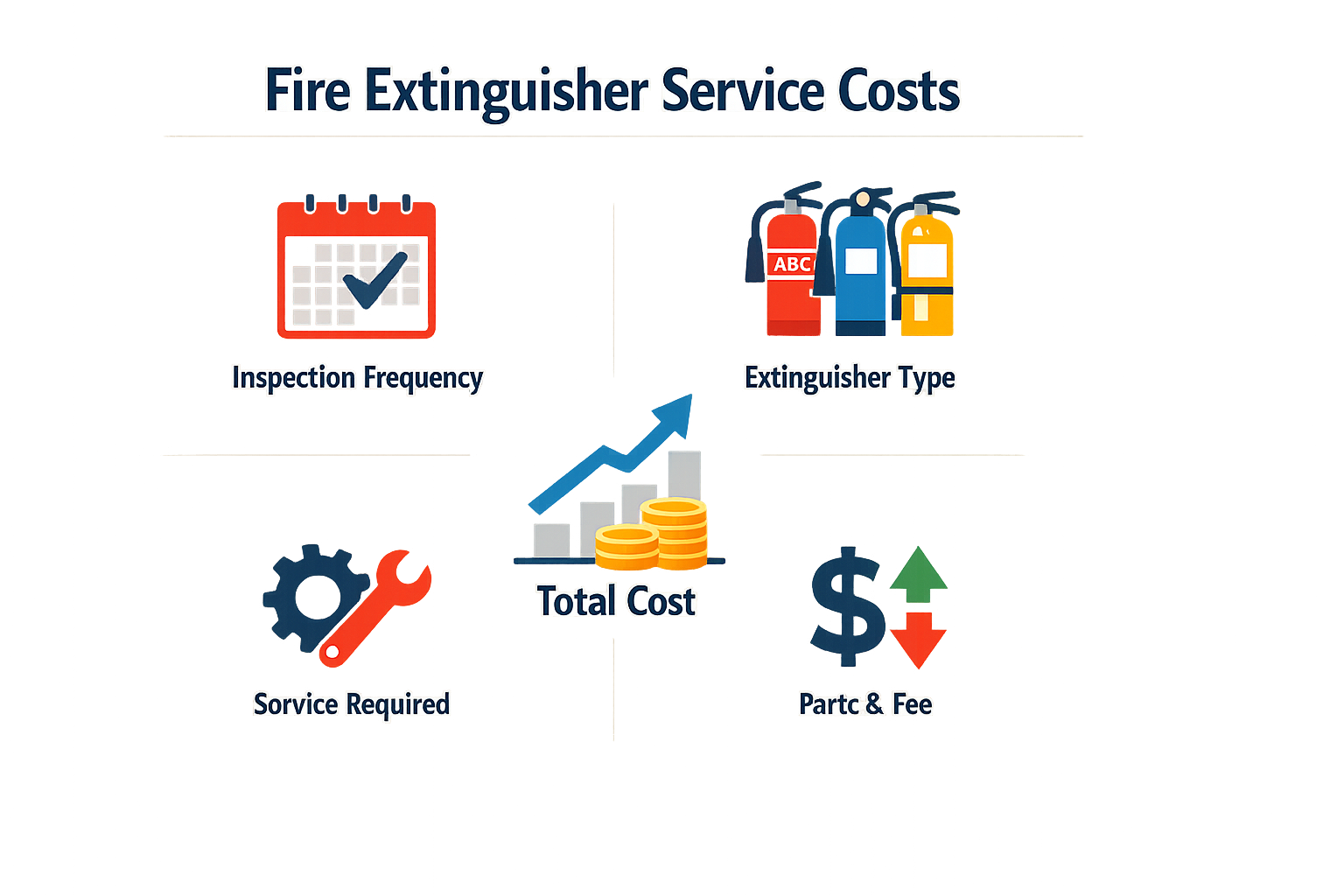
Determining accurate fire extinguisher service cost begins with separating what the standard requires from what the agreement provides. The interval matters: NFPA 10 establishes annual maintenance, six-year internal examination, and twelve-year hydrostatic testing as distinct items. A quote that bundles them without line-item pricing obscures what you authorize and what closes which requirement.
How Do I Get Accurate Fire Extinguisher Service Cost Pricing?
Step 1
Request line-item pricing before the visit
Before any work starts, ask for a written agreement that states the agreed contract amount and identifies each service separately. Annual maintenance is not the same item as a six-year teardown, and the two carry different labor and parts requirements. A contract that lists only a total figure leaves you unable to verify that the performed scope matches the invoiced scope.
The provision permits either remedy where alternatives exist—test the gauge against a calibrated instrument or replace it—but only one of those reaches most quotes. Ask which remedy the contractor proposes and what the separately priced alternative costs. If the agreement omits the choice, you cannot later dispute that the more expensive path was unnecessary.
Who Is Responsible for Fire Extinguisher Service?
Step 2
Verify licensing and entity identification
Establish who the obligated party is before you sign. The agreement must identify the contractor by name, license number, and business address. If an individual signs on behalf of a corporation or LLC, confirm that the entity—not just the signer—is the party to the contract. A personal guarantee block, when present, shows an additional obligated party, but it does not replace the primary entity obligation.
California requires contractors performing fire protection work to hold the appropriate license classification. The license number on the agreement is your verification path: check it against the Contractors State License Board registry to confirm active status and the scope of work the license permits. If the license does not cover the work described, the agreement may not be enforceable, and you may have no recourse if the work fails inspection.
What Happens If I Dispute Fire Extinguisher Service Cost?
Step 3
Confirm what the agreement provides for disputes
Read the dispute window, default provisions, and suspension terms before the first visit. Many service agreements specify a window—often fifteen or thirty days—within which you must raise a billing dispute in writing. Miss that window, and the agreement may treat the invoice as accepted. For guidance on related timelines in California service contracts, see Insurance Adjuster Contact Timeline: California Regulations.
Default and acceleration clauses control what happens if you withhold payment. Some agreements provide that a single missed payment renders the entire remaining term due immediately. Others suspend service but preserve the term. Know which applies: the difference determines whether a dispute over one visit terminates the relationship or simply pauses it.
What Records Must I Keep After Fire Extinguisher Service?
Step 4
Retain the documentation the standard requires
The contractor must provide a signed and dated copy of the contract before any work starts, and a service tag or report after each visit. NFPA 10 requires that the service organization attach a tag showing the month and year of service, and that the owner retain records of maintenance, inspection, and testing. These records are what an authority having jurisdiction will request during an inspection. Without them, you cannot demonstrate compliance, even if the work was performed.
The service report must state what was performed, what was found, and what remedy was applied. If the report says the system failed, establish who is permitted to close that failure before you authorize corrective work. Some deficiencies require reinspection by the authority having jurisdiction; others are closed by the contractor's certification. The report itself should specify which path applies. If it does not, ask for it in writing.
Tips and Tricks
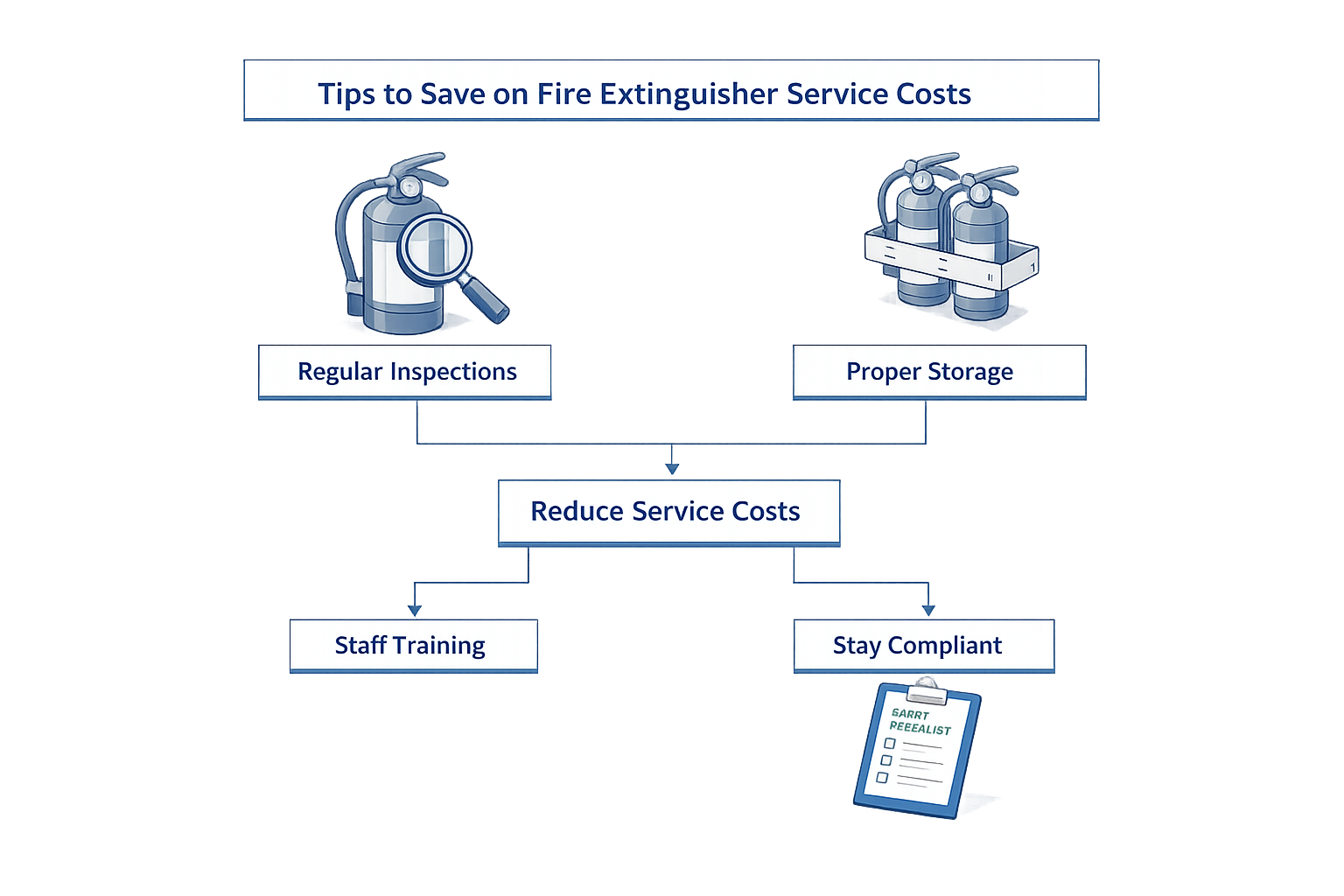
The standard requires service by interval, but how you structure the agreement determines what you actually pay and what documentation you retain. A written contract clarifies the scope, prevents acceleration clauses from triggering unexpectedly, and gives you a dispute window when a report says the system failed but the remedy quoted exceeds the original scope.
Ask for the Agreement in Writing Before Work Starts
The provision permits oral agreements for small jobs, but fire protection service almost always involves recurring visits. Before any work starts, ask for a signed and dated contract that states the agreed amount, the interval covered, and any downpayment or payment schedule. If the contractor provides a quote verbally and then invoices a higher figure after the visit, you have no record to dispute the overrun. Retain the signed contract and any amendment in your compliance file — the authority having jurisdiction may ask for it during the next inspection cycle.
Separate What the Owner Performs from What a Licensed Agency Performs
The standard distinguishes between monthly visual checks — which the owner performs — and annual or five-year service that requires a licensed agency. When a contractor quotes "full compliance," establish which tasks are owner-performed and which require certification. Paying for monthly checks that you can document internally inflates the invoice without closing any additional code requirement. The obligated party on the agreement should match the entity that holds the occupancy permit; if the contractor lists a personal name or a dissolved entity, the guarantee block may not protect you when the work is deficient.
Check the Date on the Last Report and the Edition That Applies
The edition matters. NFPA 10 and NFPA 25 update on different cycles, and the locally adopted version determines which tasks are mandated at which interval. Before you authorize a five-year internal inspection, confirm that five years have elapsed since the last one — not since the last annual visit. Contractors sometimes quote both as a combined service when only the annual is due, and the owner pays for work the standard does not yet require. Ask for the previous report date in writing, and verify it against your retained records.
The cheapest bid is the one whose interval breakdown you can cross-check against the standard without calling the contractor back for clarification.
Understand What Closes the Failure and Who Is Permitted to Close It
When a report says the system failed, the authority having jurisdiction opened a violation. Not every contractor is permitted to close it. If the original service provider identifies a deficiency but is not licensed for the corrective work, a second contractor may be required — and the agreement with the first provider may not cover the cost. Before you approve a remedy, establish who performs the repair, whether it falls within the original scope, and what documentation the AHJ expects to see. A signed-off report from an unlicensed party does not close the failure, and you may pay twice.
For disputes that extend beyond the service agreement window, consider reviewing filing a complaint with the California Department of Insurance to understand the formal process when a contractor's performance or billing practice raises concerns.
Retain the Record for the Full Retention Period
The standard requires documentation, and the AHJ expects you to produce it on request. Retain the service report, the signed contract, any amendment, and proof of payment for the interval specified by the locally adopted code. If the contractor provides a summary invoice without a detailed report, ask for the full inspection record before you authorize payment. What the report actually says determines whether the system passed or failed, and a summary line does not satisfy the retention requirement when the AHJ audits your file.
Conclusion
Understanding fire extinguisher service cost begins with knowing what the standard requires and what the agreement provides. The annual inspection is a separate item from the five-year internal maintenance, and the two are frequently quoted as one line. Before you authorize a combined service, establish which interval each component satisfies and whether the agreement separately prices them. The contract must state the agreed amount in writing, and the edition of NFPA 10 adopted locally determines what the licensed agency must perform.
Retain the record for each visit. The report shows what was inspected, what passed, and what failed. If a deficiency is documented, ask for the remedy in writing and confirm that the entity performing the correction is permitted to close that failure. Service agreements provide dispute windows and default provisions — read them before the first visit, not after a disagreement emerges. The obligated party on the agreement is the entity whose signature binds the contract, and a personal guarantee block names the individual who stands behind that obligation.
Regular servicing satisfies the interval the standard prescribes. The owner performs monthly visual checks; a licensed agency performs the annual and five-year service. What the report actually says determines whether the system remains in service or whether a violation opens. Check the date on the last inspection, confirm that the next interval is scheduled, and keep the documentation an authority having jurisdiction expects to see. When you know what closes the failure and who is permitted to close it, you avoid paying twice for the same remedy.
For guidance on how regulatory timelines work in other compliance contexts, see Insurance Adjuster Contact Timeline: California Regulations.
FAQ
What is the typical fire extinguisher service cost per unit?Fire extinguisher service cost typically includes a base visit charge plus per-unit fees. The per-unit cost covers inspection, tag replacement, and documentation, while deficiencies such as recharge or parts replacement are billed separately.
How often does fire extinguisher service cost recur?Annual maintenance is required every twelve months under NFPA 10, with six-year internal examinations and twelve-year hydrostatic testing as additional intervals. Each interval carries separate fire extinguisher service cost components.
Can I reduce fire extinguisher service cost by performing checks myself?The standard permits owners to perform monthly visual checks, which can reduce overall fire extinguisher service cost. However, annual maintenance and internal examinations must be performed by a licensed agency.
Does fire extinguisher service cost include all repairs?Not always. Some agreements include minor repairs in the annual fee, while others price every remedy individually. The agreement should specify what is included in the base fire extinguisher service cost and what triggers additional charges.