
Introduction
A tenant improvement allowance is the landlord's written commitment to fund part or all of the tenant's build-out. The lease names the amount, the permitted work, and the procedure for drawing the funds. What the lease does not always spell out is who performs mandated inspections after the work is done, what happens when the allowance falls short, and which entity signs the service agreements that keep the space compliant.
The calculation itself is straightforward: the lease states a dollar figure per rentable square foot, or a fixed sum, and defines the scope—demolition, electrical, HVAC upgrades, finishes. Where tenants run into trouble is assuming the allowance covers everything the space requires to open, or that the landlord will approve change orders without adjusting the rent. The lease improvement clause is a contract provision, not a blank check, and every dollar above the cap is tenant-funded unless the amendment says otherwise.
Commercial leases often separate the improvement allowance from the compliance obligation. The tenant may hold the construction contract and select the contractor, but the landlord retains responsibility for life safety systems covered by California building and fire codes. When a fire alarm panel is replaced as part of the build-out, NFPA 72 testing intervals start from the acceptance date, and the record must show who performed the acceptance test and under whose license. If the lease is silent on that split, disputes emerge when the authority having jurisdiction issues a notice.
Understanding how to calculate a tenant improvement allowance means reading the clause to the end: the dollar amount, the draw schedule, the approval process, the lien waiver requirement, and the compliance hand-off. Each of those terms affects the tenant's out-of-pocket cost and the landlord's ongoing obligation. The sections that follow walk through the calculation steps, the common traps, and the documentation that closes the transaction cleanly.
Problem Statement
The tenant improvement allowance line appears in the lease, but the number rarely tells the full story. What the provision permits, what it excludes, and what the tenant must document are frequently left to interpretation until a dispute opens. By that point, the owner and tenant are reading different editions of the same agreement.
The allowance is quoted as a dollar-per-square-foot figure or a lump sum, and the tenant assumes it covers the work required to occupy the space. The provision then lists exclusions — permit fees, architectural services, furniture, telecommunications infrastructure — and the tenant discovers that the allowance applies only to hard construction costs. The gap between the quoted allowance and the actual cost to occupy becomes visible only after the tenant has signed.
Another common misunderstanding: the allowance is presented as a reimbursement, but the lease may require the tenant to fund the work upfront and submit for reimbursement after final inspection. The tenant who cannot carry that cost discovers the structure too late to negotiate an alternative. The lease may also cap reimbursement at the lesser of actual cost or the stated allowance, meaning cost overruns fall entirely on the tenant even when the owner approved the scope.
What the Agreement Actually Provides
The improvement allowance provision typically includes three components: the allowance amount, the scope of covered work, and the reimbursement procedure. The amount is stated, but the scope determines what fraction of total project cost the allowance actually covers. The reimbursement procedure establishes who funds the work initially, what documentation closes each draw request, and what happens if the tenant's cost exceeds the allowance.
When the provision permits two remedies — for example, tenant-managed construction or owner-managed construction at separately priced rates — the tenant must elect one at lease execution. Changing course mid-project is not typically permitted, and the lease may not allow the tenant to split the allowance between the two remedies. The election matters because the reimbursement windows, documentation requirements, and dispute procedures differ between the two structures.
The cheapest allowance is the one whose exclusions you read before you commit to the space.
The agreement may also require the tenant to name the obligated party on all construction contracts and lien waivers. If the tenant is a newly formed entity, the lease may require a personal guarantee from the principals, and that guarantee block extends to cost overruns and unreimbursed expenses. The tenant who signs without reviewing the guarantee language may find that the allowance dispute reaches beyond the lease term and beyond the tenant entity itself.
Before you authorize any work, establish the documentation the owner will require to close each reimbursement request. The lease may reference a standard not included in the exhibits, and obtaining that standard after the work is complete is significantly more expensive than obtaining it before the first invoice.
Steps to Calculate a Tenant Improvement Allowance
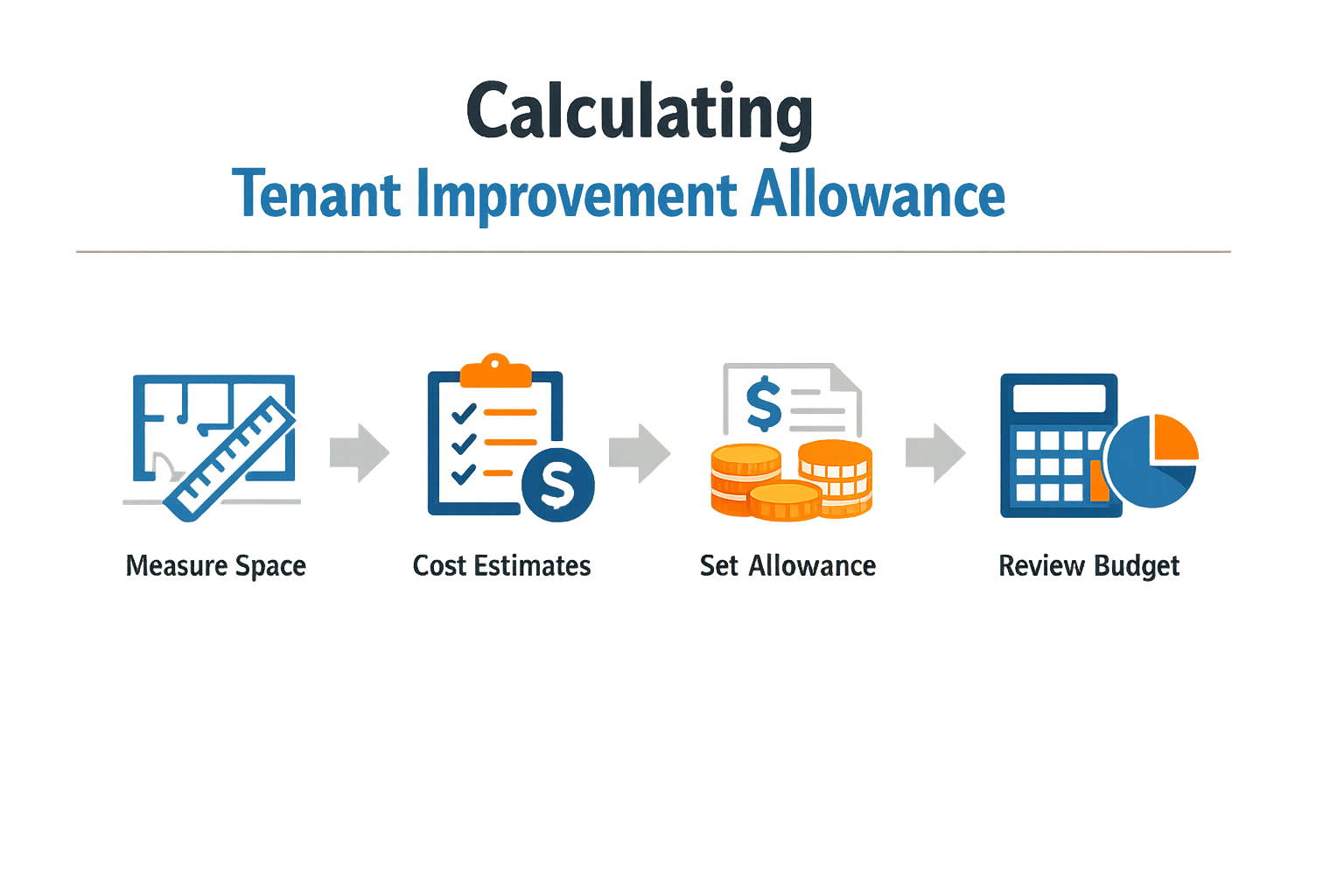
The tenant improvement allowance appears in the lease as a dollar figure, a per-square-foot rate, or a combination with conditions. The calculation method determines what the tenant receives and what documentation the landlord requires before disbursement. Each lease defines the allowance differently, and the tenant's obligation is to read the provision to the end before estimating available funds.
Identify the Allowance Structure in the Lease
The lease states the allowance in one of three ways: a lump sum, a per-square-foot rate, or a percentage of construction cost. A lump sum is a fixed dollar amount regardless of space size. A per-square-foot rate multiplies the rate by the rentable square footage defined in the lease. A percentage structure ties the allowance to actual construction cost, with the landlord contributing a stated percentage up to a cap.
Step 1
Locate the allowance clause
Find the section titled "Tenant Improvements," "Work Letter," or "Allowance." The clause specifies the dollar amount, the rate, or the percentage. It also names the party responsible for cost overruns and identifies which improvements qualify.
Step 2
Confirm the rentable square footage
If the lease uses a per-square-foot rate, confirm the rentable square footage figure in the lease's basic terms or premises description. Multiply that figure by the stated rate. The lease may define rentable square footage differently from usable square footage, and the calculation uses the rentable figure.
Step 3
Determine eligible costs
The lease lists which costs the allowance covers. Common inclusions are construction labor, materials, permits, and design fees. Common exclusions are furniture, equipment, signage, and tenant-specific technology infrastructure. Read the exclusions list carefully; an item excluded from the allowance remains the tenant's separate expense.
Calculate the Net Allowance Available
Once the gross allowance is known, subtract any landlord-retained amounts. Some leases permit the landlord to deduct project management fees, architectural review costs, or permit expediting fees from the stated allowance before the tenant receives funds. The lease specifies these deductions as a percentage or a flat fee.
If the lease includes a construction management fee, multiply the gross allowance by that percentage and subtract the result. The remainder is the amount available for tenant-directed work. If the lease caps reimbursement at actual cost, the tenant receives the lesser of the calculated allowance or the invoiced construction cost.
Establish the Disbursement Schedule
The lease defines when the landlord disburses allowance funds. Common structures are lump-sum payment at substantial completion, monthly draws against submitted invoices, or a single reimbursement after final inspection. The timing affects the tenant's need for bridge financing and the documentation required at each stage.
Step 4
Review disbursement conditions
The lease lists the documents the landlord requires before releasing funds. Standard requirements include lien waivers from contractors, copies of paid invoices, and a certificate of occupancy or final inspection sign-off. Some leases require the tenant to submit a draw request on a landlord-provided form with a specified notice period.
If the lease permits monthly draws, the tenant submits invoices and lien waivers at regular intervals. The landlord reviews the submission and disburses within the period stated in the lease, often 15 to 30 days. A lease that requires a single disbursement at completion obligates the tenant to carry the full construction cost until the landlord's final payment.
Account for Allowance Amortization or Rent Adjustment
Some leases treat the allowance as a landlord contribution with no repayment obligation. Others amortize the allowance into the base rent over the lease term, effectively converting it to a loan. The lease states whether the allowance is a true contribution or an amortized advance, and the calculation of effective cost depends on that distinction.
If the lease amortizes the allowance, the landlord adds an amount to the monthly base rent equal to the allowance divided by the number of months in the term, often with interest. A $100,000 allowance amortized over a ten-year lease at 6% interest increases monthly rent by approximately $1,110. The tenant repays the allowance through higher rent rather than receiving a cash reduction in construction cost.
An allowance that increases base rent is a financed improvement, not a landlord concession — the lease defines which structure applies, and the tenant's obligation is to read that provision before signing.
Calculate the total repayment by multiplying the monthly addition by the lease term in months. Compare that figure to the stated allowance to determine the effective interest rate. If the lease is silent on amortization, the allowance is typically a non-repayable contribution, but the tenant should confirm that interpretation with the landlord in writing before construction begins.
Document the Calculation in Writing
Once the allowance is calculated, document the assumptions and the result in a written summary shared with the landlord before construction starts. The summary should state the gross allowance, any deductions, the net amount available, the eligible cost categories, and the disbursement schedule. Written confirmation prevents disputes when the tenant submits the first draw request.
If the calculation depends on a square-footage figure or a construction cost estimate, attach the source document to the summary. If the lease permits the landlord to adjust the allowance based on final as-built square footage, note that the summary reflects the initial calculation and that a final reconciliation will occur after occupancy. Retain the written confirmation and all supporting documents for the full lease term and any extension period.
For additional guidance on managing compliance documentation and timelines in commercial property matters, see Insurance Adjuster Contact Timeline: California Regulations.
Tips and Tricks for Maximizing Your Allowance
The allowance figure in the lease is the starting point, not the ceiling. The provision typically permits negotiation on what counts toward the cap, what documentation closes the obligation, and which party holds the retention until work is complete. Before you authorize any improvement, establish in writing what the landlord will reimburse and what evidence satisfies the agreement.
Ask for It in Writing Before Work Begins
The lease defines the allowance, but the work letter or tenant improvement agreement specifies which costs apply against it. Labor, materials, and permits are standard; architectural fees, expediting charges, and after-hours access may or may not qualify. If the provision is silent on a category, request written confirmation before you incur the expense. What the lease does not exclude, the landlord can still refuse to reimburse if the agreement does not list it.
Retain Every Record the Agreement Requires
The tenant improvement agreement will state what documentation closes the landlord's obligation: lien releases, final inspection sign-offs, paid invoices, or certified payroll records. Retain the record in the form the agreement specifies. A landlord can withhold reimbursement if the tenant produces a contractor's affidavit when the provision required a notarized lien waiver. Check the date on each document; stale releases do not satisfy a current obligation.
If the agreement permits partial draws, each draw requires its own documentation package. The obligated party—whether the tenant entity or a guarantor—must produce the full set within the window the provision allows, or the landlord can suspend payment without breaching the lease.
Separately Priced Items and the Allowance Cap
Some landlords offer a higher allowance if the tenant accepts a higher base rent or a longer term. That trade-off is separately priced; the allowance and the rent are independent line items, and either remedy satisfies the lease if both are documented. Before you agree to the higher rent, calculate the net present value of the additional allowance against the increased payment stream. A $10-per-foot allowance bump that costs $2 per foot per year over ten years is not a benefit.
The allowance is not the whole provision—what counts toward it, when it pays, and who holds it until work is done are all negotiable.
What the Agreement Actually Says About Unused Allowance
If the tenant spends less than the allowance, the lease or work letter will state whether the landlord returns the difference, applies it to rent, or retains it. Most provisions do not permit the tenant to pocket unused allowance as cash. If the agreement is silent, the landlord keeps it. If you want the option to apply unused allowance to future improvements or rent credits, negotiate that language into the work letter before the lease is executed.
For tenants considering whether to file a complaint about withheld reimbursement or unclear lease terms, understanding the process can help clarify next steps. Learn more about filing a complaint with the California Department of Insurance if a dispute involves insurance-related lease provisions or bonding requirements.
The Edition Matters When Code Upgrades Are Required
If the improvement triggers a code upgrade—fire sprinklers, ADA access, or seismic bracing—the lease will allocate responsibility between landlord and tenant. The edition of the adopted code matters; a 2019 California Building Code requirement is not the same as a 2022 amendment, and the landlord can refuse to cover an upgrade the tenant's scope triggered if the lease assigns that cost to the tenant. Establish which party pays for code-driven work before the permit application, not after the inspector issues a correction notice.
Conclusion
Calculating a tenant improvement allowance is a documented exercise, not a negotiation tactic. The lease states the allowance as a dollar-per-square-foot figure or a lump sum; the tenant multiplies it by the rentable area or accepts the stated amount. Where the provision permits alternative forms—build-out credit, rent abatement, or direct reimbursement—each carries different documentation requirements and different points at which the landlord's obligation closes. The edition of the lease matters: what closes a draw request in one form may leave it open in another.
The tenant performs the initial scope assembly and cost estimate. A licensed contractor performs the build-out under permit. The landlord reviews invoices against the allowance cap and the approved scope. Retain every invoice, every change order, and every draw request with its approval or denial in writing. An unsigned email thread does not close a dispute; a signed amendment does. When the lease requires receipts within a window—thirty days, sixty days, the term stated in the provision—ask for confirmation in writing that the submission satisfies the requirement before the window expires.
Before entering a lease with a tenant improvement allowance, establish who is obligated on the agreement. The lease names the landlord entity; a personal guarantee block, if present, names an individual. Where a property management company signs on behalf of the owner, the obligated party is the owner unless the lease states otherwise separately. What the lease actually says controls what you can enforce.
For guidance on documentation timelines in other compliance contexts, see Insurance Adjuster Contact Timeline: California Regulations. The standard requires the record; the interval is stated; retain it as long as the lease or the applicable code provision requires, and produce it when the authority having jurisdiction requests it.