
Introduction
An insurance denial arrives as a letter, often brief, stating that a claim will not be paid. The denial does not end the matter. Most commercial property insurance policies include provisions that permit the policyholder to challenge the decision through a formal appeals process. The outcome of that process depends on understanding what the insurer's letter actually states, what the policy requires, and what documentation the property owner can produce.
Commercial property owners encounter denials for reasons ranging from coverage exclusions to alleged policy violations. A common scenario involves a claim denied because the insurer asserts that required inspections were not performed or documented. In these cases, the appeal hinges on producing records that satisfy the policy's maintenance and inspection provisions. The policyholder must establish that the mandated work was completed, by whom, and within the required interval. The insurer is not obligated to accept incomplete or undated documentation.
The appeals process operates within fixed timelines. The policy specifies how many days the policyholder has to submit an appeal, what form the appeal must take, and what happens if the deadline passes. Missing the window typically forecloses the right to challenge the denial. The appeal itself must address the specific reason for the denial as stated in the insurer's letter. A general assertion that the claim should be paid does not satisfy the requirement. The policyholder must present evidence that directly contradicts the basis for the denial or demonstrates that the policy provision cited by the insurer was satisfied.
This guide walks through the mechanics of appealing an insurance denial in the context of commercial property claims. It covers what a denial letter contains, how to interpret the policy language that governs the appeal, what documentation closes a disputed issue, and where the process permits alternative remedies. It does not provide legal advice or representation in a specific dispute. It does not estimate what any particular claim should cost or guarantee that any appeal will succeed. It names the steps, identifies the intervals, and stops where the record stops.
For property owners managing compliance obligations such as fire extinguisher inspection requirements, understanding how documentation standards intersect with insurance policy terms is essential. The same records that satisfy a fire marshal also determine whether an insurer can deny a claim based on alleged non-compliance. Retain the record, check the date on it, and know what the report actually says before the claim is filed.
Learn how to successfully appeal an insurance denial with our step-by-step guide, including essential tips and best practices.
What is an Insurance Denial?
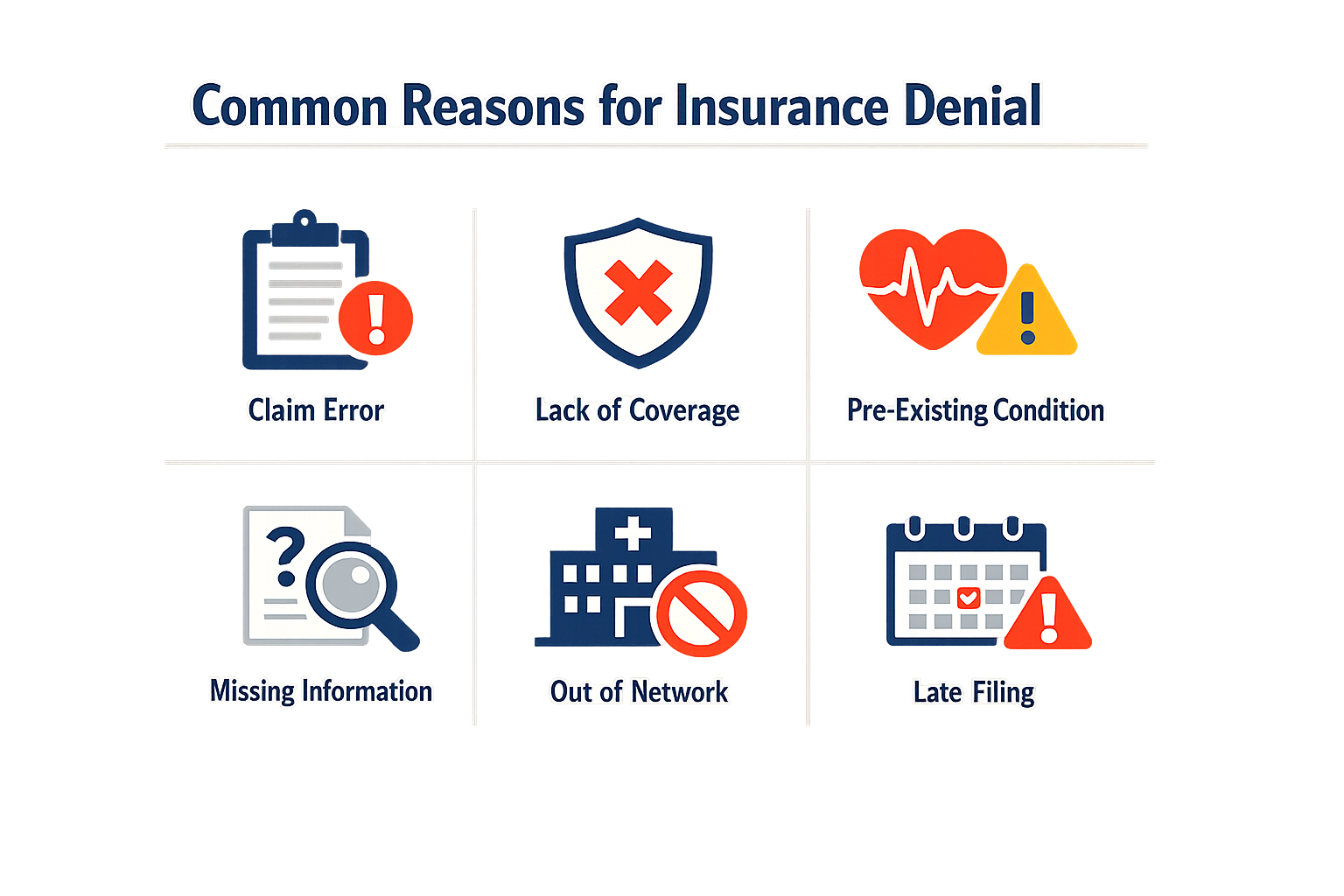
An insurance denial occurs when an insurer declines to pay a claim submitted under a policy. The denial may be partial or complete, and the reasons vary widely. A first-party claimant—defined under California regulations as any person asserting a right under an insurance policy as a named insured, other insured, or beneficiary—receives written notice stating why the claim was not honored. A third-party claimant, asserting a claim against a person or the interests insured under a policy, may receive a similar notice.
The denial notice is the starting point. It identifies the policy provision cited, the specific facts the insurer relied on, and the documentation the insurer considered. Regulations require that when losses are settled on the basis of a written scope or estimate prepared by or for the insurer, the insurer must supply the claimant with a copy of each document upon which the settlement is based. The same transparency applies to denials: the notice should reference the proof of claim—defined as any evidence or documentation in the insurer's possession that provides evidence of the claim and reasonably supports the magnitude or amount of the claimed loss.
Common Reasons for Denial
Denials fall into several categories. Policy exclusions are the most straightforward: the claimed event or loss type is not covered under the terms of the policy. Coverage disputes arise when the insurer and claimant disagree on whether a provision applies. Documentation gaps occur when the claimant has not submitted sufficient proof of claim, or when the insurer's investigation reveals inconsistencies.
Adjustments for betterment, depreciation, or salvage can also trigger disputes that result in partial denials. Regulations specify that any such adjustments must be discernable, measurable, itemized, and specified as to dollar amount, and must accurately reflect the value of the betterment, depreciation, or salvage. All justification for the adjustment must be contained in the claim file. When these adjustments are not clearly documented, the claimant may perceive the reduced payment as a denial.
Understanding the Denial Notice
The denial notice is not optional language. It is the insurer's formal statement of the factual and contractual basis for declining the claim. Read it to the end. Identify the policy section cited, the edition of the policy, and the specific facts the insurer asserts. If the notice references an estimate, a scope, or an appraisal, request a copy if it was not included. Regulations require the insurer to provide these documents when the settlement—or denial—is based on them.
If the denial cites an exclusion, locate that exclusion in your policy and confirm the language matches. If the denial cites insufficient documentation, identify what was submitted and what the insurer claims is missing. If the denial involves an adjustment for depreciation or betterment, confirm that the adjustment is itemized and that the dollar amount is specified. A denial that does not meet these documentation standards may be vulnerable on procedural grounds.
The denial notice also establishes the timeline for appeal. Most policies specify a window within which the claimant must respond. That window is not negotiable. Missing it can forfeit the right to internal appeal and force the claimant into external dispute resolution or litigation. Mark the deadline, and begin gathering the documentation the moment the notice arrives.
For commercial property owners managing fire extinguisher inspection requirements or other mandated compliance intervals, the same principle applies: the record either supports the claim or it does not, and the insurer's obligation turns on what the documentation actually says.
Why Appealing an Insurance Denial Matters
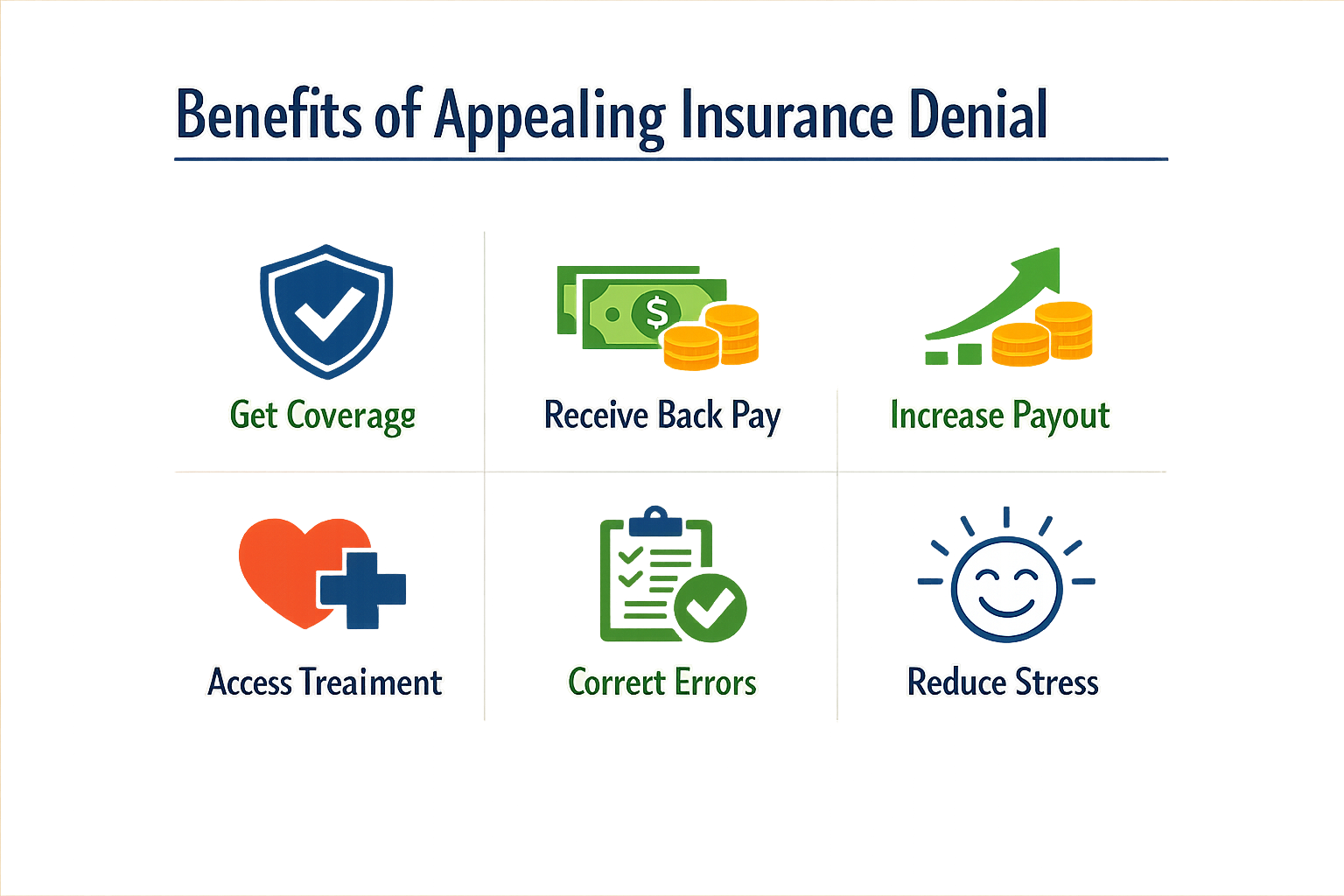
A denial is not final. The provision permits an appeal, and the window to file it is printed on the denial notice. Many claimants assume a denial closes the matter, but the standard requires insurers to outline the appeal procedure in the same document that delivers the denial. The appeal is a separate stage, not a courtesy.
What a Successful Appeal Recovers
A successful appeal reverses the denial and obligates the insurer to pay the claim under the policy terms. The outcome depends on what the appeal demonstrates: either that the insurer applied the policy incorrectly, or that the claimant's proof was sufficient but not recognized. The appeal does not create coverage where none existed, but it does require the insurer to reconsider the record.
When an appeal succeeds, the insurer pays the claim as originally submitted, or pays the portion that the appeal established as covered. The claimant does not receive additional compensation for the delay, unless the policy or applicable regulation provides for interest or penalties on late payment. The appeal closes the failure that the denial opened.
Why Claimants Abandon Valid Appeals
Many claimants do not appeal because they assume the insurer's decision is technically correct or because they lack the documentation to counter it. Others believe the appeal process is adversarial and requires legal representation. The provision permits a claimant to submit an appeal without counsel, and the insurer must review it on the merits.
Understanding the regulatory framework surrounding insurance claims can strengthen your appeal, as it outlines the rights of claimants regarding proof submissions. For example, California Code of Regulations Title 10, Section 2695.4 prohibits insurers from denying a claim based on a claimant's failure to exhibit property unless the insurer documented a reasonable demand and an unfounded refusal. The regulation also prohibits requiring duplicative proofs of claim where coverage may exist under more than one policy issued by the same insurer. These provisions protect claimants from procedural denials that rest on technicalities rather than the substance of the claim.
The Cost of Not Appealing
When you do not appeal, the denial stands, and the insurer's file closes. The claim cannot be reopened later unless new evidence emerges that the policy or regulation explicitly permits as grounds for reconsideration. Most policies do not provide that option. The denial becomes the final record, and any subsequent claim for the same loss or condition will reference it.
Similar to how fire extinguisher inspection requirements mandate documented compliance at specific intervals, insurance appeals require timely submission of the correct proof within the stated window. The appeal is the claimant's opportunity to establish what the initial submission did not, and the insurer must apply the same standard to both.
The appeal is not a request for reconsideration—it is a procedural right that obligates the insurer to review the claim under the terms you present.
How to Successfully Appeal an Insurance Denial
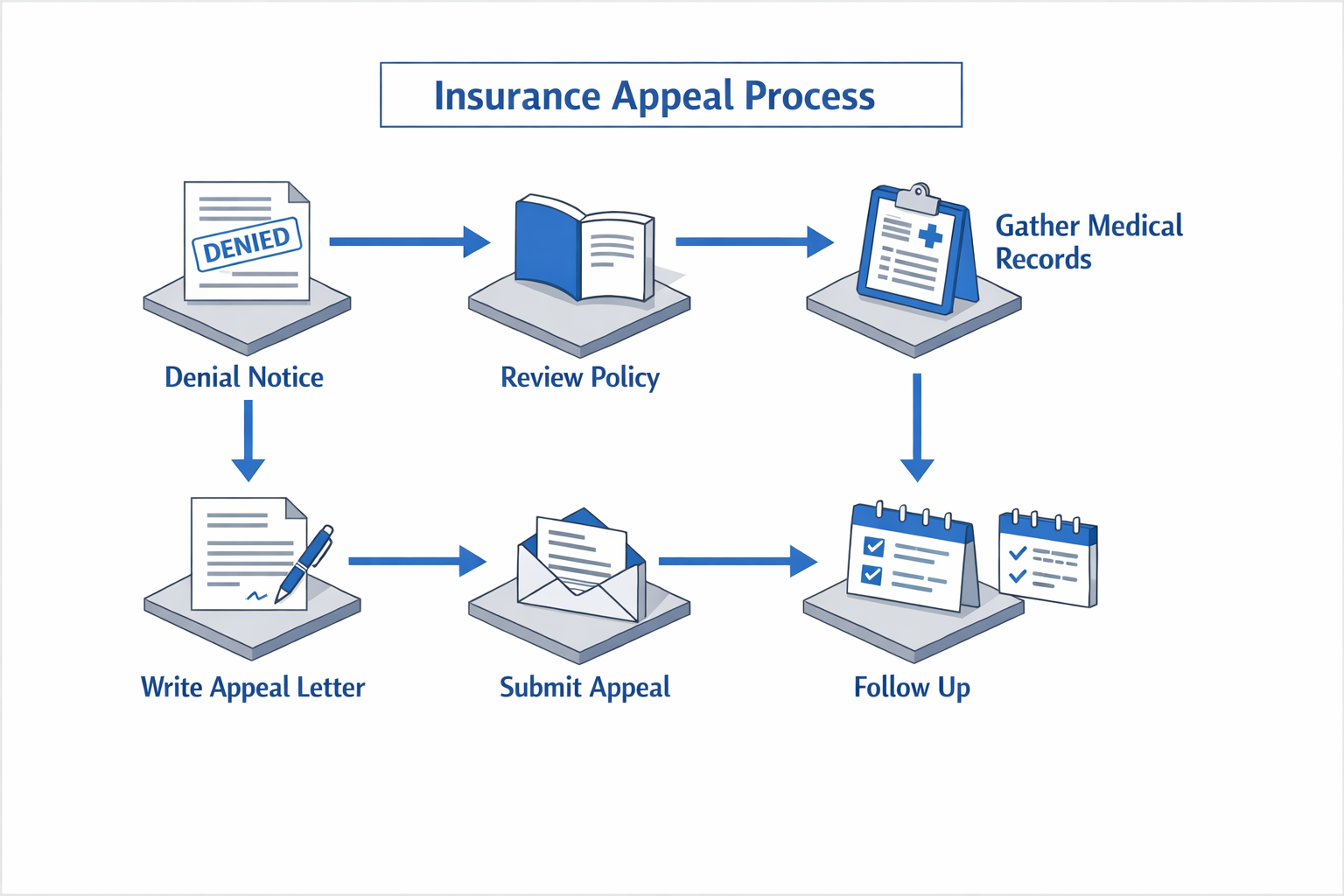
The appeal process is a documented sequence. Each step creates a record that either supports your position or exposes a gap the insurer will cite. The standard requires that claim files contain all correspondence and work papers in sufficient detail to reconstruct events and the insurer's actions pertaining to the claim. When you appeal, you are building a parallel file that meets the same standard.
Step 1: Obtain the Denial Letter and Policy Language
Step 1
Request the denial in writing
If the denial was communicated by phone, ask for it in writing. The written denial must state the reason and cite the policy provision. Without that citation, you cannot confirm whether the denial rests on a coverage exclusion, a documentation gap, or an interpretation dispute. Retain the denial letter and the relevant policy pages it references.
The denial letter is the insurer's opening position. Compare the cited provision to the facts in your claim file. If the insurer states that you failed to provide proof of claim, confirm what documentation you submitted and when. California Code of Regulations Title 10, Section 2695.2(s) defines "proof of claim" as any evidence in the insurer's possession that reasonably supports the magnitude or amount of the claimed loss — whether you submitted it or the insurer obtained it during investigation.
Step 2: Assemble Your Documentation
Step 2
Compile the claim file
Gather every document that supports your claim: photographs, repair estimates, invoices, correspondence, and any notes from phone calls with the insurer. If the insurer adjusted your claim for betterment or depreciation, the adjustment must be discernable, measurable, itemized, and specified as to dollar amount. If those details are missing from the insurer's settlement offer, note the gap.
Your file should mirror the insurer's obligation under Section 2695.3(a): all documents, notes, and work papers that reasonably pertain to the claim, in sufficient detail that events and dates can be reconstructed. If you submitted an estimate and the insurer countered with a lower figure, both estimates belong in your appeal file. If the insurer's estimate omits line items present in yours, document the omission.
Step 3: Draft the Appeal Letter
The appeal letter states your position and directs the insurer to the supporting evidence. Structure it as a short narrative:
- Opening: Reference the claim number, denial date, and the policy provision cited in the denial.
- Statement of facts: Summarize what happened, when you filed the claim, and what documentation you provided.
- Rebuttal: Explain why the denial does not align with the policy language or the facts. If the insurer's estimate underpaid the loss, attach your contractor's estimate and note the discrepancies line by line.
- Request: State what you are asking for — full payment, partial reconsideration, or clarification of the denial reason.
Keep the tone professional. The letter is a record; if the appeal proceeds to further review or litigation, the letter will be read by someone who was not part of the original exchange. Avoid characterizing the insurer's actions as bad faith unless you have documentation that supports that claim. Instead, point to the policy language and the evidence.
Step 4: Submit the Appeal Within the Policy Window
Most policies specify a deadline for appeals — commonly 60 or 180 days from the denial date. Submit your appeal by certified mail or through the insurer's online portal if one is available. Retain proof of submission. If you miss the deadline, the insurer may treat the denial as final, and your options narrow to external review or litigation.
If your policy covers tenant improvements in a commercial lease, understanding how improvement allowances and coverage limits interact can clarify what documentation the insurer expects. For more on how tenant improvement allowances are structured and documented, see Tenant Improvement Allowance for Commercial Spaces.
Step 5: Follow Up and Track the Insurer's Response
Step 5
Monitor the appeal timeline
The insurer must acknowledge your appeal and provide a decision within the timeframe stated in the policy or required by regulation. If the insurer requests additional documentation, provide it promptly and retain copies. If the insurer does not respond by the deadline, send a follow-up letter noting the lapse and requesting a status update.
Document every interaction. If the insurer calls to discuss the appeal, take notes and send a follow-up email summarizing the conversation. If the insurer offers a partial settlement, confirm the offer in writing before you accept. A verbal agreement is not enforceable; the written record is what closes the claim.
The appeal file you build is the same file the regulator will examine if the dispute escalates — complete documentation is not optional.
Step 6: Escalate if the Appeal Is Denied
If the insurer upholds the denial, review the appeal decision for new information. The insurer may cite additional policy language or identify a documentation gap you can address. If the denial still appears unsupported, your next step depends on the policy type and the jurisdiction. Many states require insurers to inform claimants of external review options or regulatory complaint procedures. Pursue those remedies before considering litigation.
Retain the entire appeal file — denial letter, your appeal submission, the insurer's response, and all supporting documents. If you engage legal representation or file a regulatory complaint, that file is your starting point.
Best Practices for Insurance Appeals
The standard requires documentation, and the provision permits you to request it in writing. When appealing a denial, retain every record the insurer provides and ask for anything missing before you authorize the next step. The agreement between you and the carrier includes dispute windows; understanding those intervals matters as much as the substance of your appeal.
Document Every Communication
Retain the record of every phone call, email, and letter exchanged with the insurer. Note the date, time, representative name, and summary of what was discussed. When the insurer states a position orally, ask for it in writing. Written confirmation closes ambiguities that oral statements leave open, and regulators expect a paper trail when a claim escalates.
If the insurer provides a written scope or estimate, the provision requires them to supply you with a copy of each document on which the settlement is based. Any adjustments for betterment or depreciation must be itemized and specified as to dollar amount. Before you accept an adjusted figure, confirm that the justification is discernable and measurable — the regulation does not permit vague reductions.
Understand the Timeline and Extensions
The standard sets intervals for claim decisions. If the insurer requires additional time, they must provide written notice within the original timeframe and specify what additional information they need. When you receive a request for more documentation, respond within the window stated in the notice. Missing a deadline can restart the clock or close your dispute rights under the agreement.
If the insurer invokes an appraisal provision, the process follows the terms specified in the policy and applicable code. The appraisal does not include legal proceedings beyond what the statute permits, and you retain the right to pursue separate legal action on issues unrelated to the appraisal itself.
Maintain Transparency in Your Submissions
Submit complete documentation with each communication. Include proof of claim — any evidence or documentation that reasonably supports the magnitude or amount of the claimed loss. Partial submissions invite requests for clarification, which extend the process and introduce new opportunities for misunderstanding.
When the insurer suggests a specific repair contractor, confirm in writing that you have been informed of your right to select your own contractor. If you accept the insurer's recommendation, the provision requires the insurer to cause the property to be restored in accordance with the estimate and applicable policy terms. The obligated party on that repair work is the insurer, not you, when you accept their referral under those conditions.
Every insurer shall provide written notification to a first party claimant as to whether the insurer intends to pursue subrogation of the claim.
Know What Constitutes Notice of Claim
A notice of claim is any written or oral notification that reasonably apprises the insurer you wish to make a claim. Communications provided solely for informational or incident reporting purposes do not qualify. When you contact the insurer, state clearly that you are filing a claim, not merely reporting an incident. The distinction determines when the insurer's obligations under the policy begin.
Request Subrogation Notification
If the insurer elects to pursue subrogation, they must notify you in writing. If they do not pursue it or discontinue pursuit, the notification must state that any recovery is your responsibility. This disclosure affects whether you retain the right to seek recovery from a third party after the claim closes. Ask for the subrogation decision in writing before you settle.
For commercial property claims, understanding tenant improvement allowance coverage can help clarify which party is responsible for specific improvements when a claim involves leased space.
Common Mistakes to Avoid When Appealing
The appeal process is a documented record. What you submit, when you submit it, and what you omit all become part of that record. Certain errors appear frequently enough that they merit specific attention — not because they are difficult to avoid, but because they are difficult to reverse once they enter the file.
Submitting Duplicate Proof Across Multiple Policies
When coverage may exist under more than one policy issued by the same insurer, the insurer cannot require duplicative proofs of claim from a first-party claimant. Submitting the same documentation repeatedly — serial numbers, invoices, inspection reports — creates confusion in the file and can delay the appeal. If you hold multiple policies with the same carrier, identify which policy you are appealing under and submit the proof once. The insurer's obligation is to process the claim without requiring you to reproduce the same evidence for each policy.
Treating Informational Communication as a Notice of Claim
A notice of claim is any written or oral notification that reasonably apprises the insurer that you wish to make a claim and that a condition giving rise to the insurer's obligations may have arisen. Communications provided solely for informational or incident reporting purposes do not qualify. If you notify the insurer of a condition but do not state that you are filing a claim, the insurer may not treat that communication as a claim trigger — and your appeal timeline may not begin until you submit a formal notice. State your intent clearly. If you are filing a claim, say so. If you are reporting an incident for informational purposes only, note that distinction.
Failing to Document a Reasonable Demand for Property Exhibition
An insurer cannot deny a claim on the basis of your failure to exhibit property unless the file contains documentation of a reasonable demand by the insurer and an unfounded refusal by you, or documentation of a breach of any policy provision providing for the exhibition of property. If the insurer states that you did not make the property available, check the file. If no reasonable demand appears in writing, the denial may not stand. Conversely, if the insurer made a reasonable demand and you did not respond, that refusal becomes part of the record. Respond to exhibition requests promptly, and retain your own copy of the response.
No insurer shall deny a claim on the basis of the claimant's failure to exhibit property, unless there is documentation in the file of reasonable demand by the insurer, and unfounded refusal by the claimant, to exhibit property.
Omitting Proof That Reasonably Supports the Magnitude of the Loss
Proof of claim means any evidence or documentation in the possession of the insurer — whether submitted by you or obtained by the insurer during its investigation — that provides any evidence of the claim and that reasonably supports the magnitude or the amount of the claimed loss. If you submit invoices but omit the inspection report that ties the invoices to the failed component, the insurer may conclude that the proof does not support the magnitude of the loss. The standard is reasonable support, not absolute certainty. If the documentation you provide reasonably connects the loss to the claimed amount, it satisfies the definition. If it does not, the insurer may deny the claim, and your appeal must supply the missing link.
For detailed guidance on compliance intervals and documentation requirements in commercial property contexts, see Fire Extinguisher Inspection Requirements: Monthly and Licensed.
Frequently asked questions
How long do I have to file an appeal?
The window varies by policy and by the type of coverage. Most commercial property policies specify the dispute window in the declarations or the general conditions section. Thirty to sixty days from the date of the denial letter is common, but the agreement controls. Check the date on the denial letter and count from that date, not from when you received it. If the policy permits an extension for good cause, ask for it in writing before the window closes.
Can I appeal more than once?
Most policies provide for an internal appeal followed by an external review if the internal appeal is denied. The internal appeal goes to the carrier's own review process. If that fails, many states require carriers to offer an independent external review by a third party. The policy and the state's insurance code together determine how many levels you have. Read the denial letter — it typically explains the next step and whether a second level exists.
What if I miss the appeal deadline?
Missing the deadline typically closes the dispute window, and the denial becomes final. Some policies permit late filing if you can show good cause — for example, if the carrier sent the denial to an outdated address or if a documented emergency prevented timely response. The carrier is not required to accept a late appeal absent a provision that permits it. If you anticipate missing the deadline, submit a written request for extension before the window closes, stating the reason and the date by which you will file.
Do I need a lawyer to appeal an insurance denial?
The appeal process does not require legal representation, and many commercial property owners file internal appeals without counsel. However, if the claim is large, if the denial involves a coverage interpretation that affects multiple claims, or if the internal appeal fails and you are considering litigation, consult an attorney who practices insurance coverage law. An attorney can review the policy language, identify coverage arguments the carrier did not address, and represent you in external review or court proceedings.
What happens if my appeal is denied again?
If the internal appeal is denied, the policy or state law may provide for external review. External review is conducted by an independent reviewer, often selected from a state-approved list. The reviewer examines the claim file, the policy, and the evidence you submitted, then issues a binding or non-binding decision depending on the state's rules. If external review is not available or if the decision is non-binding and unfavorable, you may have the option to file a lawsuit within the time limit specified by the policy or by state law.
Can the carrier close a claim while an appeal is pending?
The carrier can close the claim file administratively, but the appeal process remains open if you filed within the dispute window. Closing the file does not terminate your right to appeal. However, if the policy includes an acceleration clause that shortens the time to file suit once an internal appeal is denied, the clock starts when the appeal decision is issued, not when the file is closed. Confirm in writing that your appeal was received and is under review.
What documentation should I keep during the appeal?
Retain the original denial letter, the policy declarations and conditions, every document you submit in support of the appeal, every response from the carrier, and every record of phone or email communication. If the claim involves a service agreement or a licensed contractor's report, retain the agreement, the report, and any correspondence about the scope of work or the findings. If the appeal escalates to external review or litigation, you will need to produce this documentation. Organize it by date and by subject so you can locate a specific document quickly.
Conclusion
The appeal process exists because denials are not final. The standard requires a written determination, and the provision permits a formal challenge within the window stated in your policy. What closes a denial is documentation that satisfies the specific grounds cited in the original determination — not general argument, not repeated submission of the same record, but evidence that addresses the stated deficiency.
Retain the record at every stage: the denial letter, the appeal submission with its postmark or transmission confirmation, and any correspondence that follows. The agreement provides a dispute mechanism, and you preserve your position by operating within it. Ask for determinations in writing, verify the date on every notice, and confirm that the obligated party — the insurer named in your policy — signed the response.
Before you authorize payment for a denied service or procedure, establish whether the appeal window remains open. A single procedural misstep — missing a deadline, submitting to the wrong address, failing to include required documentation — can foreclose the remedy that the provision otherwise permits. The report says the claim was denied; what the report actually says about the grounds for denial determines what evidence you must produce to reverse it.
If you are navigating a denial related to commercial property compliance or tenant improvement coverage, understanding the documentation requirements can strengthen your position. Review Tenant Improvement Allowance for Commercial Spaces to confirm what records your lease and service agreements require you to retain.
The edition matters, the interval matters, and the party obligated to perform the appeal matters. Read the provision to the end, identify the remedy it permits, and stop where the record stops. The appeal is not a negotiation; it is a procedural right exercised within defined limits, and those limits are stated in the policy you hold.