Introduction
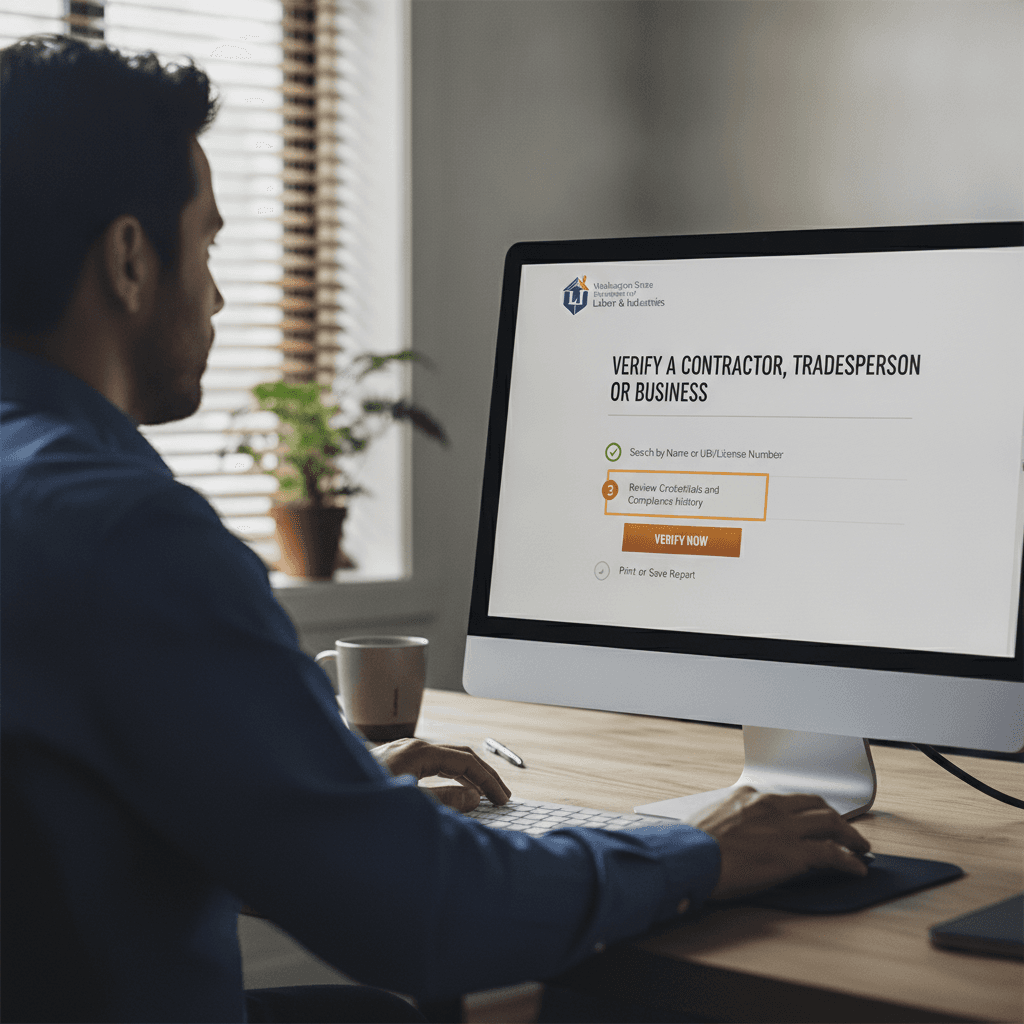
To verify contractor Washington State L&I status is the first step before authorizing any work that falls under Washington's contractor registration statutes. The state's Department of Labor & Industries operates a public lookup system that shows whether a contractor holds an active registration, maintains workers' compensation coverage, and carries the bond the law requires. That lookup is not optional. It is the first line in the chain of custody that runs from bid acceptance through final payment, and it closes the question of whether the entity on the proposal is permitted to perform the work.
The provision exists because unregistered contractors create liability that transfers to the property owner. If an unregistered contractor injures a worker on site, the owner may become the statutory employer for workers' compensation purposes. If the contractor walks away mid-job, the bond that should have been in place is not there to complete the work. If a mechanics lien follows, the absence of registration complicates the owner's defenses. The L&I verification step prevents those failures by confirming, at the time of bid, that the contractor meets the baseline the statute sets.
Commercial property owners who manage buildings subject to annual fire alarm inspection costs or other mandated service intervals know that service agreements often span multiple years. The contractor's L&I status at signing does not guarantee the status remains active for the full term. The record you pull today is a snapshot. If the agreement renews automatically, or if work spans multiple calendar years, the verification step repeats at each renewal or at the start of each new compliance period. Ask for it in writing, and retain the printout with the executed agreement.
The verification process takes minutes and costs nothing. The alternative—discovering mid-project that the contractor was never registered—costs considerably more. What the L&I lookup actually says is what you rely on when the authority having jurisdiction asks for proof of compliance, or when a dispute over scope, payment, or workmanship lands on your desk. The record you retain is the record that closes the question.
What Happens When You Skip Contractor Verification?
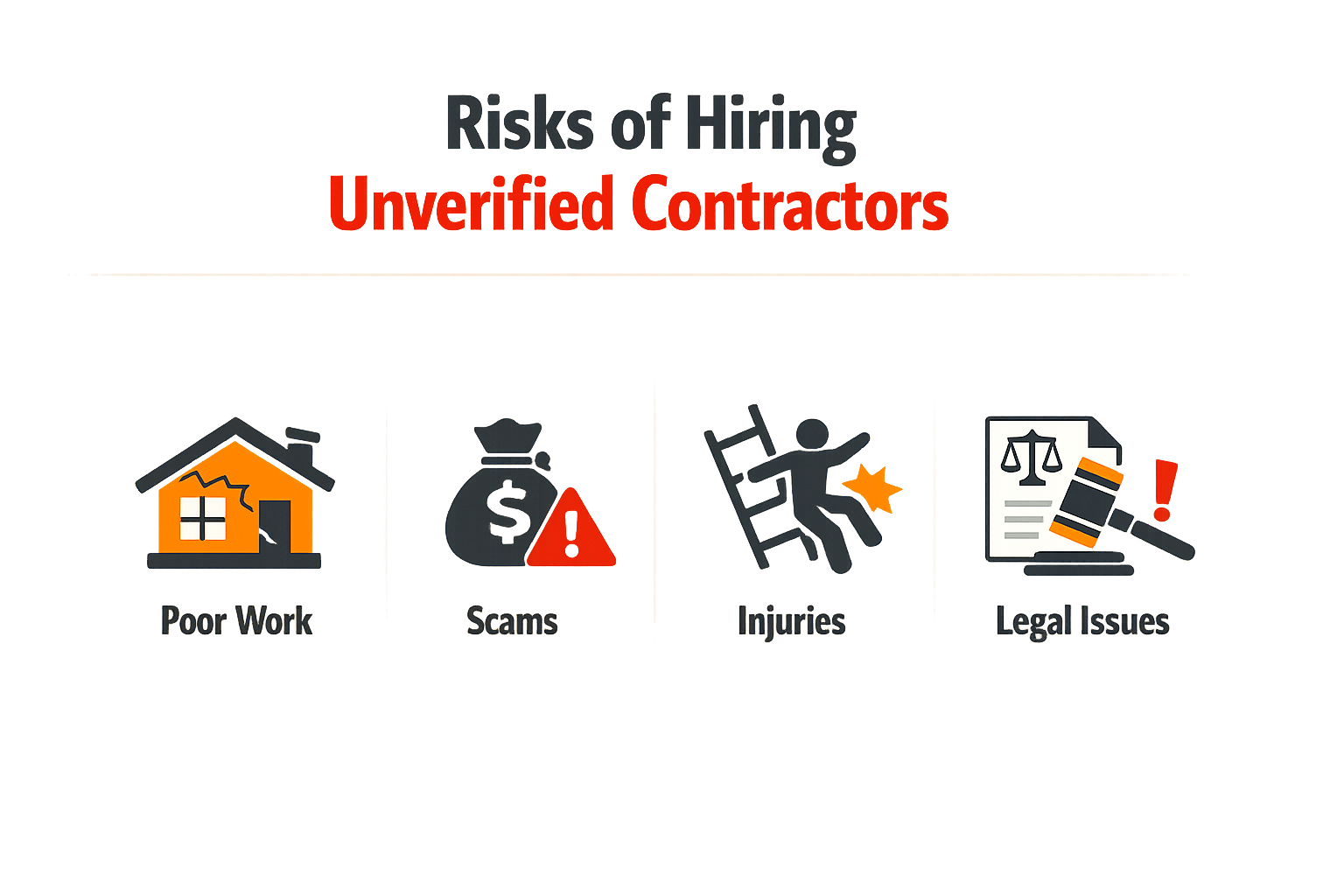
Hiring a contractor without verification creates exposure on three fronts: the contractor may lack active registration, may carry no workers' compensation coverage, and may leave the owner with mechanics lien liability when subcontractors or suppliers go unpaid. Each failure surfaces at a different point in the project, and each carries a distinct remedy window.
When the Problem Appears
The unregistered contractor typically emerges during permit application, when the jurisdiction checks the registration number against state records. The uninsured contractor surfaces after a workplace injury, when the injured worker files a claim and the state discovers no policy on file. The unpaid subcontractor appears weeks or months after the work stops, when a preliminary notice or mechanics lien arrives at the property.
The owner who authorizes work without verifying coverage assumes the workers' compensation obligation by default. The state treats the property as the worksite, and the owner as the entity responsible for ensuring coverage exists. When no policy covers the injured worker, the claim proceeds against the owner's policy or, where none applies, against the owner directly.
The Documentation Gap
Most contractors provide a certificate of insurance at bid, but the certificate shows only that a policy existed on the date of issue — it does not confirm the policy remains active, that premiums remain current, or that the coverage applies to the specific trade performing the work. A certificate issued sixty days before the work starts may describe a policy that lapsed thirty days before the crew arrived.
The registration check closes that gap. The state maintains current status for every registered contractor, including active workers' compensation account standing. A contractor whose policy lapsed or whose account shows a balance due appears in the state system with a status other than active, and that status updates within days of the coverage lapse.
The certificate describes the past; the state registration describes the present.
Lien Exposure and Recording Windows
When a subcontractor or supplier remains unpaid, the claimant may record a mechanics lien against the property. The lien remains enforceable for a statutory period after the work stops, and the owner's payment to the general contractor does not extinguish it. The lien claimant may foreclose on the property to satisfy the debt, and the owner's only defenses are payment to the claimant directly or proof that the claimant missed the recording deadline.
The deadline varies by claimant type. Under California law, a claimant other than the direct contractor must record the lien within ninety days after completion of the work of improvement, or thirty days after the owner records a notice of completion or cessation, whichever comes first. The direct contractor receives a longer window — ninety days after completion or sixty days after the notice, whichever is earlier. These windows run independently of the owner's payment schedule, and missing the deadline by one day extinguishes the lien.
Verifying the contractor before the work starts does not prevent a lien, but it confirms that the contractor maintains an active account with the state and that workers' compensation coverage applies to the crew. That confirmation narrows the owner's exposure to contract disputes and payment timing, rather than to coverage gaps that shift the entire obligation onto the property.
How Do You Verify Contractor Washington State L&I Status?
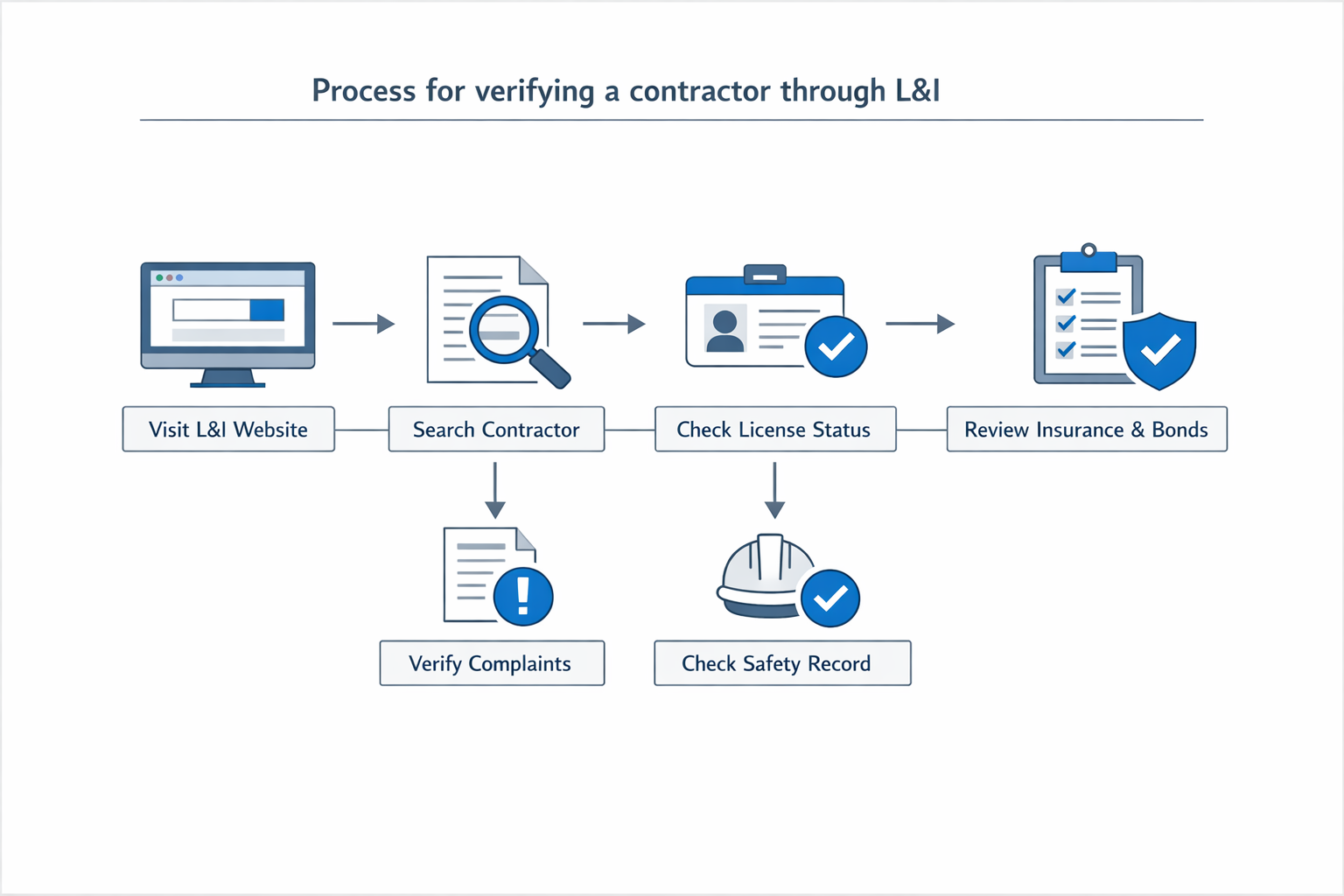
The standard procedure for confirming a contractor's standing is to use the online verification tool maintained by the licensing authority. The tool permits searches by contractor name, registration number, or geographic location, and returns current license status, coverage dates, and any public record of enforcement action.
Step 1
Collect the contractor's registration number
Ask the contractor for their full legal name and registration number before the first meeting. If they provide only a business name, request the individual or entity name under which the license is held. A contractor operating under multiple names must hold a separate registration for each, or document that the alternate name is a registered DBA tied to the primary license.
Step 2
Access the online verification portal
Navigate to the licensing authority's contractor verification page. The search function accepts a registration number, a full legal name, or a ZIP code to return all active registrations in that area. Enter the information exactly as the contractor provided it; minor spelling variations may return no results even when the license is valid.
Step 3
Review the returned license record
The result page displays the license status, the issue and expiration dates, the classification of work the license permits, and whether workers' compensation and liability coverage are current. A license marked "active" with current coverage dates satisfies the initial verification requirement. Any notation of suspension, revocation, or lapsed coverage requires a written explanation from the contractor before work begins.
Verify contractor Washington State L&I coverage independently
The licensing authority's database shows whether the contractor has filed proof of coverage, but it does not guarantee that the policy remains in force or that the coverage limits meet the project's requirements. Request a certificate of insurance directly from the contractor's carrier, naming your entity as the certificate holder. The certificate must show the policy number, the effective and expiration dates, and the per-occurrence and aggregate limits. Compare the certificate's policy number to the number on file with the licensing authority; a mismatch indicates that the contractor has changed carriers and may not have updated their registration.
When the project involves work that triggers preliminary notice requirements, the contractor must provide the owner's name and address and, if applicable, the construction lender's contact information. This obligation is separate from the license verification, but it confirms that the contractor understands their statutory duties and has identified the correct parties for notice purposes.
The verification process stops at the record the authority maintains; it does not extend to evaluating the contractor's past performance or financial stability.
Once you have confirmed active license status, current coverage, and the correct classification for the work, retain a copy of the verification result page, the certificate of insurance, and any correspondence in which the contractor provided their registration number. These records establish that you performed the required checks at the time of hire, and they are the first documents an authority having jurisdiction will request if a coverage dispute or a lien claim arises later.
For projects that involve fire extinguisher service cost or other mandated compliance intervals, verify that the contractor's classification permits the specific inspection or service work the standard requires. A general contractor license does not authorize all specialized inspections, and the licensing authority's database will show the permitted scope of work under the contractor's classification.
Tips and Tricks

Verification is not a one-time event. The contractor's L&I account status, workers' compensation coverage, and bond can lapse between the day you check and the day work begins. Set a calendar reminder to re-verify the week before the scheduled start date, and confirm coverage again if the project extends beyond the original completion window.
Check the Vehicle Before Authorizing Work
When a contractor arrives on-site, the vehicle identification tells you whether the entity you vetted is the entity performing the work. Licensed contractors in certain trades are required to display their name, permanent business address, and license number on each side of every commercial vehicle used in the business, with letters and numerals not less than 1.5 inches high. Failure to comply with identification requirements can trigger disciplinary action. If the vehicle displays a different name or no identification at all, ask for written confirmation that the crew is authorized to work under the verified license.
Retain the Verification Records
The L&I verification printout, the bond confirmation, and the insurance certificate are not just pre-hire paperwork — they are the documents that close a dispute about whether the contractor was properly licensed and insured on the day work began. Store them with the contract and any change orders, and keep them for the full retention period required by your jurisdiction. If a mechanics lien is recorded or a worker files an injury claim, the first question an adjuster or attorney will ask is whether you verified coverage before the work started.
The verification printout is not decoration — it is the record that shows you performed due diligence before authorizing the work.
Confirm the Obligated Party on the Agreement
The service agreement must name the same legal entity that appears on the L&I verification and the bond. If the verification shows "ABC Mechanical LLC" and the agreement shows "ABC Services" or a personal name, the coverage does not follow the agreement. Before you sign, confirm that the entity name matches exactly, and check whether a personal guarantee block appears on the signature page. The guarantee does not extend the contractor's license or bond — it identifies who is personally liable if the business defaults.
Ask for It in Writing
If the contractor tells you that coverage is current but the L&I portal shows a lapse, ask for written confirmation from L&I or the surety before you proceed. Verbal assurances do not close a coverage gap, and a contractor who cannot produce documentation within 24 hours is not in compliance. The same rule applies to insurance certificates: if the contractor says the certificate is in the mail, the work does not start until the certificate is in your file.
Conclusion
Verifying a contractor through Washington State L&I closes the gap between what a contractor says and what the record shows. The state maintains the database because compliance is not optional — workers' compensation coverage, licensing status, and bond standing are not negotiable items. A building owner who skips the verification step discovers the gap only when a lien lands, a claim is denied, or an inspector opens a violation that the unlicensed entity cannot close.
The lookup is a five-minute task. The alternative is a protracted dispute over who owes what, who was authorized to perform the work, and which entity the agreement actually bound. Verification does not guarantee performance, but it confirms that the contractor meets the minimum statutory requirements to operate in Washington. That confirmation matters when the authority having jurisdiction asks for documentation, when an injury triggers a claim, or when a mechanics lien is recorded and the obligated party becomes a question of fact.
The record on file with L&I is the record that counts. What a contractor represents in a proposal, what appears on a business card, and what a trade reference says are all secondary to what the state database confirms. Before you authorize the work, verify the contractor through Washington State L&I. Retain the printout with the date stamp, and attach it to the executed agreement. That printout is the documentation you produce when the next question arises — and in commercial property management, the next question always arises.
Frequently asked questions
How often should I verify contractor Washington State L&I status?
Verify at the time of bid, again the week before work starts, and at each annual renewal if the service agreement spans multiple years. The contractor's registration, bond, and workers' compensation coverage can lapse at any time, and the L&I database reflects changes within days.
What does it mean if the L&I lookup shows "inactive" status?
An inactive status means the contractor's registration has lapsed, expired, or been suspended. The contractor is not legally permitted to perform work in Washington until the status returns to active. Do not authorize any work until you receive written confirmation from L&I that the registration is current.
Can I rely on the insurance certificate the contractor provides?
The certificate shows that a policy existed on the date of issue, but it does not confirm the policy remains in force or that premiums are current. Always verify coverage directly through the L&I portal and request a certificate issued within the current week.
What should I do if the contractor's L&I number does not appear in the database?
Ask the contractor to provide their full legal name and confirm the registration number. If the number still does not appear, the contractor is not registered and cannot legally perform work in Washington. Do not proceed until the contractor obtains a valid registration.
Does verifying a contractor prevent mechanics liens?
No. Verification confirms that the contractor is registered and insured, but it does not prevent subcontractors or suppliers from filing a lien if they remain unpaid. The verification step narrows your exposure to coverage gaps, but you must still manage payment obligations to avoid lien claims.
Related reading
Contractor Identification: Verify Credentials and Avoid Fraud
Related reading
Contractor Assessment Checklist: Key Verifications Before Signing