
Introduction
A lien recorded after payment creates immediate confusion for commercial property owners. The invoice was paid, the check cleared, and the contractor signed a release—yet the county recorder shows a new encumbrance against the property. This situation arises most often when payment stopped somewhere in the contractor chain, leaving a subcontractor or material supplier unpaid despite the owner's good-faith payment to the general contractor.
California lien law permits a direct lien for the lesser of the reasonable value of work provided or the price agreed between the claimant and whoever contracted for that work. The lien is not automatically capped by the prime contract price the owner signed. When a subcontractor files, the lien reflects what the general contractor owed them, not what the owner paid at the top of the chain. This structure protects parties who provided labor or materials but never received payment, even when the property owner believes the matter closed.
Understanding filing a complaint with the California Department of Insurance can help if payment disputes involve bonded contractors or insurance claims. The distinction between paying the contractor and confirming payment reached the claimant determines whether the lien was properly recorded. A lien does not extend to work not included in a direct contract or written modification if the claimant had actual or constructive notice of those contract limits before providing the work. The filing of a contract or modification with the county recorder provides that constructive notice.
The owner's obligation is to retain documentation: the contract, all written modifications, payment records showing the payee and date, conditional and unconditional lien releases, and any correspondence establishing who was owed what amount. When a lien recorded after payment appears on your property record, the first question is whether the claimant had notice of the contract terms before performing work, and the second is whether payment reached the claimant or stopped upstream. Both answers depend on records the owner produces, not on what the general contractor represented at closing.
Why Does a Lien Recorded After Payment Appear?
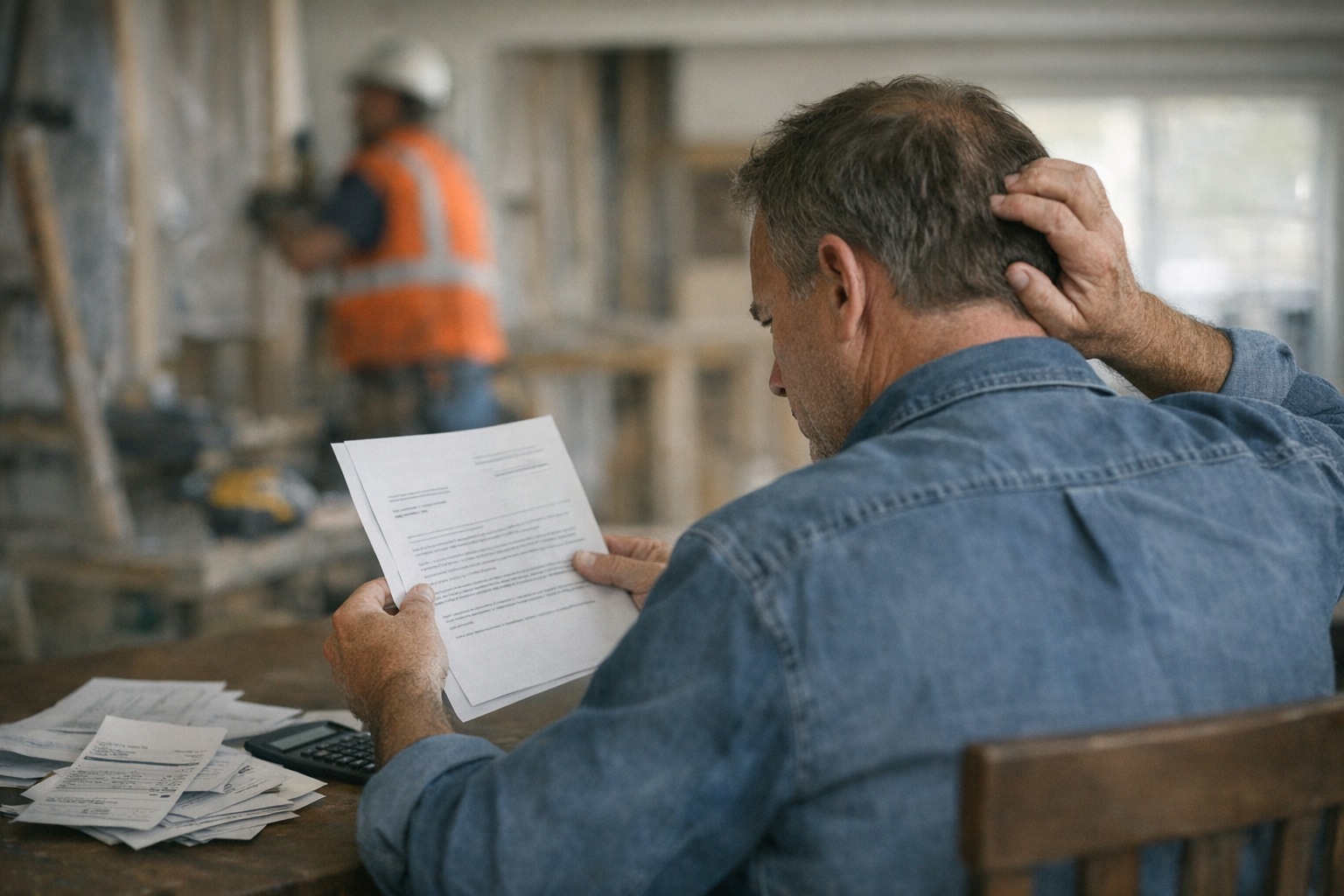
A lien appears on your property record for design services you already paid. The design professional filed the claim after you cut the check, and now the county shows an encumbrance against your site. The lien amount does not match what you paid, and the work of improvement the professional was hired to design never commenced. You retained the canceled check, the signed contract, and proof of payment — yet the lien remains on record, clouding title and blocking refinance or sale.
The California Civil Code permits a design professional to record a lien on the site even when the planned work of improvement has not started, provided the landowner who contracted for the services is also the owner of the site at the time of recordation. The lien attaches from the date of recordation, not from the date of the contract or the date services were performed. That timing creates a window in which payment and recordation can cross paths, leaving an owner who paid in full facing a recorded claim that appears valid on its face.
When a Lien Records Despite Payment
The statute reduces the lien amount by any deposits or prior payments made under the contract, but it does not prevent recordation when those payments satisfy the full obligation. A design professional may record a claim of lien after default or refusal to pay, and the definition of default is not limited to zero payment — partial payment disputes, disputed change orders, or disagreements over scope can all trigger a lien filing. If the professional believes a balance is owed and records a claim before your payment clears or before the professional acknowledges receipt, the lien goes on record and remains there until released or expunged by court order.
No lien created under this chapter affects or takes priority over the interest of a purchaser, lessee, or encumbrancer if that interest was duly recorded before the claim of lien. If you refinanced or sold the property before the lien was recorded, the lien does not displace those prior interests. But if the lien records first, it encumbers the property until resolved, and title companies will not close a transaction with an unresolved mechanics lien on record.
The Permit Requirement and Lien Validity
A design professional cannot record a claim of lien unless a building permit or other governmental approval for the work was obtained in connection with their services. If no permit was ever issued, the lien may be invalid from the outset — but the county recorder does not verify permit status before accepting the filing. An invalid lien still clouds title until you challenge it, and challenging it requires either negotiation with the claimant or a court petition to expunge.
The lien automatically expires and is null and void on the occurrence of either the commencement of the work of improvement for which the design professional provided services, or the expiration of 90 days after recording the claim if the work does not commence. If construction started, the design professional's lien converts or expires under the statute's own terms. If 90 days pass without commencement, the lien expires by operation of law — but again, the expired lien remains on the recorded document until someone files a notice of expiration or obtains a court order confirming it.
Solution Steps
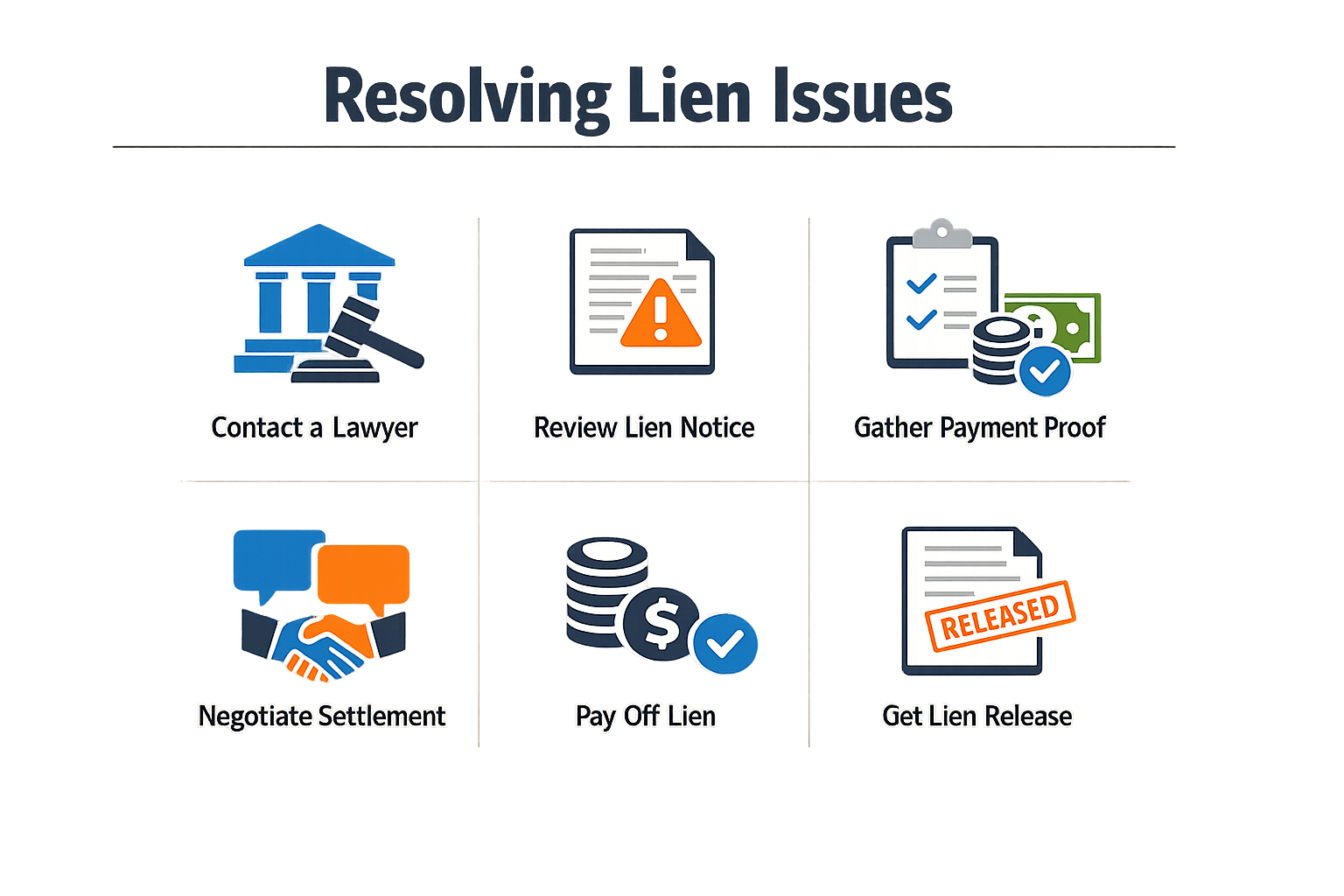
When a lien recorded after payment appears on your property, the record determines what happens next. The steps below assume you have documentation showing payment was made and accepted. If your records are incomplete, establish what you can prove before you proceed.
Verify the Recording Date and Deadline
A claimant other than a direct contractor must record the claim of lien within ninety days after the completion of the work, or within thirty days after the owner records a notice of completion or cessation — whichever comes first. Pull the recorded lien from the county recorder and compare its filing date to the date work stopped. If the lien was recorded outside that window, the claim may be unenforceable on its face.
Step 1
Obtain the recorded claim of lien
Request a certified copy from the county recorder's office. The document will show the claimant's name, the amount claimed, the date of recording, and a description of the work. Check that the property description matches your parcel.
Step 2
Compare the lien amount to your payment records
Line up the lien's stated demand against your cancelled checks, wire confirmations, or signed receipts. If you paid the general contractor in full, determine whether the lien claimant is a subcontractor or material supplier who was not paid by that contractor. The lien attaches to your property for the reasonable value of work provided, even if you already paid someone else.
Step 3
Identify the entity that recorded the lien
Confirm whether the claimant is the party you contracted with or a downstream supplier. If the lien names a subcontractor you never hired, your dispute is with the general contractor who failed to pay them, but the lien remains on your property until it is released or expunged.
Demand a Release or File to Expunge
Once you have verified your payment and the lien's timeliness, send the claimant a written demand for release. Include copies of your payment documentation and a statement that the amount claimed was paid in full. If the claimant does not respond or refuses to release, you may petition the court to expunge the lien. That proceeding requires you to post a bond or deposit, and the court will determine whether the lien was valid.
If the lien was recorded by a subcontractor after you paid the general contractor, establish whether the general contractor is still solvent and whether your contract required lien waivers before final payment. A missing waiver does not erase the lien, but it may give you a claim against the contractor for indemnity. For guidance on related disputes involving service providers, see our article on filing a complaint with the California Department of Insurance. When disputes involve delayed responses from insurers or adjusters, understanding the insurance adjuster contact timeline can help you track whether regulatory deadlines apply.
Preserve All Records During the Dispute
Retain every payment record, contract, change order, and piece of correspondence related to the work. If the lien proceeds to litigation, the court will examine what you paid, when you paid it, and what the claimant was owed. A missing document can turn a straightforward release into a prolonged dispute. Keep copies of the recorded lien, your demand letter, and any response from the claimant in a single file that you can produce on request.
Tips and Tricks
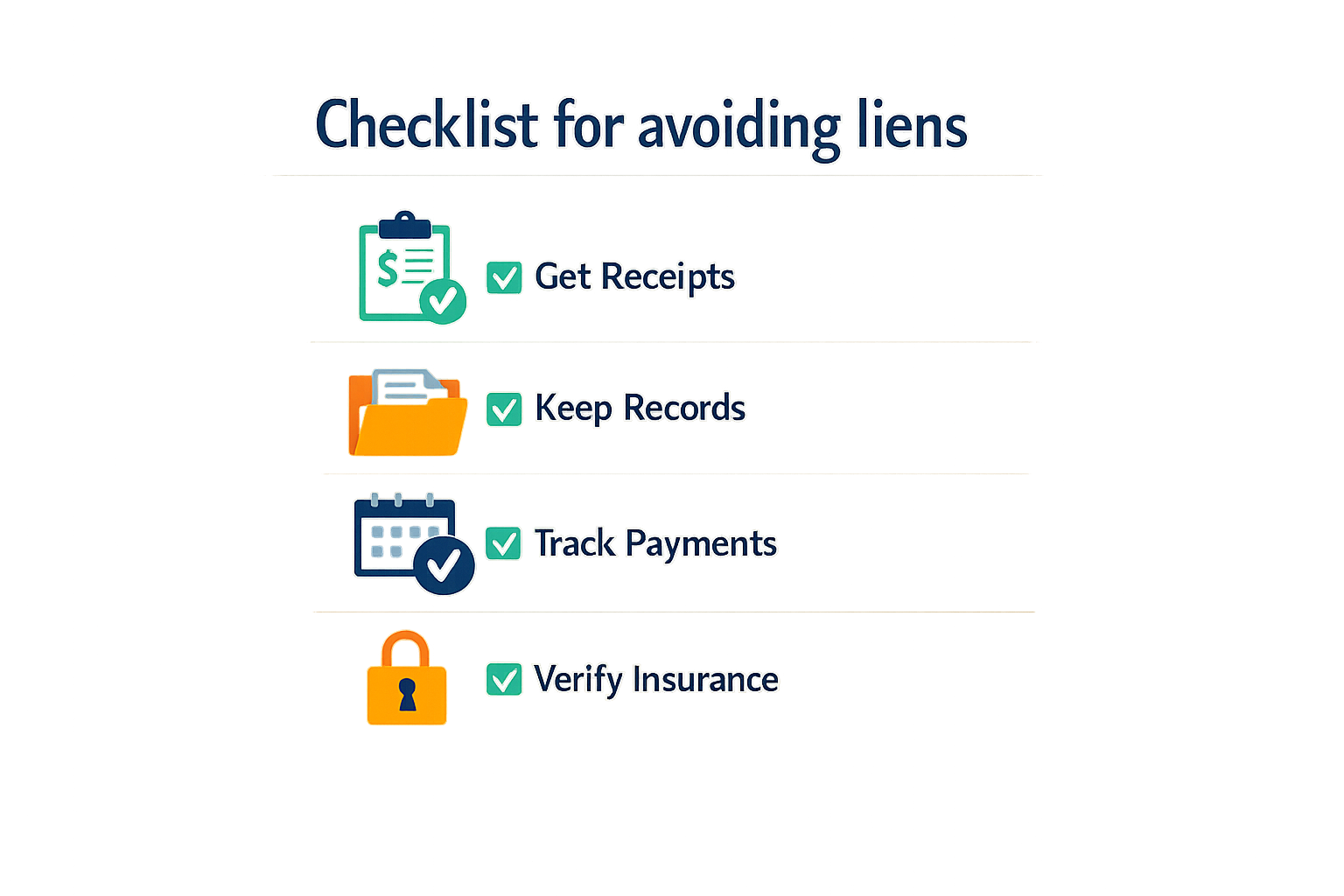
Retain every payment instrument and every proof of receipt. A cancelled check is not sufficient if the claimant disputes what the payment covered. The owner's record must tie the amount to the specific work, by date and by invoice number, and show that the recipient acknowledged it in writing.
Document the Chain Before Work Begins
Establish who contracted for the work and who performed it. If a general contractor hired a subcontractor, the owner's payment to the general does not automatically satisfy the subcontractor's claim. The lien attaches to the interest of the person who contracted for the work, and it can attach to the interest of a person who did not contract if the work was provided with their knowledge. A notice of nonresponsibility, recorded within ten days of learning about the work, protects an owner who did not authorize it.
Keep a copy of every contract and every written modification. A lien does not extend to work not included in a direct contract or a modification if the claimant had actual knowledge or constructive notice of the contract's provisions before providing the work. Filing the contract or modification with the county recorder gives constructive notice to all parties.
Separate Payment Records by Phase and by Party
When multiple parties provide work on the same property, designate the amount due for each separately. A claimant may record one claim of lien on two or more works of improvement if they have the same owner or were contracted by the same person, but the claim must designate the amount due for each work. The owner's payment records should mirror that structure so that a dispute over one phase does not cloud the entire project.
The lien is a direct lien for the lesser of the reasonable value of the work or the price agreed to by the claimant and the person who contracted for it.
If a contractor provides work outside the scope of the written agreement, document the change order immediately. The lien amount is not limited by the contract price for the work of improvement except as specified in statute, but a written modification that both parties signed establishes what the owner agreed to pay and what the claimant agreed to accept.
Verify Entity Identity and Signature Authority
Confirm that the person signing a lien waiver has authority to bind the entity that performed the work. A waiver signed by an employee without authority does not release the claim. Ask for the signer's title and, if the entity is a corporation or LLC, ask for a corporate resolution or an operating agreement excerpt showing signature authority. Retain that documentation with the waiver.
For more guidance on resolving disputes with agencies and documenting your position, see Filing a Complaint With the California Department of Insurance.
Conclusion
A lien recorded after payment does not mean the owner failed to pay — it means the payment did not reach the party who recorded the lien, or the recording party disputes what the payment covered. The owner's obligation is to establish who was paid, when, and for what scope of work. That record closes the question of whether the owner performed its duty under the prime contract. What happens between the general contractor and the subcontractor is a separate dispute, and the owner is not a party to it unless the lien statute makes the owner responsible for verifying payment down the chain.
The lien laws operative from July 1, 2012, establish priority based on when work commenced and when encumbrances were recorded, not on when payment cleared. A lien that attaches after commencement of work can take priority over a mortgage or deed of trust that was unrecorded at commencement, even if the owner paid the general contractor in full and on time. That priority structure does not make the owner liable for the unpaid subcontractor's claim, but it does mean the owner must produce the payment record to establish that the lien was recorded in error or that the dispute lies elsewhere in the payment chain.
Retain every payment instrument, lien waiver, and progress invoice tied to the work of improvement. When a lien recorded after payment appears on your title, produce the record showing what was paid, to whom, and on what date. If the general contractor received payment and failed to pay the subcontractor, the lien statute may permit the subcontractor to proceed against the general contractor's bond or the owner's retention, but the owner's defense is the contemporaneous record of payment to the party named in the prime contract. Ask for the lien claimant's proof of non-payment in writing, and compare it to the payment record before authorizing any second payment or settlement.
For guidance on how regulatory timelines and documentation requirements apply in related contexts, see Filing a Complaint With the California Department of Insurance. The principle is the same: the record you produce determines whether the claim proceeds or fails, and the window to produce it is defined by statute, not by negotiation.
FAQ
Can a lien be recorded after I paid the contractor in full?Yes. A lien recorded after payment can appear when a subcontractor or supplier was not paid by the general contractor, even if you paid the prime contractor in full. California law permits the unpaid party to file a lien against your property for the reasonable value of work provided.
How long does a subcontractor have to file a lien in California?A subcontractor must record a claim of lien within ninety days after the completion of the work, or within thirty days after the owner records a notice of completion or cessation — whichever comes first.
Does paying the general contractor protect me from subcontractor liens?No. Payment to the general contractor does not automatically satisfy downstream claims. The lien attaches to your property for work provided by parties the general contractor failed to pay, even when you fulfilled your contract obligations.
What should I do if a lien is recorded after I already paid?Obtain a certified copy of the recorded lien, compare the claim amount to your payment records, and send the claimant a written demand for release with proof of payment. If the claimant does not respond, you may petition the court to expunge the lien.
Can I prevent a lien from being recorded?Request conditional and unconditional lien waivers from all parties in the payment chain before releasing final payment. A waiver signed by the party you paid should name the property, describe the work, state the amount paid, and confirm no further claims will be filed.
Related reading
How Does a Mechanics Lien Work: Mechanics Lien for Building Owners