Introduction
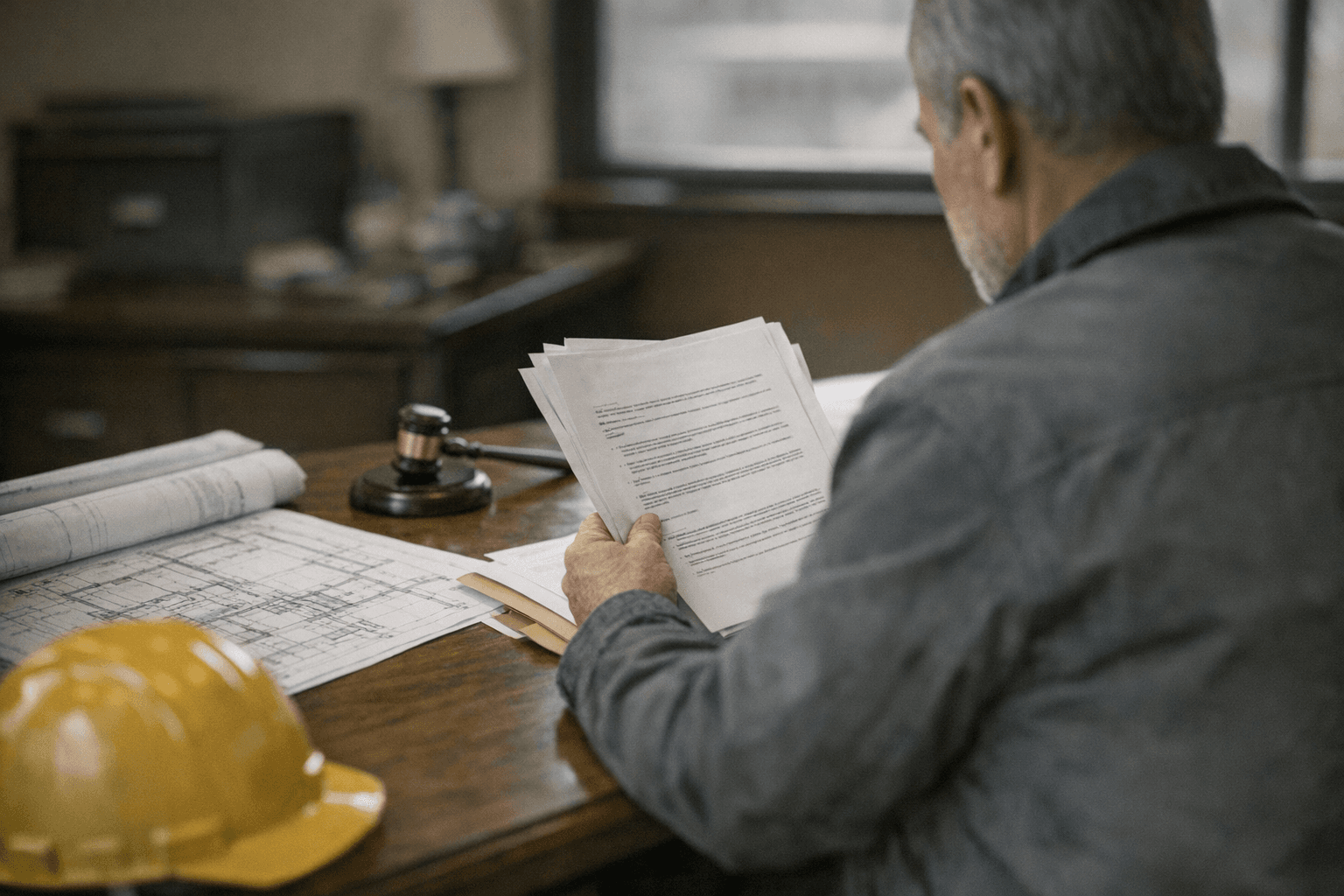
A mechanics lien operates as a security interest recorded against real property. When a contractor, subcontractor, material supplier, or design professional contributes labor or materials to a building project and does not receive payment, California law permits that party to file a lien claim against the property itself. The lien attaches to the owner's title and remains until the underlying obligation is satisfied or the lien is released through a prescribed legal process.
The mechanics lien framework applies broadly. It covers work of improvement on commercial buildings, site improvements such as grading or utilities, and professional services from architects and engineers. Each category follows specific notice requirements and recording deadlines. Owners who approve work, sign contracts, or authorize changes trigger obligations that flow through to their property title when payment disputes arise.
Understanding how these liens function matters because the recorded claim affects an owner's ability to refinance, sell, or transfer the property. A lien does not assert that the owner breached a contract or acted improperly. It establishes that someone with statutory lien rights performed work on the property and has not been paid. The lien shifts the payment dispute from a simple contract matter between two parties to an encumbrance that follows the real estate. Owners who manage compliance intervals and service agreements on commercial buildings encounter mechanics lien exposure whenever they engage contractors for fire alarm service, sprinkler system retrofits, or structural improvements. For property-related disputes that may arise after construction work, building owners should understand the insurance adjuster contact timeline that governs claim handling in California.
The lien operates independently of the direct contractual relationship. An owner who contracts with a general contractor may face a lien filed by a subcontractor or supplier the owner never hired. The statutory scheme permits parties at multiple tiers of the contracting chain to assert lien rights. This structure protects those who contribute to a project but lack direct privity with the property owner. It also means that paying the general contractor does not automatically extinguish lien rights held by unpaid downstream parties.
Problem Statement
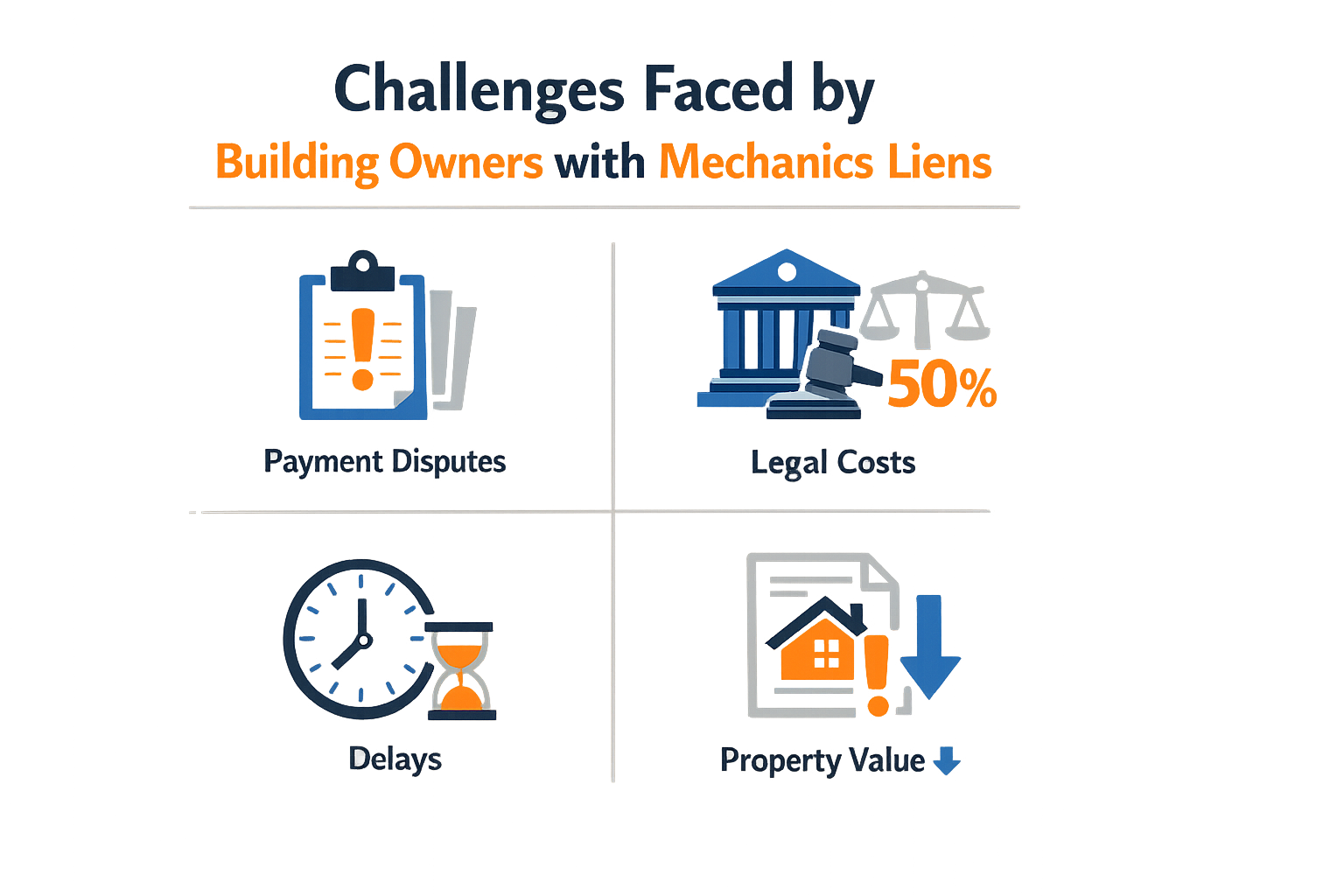
A mechanics lien recorded against your property creates a cloud on title that can halt refinancing, prevent a sale, and expose the property to foreclosure — even when you paid your contractor in full. The lien attaches to the real property itself, not to the contracting relationship, and the statute permits subcontractors and suppliers you never hired to assert claims directly against the building.
When Payment to the Contractor Does Not Close the Lien
California Civil Code permits unpaid subcontractors, suppliers, and laborers to record a mechanics lien against the property where they performed work, regardless of whether the owner satisfied the prime contract. The lien attaches to the interest of the person who contracted for the work, and it extends to any person whose property received the benefit of that work with their knowledge. Payment to the general contractor does not extinguish a subcontractor's statutory right to file.
The claim of mechanics lien must be a written statement, signed and verified by the claimant, containing the claimant's demand after deducting all just credits and offsets, the name of the owner or reputed owner if known, a general statement of the kind of work furnished, and the name of the person by whom the claimant was employed or to whom the claimant furnished materials. The statute does not require the owner to have directly contracted with the lien claimant, and it does not require the owner to have knowledge of nonpayment before the lien is recorded.
Liability Without Direct Contract
An owner's interest in real property is subject to the lien if work for which the lien is claimed was provided with the knowledge of that owner, unless the owner gives notice of nonresponsibility under the statute. The provision creates exposure even when the owner did not select the subcontractor, approve the subcontractor's bid, or receive notice that the subcontractor was unpaid. The lien attaches to the property, and the owner must address the claim to clear title.
For building owners managing insurance adjuster contact timeline obligations or other compliance intervals, a mechanics lien dispute diverts resources and introduces uncertainty into routine property operations. The recorded lien remains on the public record until it is released, expires by statute, or is discharged through litigation or settlement. Title companies will not insure over an active lien, and lenders will not fund transactions against encumbered property.
The Gap Between Contract Performance and Lien Release
The statute permits a claimant to record one claim of lien on two or more works of improvement, provided the works have or are reputed to have the same owner or the work was contracted for by the same person, and the claimant designates the amount due for each work of improvement. This aggregation provision can result in a single lien that clouds multiple parcels, complicating resolution when only one project is in dispute.
An owner who receives a mechanics lien faces immediate pressure to resolve the claim, verify the underlying debt, and determine whether the lien was timely and properly recorded. The process requires legal review, and the owner's obligation to clear title does not wait for the contractor and subcontractor to resolve their payment dispute. The lien creates a present encumbrance, and the owner must act to protect the property.
Solution Steps
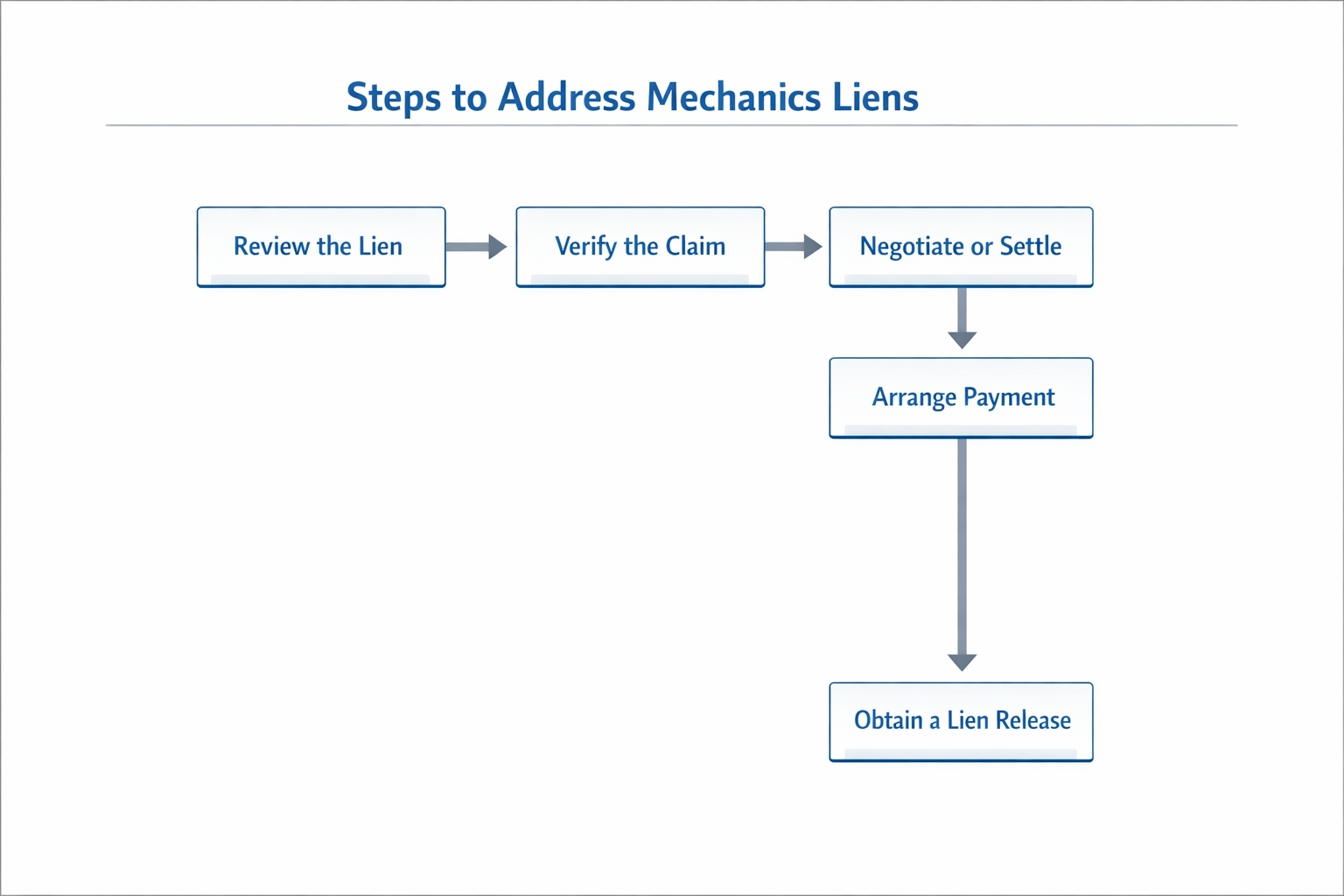
When a mechanics lien is recorded against your property, the standard requires you to act within defined windows. The claim itself is a written statement, signed and verified by the claimant, containing specific elements. California Civil Code requires the statement to include the claimant's demand after deducting all credits and offsets, the owner's name or reputed owner if known, a general statement of the kind of work furnished, and the name of the person by whom the claimant was employed or to whom they furnished materials.
Step 1
Verify the claim contents
Obtain a copy of the recorded claim from the county recorder's office. Check that it contains the mandatory elements: the demand amount, your name as owner, the work description, and the claimant's address. A claim missing these elements may be defective, but do not assume defects void the lien without consulting counsel.
Step 2
Confirm payment status with the direct contractor
If you paid the general contractor in full, request written confirmation that the claimant was paid. If the contractor confirms payment but the lien remains, the claimant may be pursuing other remedies simultaneously — the creation of a lien does not prevent the claimant from pursuing additional remedies. If the contractor acknowledges nonpayment, determine whether withholding funds pending resolution is permitted under your contract.
Step 3
Consider joint-check arrangements for remaining payments
For any payments still due to the general contractor, consider issuing joint checks payable to both the contractor and the lien claimant. This ensures that both parties are paid directly and can help prevent additional liens from other unpaid parties. The joint-check method does not release a recorded lien, but it closes the payment gap that created it.
Addressing Design Professional Liens
Design professionals operate under separate lien provisions. A design professional lien is recorded before work commences and automatically expires either when the work of improvement begins or 90 days after recording, whichever occurs first. If the lien expires because work commenced and the claim remains unpaid, the design professional may convert the expired lien to a mechanics lien within 30 days of expiration. The conversion requires a new recorded statement.
Retention Requirements
Retain the recorded claim, all correspondence with the claimant and the contractor, proof of payments, and any joint-check documentation. If the claimant later files an enforcement action, you will produce these records. The authority having jurisdiction does not adjudicate lien disputes, but a court may request the same documentation an inspector would expect for a service agreement: who is obligated, what the agreement provides, and what the record actually says.
For guidance on timelines in other property matters, see Insurance Adjuster Contact Timeline: California Regulations.
Tips and Tricks

The lien attaches to property interests in ways that surprise many building owners. A lien can reach the interest of someone who did not contract for the work, provided the work was performed with that person's knowledge. The statute permits this unless the owner posts a notice of nonresponsibility. That notice creates a bright line — without it, knowledge of the work is enough to expose the interest.
Document Everything Before Work Begins
File the direct contract before the work starts. California Civil Code permits a claimant to argue that work outside the written contract still supports a lien, but only when the claimant lacked actual knowledge or constructive notice of the contract's scope. Filing the contract in the county recorder's office establishes constructive notice. A claimant who performs work beyond the contract after that filing cannot extend the lien to cover the extra work, provided the owner did not authorize it in a recorded modification.
Retain every written modification to the contract, and record each one. The lien statute allows claimants to include work based on written modifications, rescission, abandonment, or breach. If a modification exists but was never recorded, the claimant may argue that the additional work falls within the lien. Recording the modification — or the absence of one — closes that argument before it opens.
Understand What the Lien Amount Covers
The lien is a direct lien for the lesser of two amounts: the reasonable value of the work the claimant provided, or the price the claimant agreed to with the person who contracted for the work. That ceiling does not depend on the contract price for the overall work of improvement, except as provided in Section 8600. Many owners assume the lien cannot exceed what they agreed to pay the general contractor. That assumption is incorrect. The lien measures what the claimant is owed under the claimant's own agreement, not what remains unpaid on the owner's contract.
The lien amount reflects what the claimant agreed to, not what you agreed to — and those two numbers are frequently different.
When a claimant records a claim of lien on multiple works of improvement, the statute permits it if the works have or are reputed to have the same owner, or if the same person contracted for all of them. The claimant must designate the amount due for each work of improvement. Ask for that breakdown in writing. If the amounts are not separately stated, the claim does not comply with the statute, and that defect may support a motion to release the lien.
Verify Entity Identification on Every Agreement
Every service agreement should identify the obligated party with precision. If the agreement names an LLC, confirm that the LLC is the entity that holds title or that contracted for the work. If it names an individual, confirm that the individual signed in the correct capacity. A mechanics lien filed against the wrong entity or the wrong property interest is defective, but only if the defect is raised before the lien is foreclosed. The time to verify entity alignment is before the work begins, not after the lien is recorded.
For building owners managing compliance work under NFPA intervals or fire code mandates, the intersection with mechanics lien exposure is direct. If you authorize a licensed agency to perform an annual inspection or a five-year internal assessment, and that agency subcontracts any portion of the work, the subcontractor has lien rights. The subcontractor's lien is not limited by what you agreed to pay the agency. It is limited by what the agency agreed to pay the subcontractor, and you will not see that number unless you ask for it in writing before the work starts.
For additional guidance on managing contractor relationships and understanding your obligations when disputes arise, see Filing a Complaint With the California Department of Insurance.
Conclusion
A mechanics lien creates a recorded claim against the property when work or design services remain unpaid. The lien exists whether or not the claimant pursues other remedies, and it remains on the title until satisfied or expired. Building owners who understand the timeline — when a lien may be recorded, when it expires, and what triggers conversion from a design professional lien to a mechanics lien — retain control over the record and avoid surprises at refinance or sale.
The statute sets the intervals. A design professional lien expires 90 days after recordation if the work of improvement never commences, or immediately upon commencement if it does. The claimant may convert that lien to a mechanics lien within 30 days of commencement, provided the claim remains unpaid. Once converted or recorded as a mechanics lien, the standard enforcement and release rules apply. The owner's obligation is to verify the filing date, confirm the claimant's entitlement under the direct contract, and retain every notice, modification, and payment record that shows what was authorized and what was paid.
When a lien appears on the title, ask for the recorded claim in writing, check the date against the statutory windows, and confirm that the work described matches the contract or a documented modification. If the claimant had actual knowledge that the work fell outside the direct contract before providing it, the lien does not extend to that work. The filing of the contract or a modification in the county recorder's office constitutes constructive notice to all claimants. Retain those filings, and produce them when the title company or the lender asks.
For building owners managing compliance intervals and service agreements, the mechanics lien statute operates in parallel with mandated inspection schedules and contractor obligations. A recorded lien does not close a code violation, and satisfying a lien does not substitute for the documentation an authority having jurisdiction expects. The two tracks remain separate. Retain the inspection records, retain the payment records, and retain the recorded releases. When both tracks converge — when unpaid fire-protection work triggers both a lien and a compliance failure — the owner's ability to produce a clean paper trail determines how quickly the title clears and the violation closes.
Understanding the mechanics lien process protects the building and the title. The statute provides the intervals, the notice requirements, and the expiration rules. The owner who reads the claim, checks the dates, and retains the documentation controls the outcome. For further guidance on managing compliance documentation and contractor obligations, see Filing a Complaint With the California Department of Insurance.