
Introduction to Tenant Improvement Allowance
A tenant improvement allowance is the landlord's financial contribution toward the cost of modifying leased commercial space to suit the tenant's operational needs. The lease defines the allowance amount, the categories of work it covers, and the procedure for requesting reimbursement. The provision appears in office, retail, and industrial leases where the tenant takes possession of shell or vanilla-box space and must install partitions, finishes, systems, or equipment to make the premises functional.
The allowance does not transfer ownership of the improvements to the tenant. At lease expiration, the work typically remains in place and becomes the landlord's property unless the lease requires removal and restoration. The lease also establishes whether the tenant must submit invoices, lien releases, and certificates of occupancy before the landlord disburses funds, or whether the landlord pays contractors directly under a construction management arrangement.
Commercial leases treat the allowance as an inducement, not a loan. The tenant does not repay the allowance in a separate transaction, though the lease may amortize the allowance into the base rent or require the tenant to reimburse a prorated portion if the lease terminates early. The lease states whether the allowance is a turnkey build-out managed by the landlord or a tenant-controlled project where the landlord reimburses documented costs. Either structure is compliant; the lease controls.
Why the Allowance Exists in Commercial Leasing
Landlords offer a tenant improvement allowance to make generic space marketable to a range of prospective tenants. A building delivered as open floor plate or warehouse shell requires significant investment before a tenant can occupy it, and few tenants will sign a lease if they must fund the entire build-out. The allowance shifts a portion of that cost to the landlord, who recovers it over the lease term through rent. The landlord benefits by filling vacant space and locking in a long-term tenant; the tenant benefits by reducing upfront capital outlay.
The allowance also aligns the parties' interests in quality and speed. When the landlord contributes to the cost, both parties want the work completed on schedule and to code. The lease typically requires the tenant to obtain permits, pass inspections, and deliver as-built drawings, creating a record that protects the landlord's investment and satisfies the tenant's operational requirements. For guidance on managing insurance timelines during tenant improvement projects, see Insurance Adjuster Contact Timeline: California Regulations.
The lease may cap the allowance at a specific trade or exclude certain work entirely. Common exclusions include furniture, telecommunications equipment, and signage. The tenant pays for excluded items out of pocket, and those costs do not reduce the allowance balance. The lease also states whether unused allowance reverts to the landlord or whether the tenant may apply it to other approved work, making the written terms the final authority on what the allowance covers and how it is exhausted.
The Problem with Commercial Space Customization
Commercial spaces lease as-is. The shell arrives with walls, floors, and systems that served the previous occupant—or no occupant at all. A law firm needs conference rooms and secure file storage. A medical practice needs exam rooms, HVAC zoning, and plumbing drops. A retail tenant needs storefront glass, display fixtures, and point-of-sale infrastructure. The gap between what the landlord delivers and what the tenant requires falls to the tenant to close, and closing it costs money the tenant may not have budgeted at lease signing.
The financial constraint is immediate. A tenant signs a lease, commits to years of rent, and discovers that the space cannot open for business without structural work. Demising walls must go up. Electrical panels must be upgraded to handle new loads. Fire suppression may need reconfiguration to match the new layout. The tenant now faces two competing obligations: pay rent on an unusable space, or delay opening while raising capital for improvements. Neither option preserves the tenant's cash position, and both create pressure the lease did not anticipate.
Who Pays and When
The default rule is tenant pays. Absent a negotiated provision, the landlord delivers the space in its current condition, and the tenant performs and funds all modifications necessary to conduct business. This arrangement shifts the entire improvement burden—and the entire improvement risk—onto the tenant. If the work runs over budget, the tenant absorbs the overage. If the work takes longer than projected, the tenant pays rent during the delay. The landlord's obligation ends at delivery of the keys.
The timing problem compounds the cost problem. Construction schedules slip. Permitting delays extend timelines. Material shortages push costs up mid-project. The tenant who planned a three-month buildout and a six-month cash reserve now faces a five-month buildout and a financial gap. The lease does not pause rent during construction, and the tenant's revenue does not begin until the doors open. The space sits dark, the meter runs, and the tenant's capital drains before the first customer arrives.
The tenant who underwrites improvements from operating funds competes with two clocks: the construction schedule and the rent commencement date.
For tenants entering multi-year leases, this front-loaded capital requirement creates a barrier that no amount of future rent concessions can remedy. The improvement cost is due now; the rent savings accrue over years. A tenant without access to construction capital cannot execute the lease, no matter how favorable the per-square-foot rate. The landlord loses the tenant, the tenant loses the location, and the space remains vacant because the improvement economics did not close. This is the structural problem a tenant improvement allowance addresses, and why the provision appears in leases where both parties want the deal to proceed.
How a Tenant Improvement Allowance Works
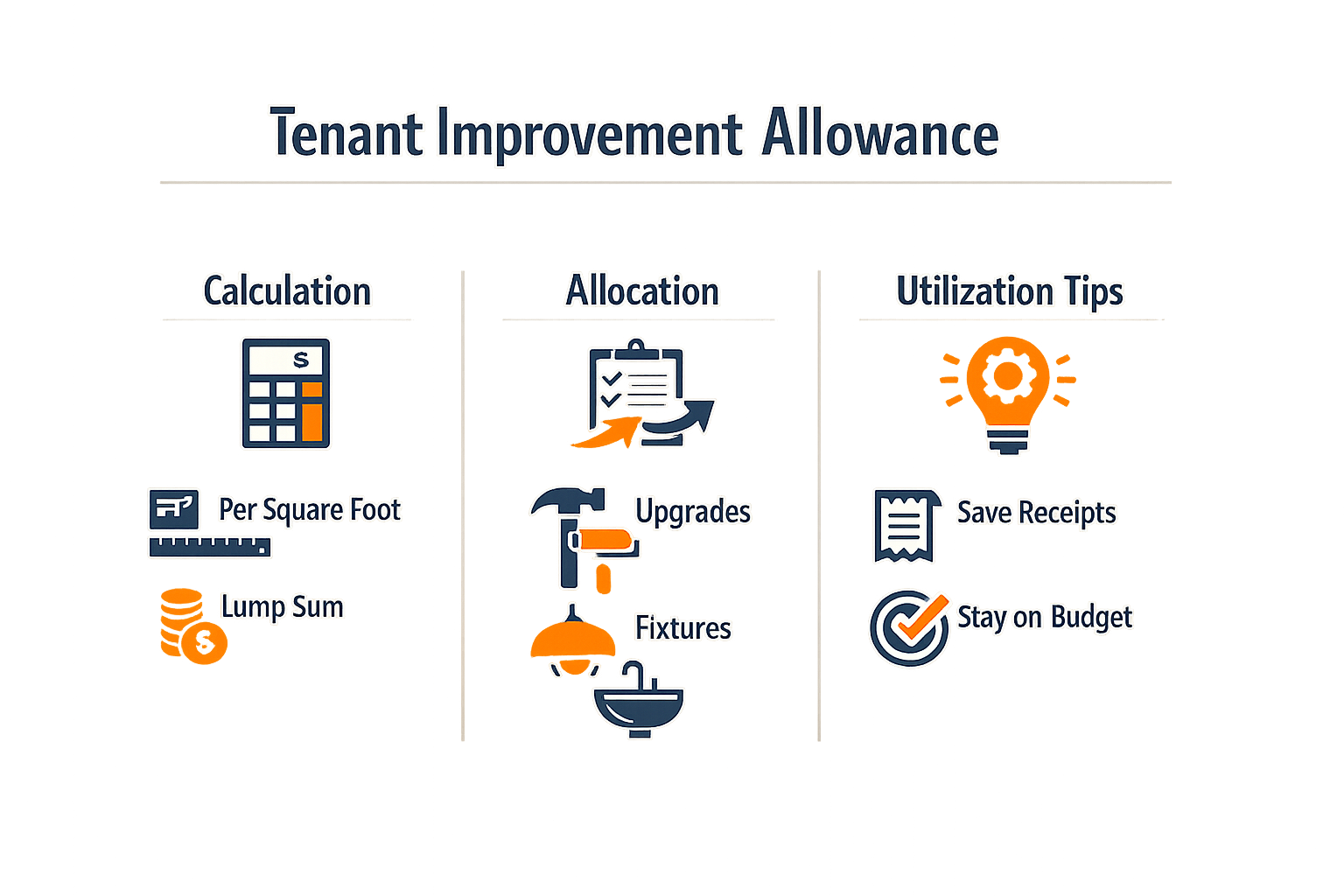
A tenant improvement allowance is a defined sum the landlord provides to offset the cost of modifying leased space. The lease establishes the amount, the permitted scope, and the documentation the tenant must submit to draw the funds. The allowance does not transfer as cash; it reimburses approved work after completion, or it pays contractors directly under a landlord-controlled account.
The lease specifies whether the allowance is a per-square-foot figure or a lump sum. A per-square-foot allowance multiplies the rentable area by the agreed rate. A lump-sum allowance states a fixed dollar amount regardless of square footage. The lease also identifies which improvements qualify—structural modifications, electrical upgrades, HVAC extensions, and finishes typically qualify, while furniture and equipment often do not. The tenant submits a scope of work, obtains landlord approval, and then proceeds with construction.
Calculation and Allocation
The landlord calculates the allowance during lease negotiation. Market conditions, lease term, and the condition of the existing space influence the amount offered. A longer lease term or a space requiring significant work to meet the tenant's operational requirements often results in a higher allowance. The lease states whether the allowance covers hard costs only—labor and materials for construction—or also includes soft costs such as design fees, permit expenses, and project management.
The tenant allocates the allowance across the approved scope. If the total project cost exceeds the allowance, the tenant funds the difference. If the project costs less, the landlord typically does not refund the unused portion unless the lease explicitly provides otherwise. The lease may permit the tenant to apply unused allowance dollars to rent, or it may declare the allowance forfeited if not fully utilized within a specified period.
Disbursement and Documentation
The landlord disburses the allowance in stages tied to construction milestones or as a single payment after project completion. The tenant submits invoices, lien releases, and inspection certificates to trigger each disbursement. The lease defines the documentation window—the period within which the tenant must submit claims—and the landlord's review period before payment.
Step 1
Submit the scope and budget
The tenant provides a detailed scope of work and a line-item budget to the landlord before construction begins. The landlord reviews the scope against the lease's permitted improvements and either approves it, requests revisions, or rejects items that fall outside the allowance terms.
Step 2
Obtain required approvals
The tenant secures building permits and any landlord-required approvals for contractors and subcontractors. The lease may require the tenant to use landlord-approved vendors or to provide proof of insurance and licensing for all parties performing work.
Step 3
Complete the work and document costs
The tenant completes construction and collects invoices, receipts, lien waivers, and final inspection sign-offs. The lease specifies whether the landlord requires conditional or unconditional lien releases and whether the tenant must provide as-built drawings.
Step 4
Submit the reimbursement package
The tenant submits the complete documentation package to the landlord within the lease's stated window. The landlord reviews the package, verifies that the work complies with the approved scope, and disburses the allowance according to the lease's payment schedule.
Holdbacks and Contingencies
The lease may authorize the landlord to withhold a percentage of the allowance as a holdback until the tenant provides final lien releases and a certificate of occupancy. A ten-percent holdback is common. The landlord releases the holdback after the tenant satisfies all post-construction documentation requirements and any punch-list items. If the tenant fails to provide the required documentation within the lease's deadline, the landlord may declare the holdback forfeited.
The lease also addresses change orders. If the tenant modifies the approved scope during construction, the tenant must obtain written landlord consent before proceeding. Unauthorized changes may render those costs ineligible for reimbursement, and the landlord may require the tenant to restore the space to the originally approved condition at the tenant's expense.
Relationship to Rent and Lease Term
The allowance does not reduce base rent unless the lease explicitly amortizes it into the rent schedule. In some leases, the landlord recovers the allowance by incorporating its cost into the base rent over the lease term, effectively converting the allowance into a financed improvement. The lease discloses whether the rent includes an allowance recovery component and, if so, the interest rate and amortization period.
If the tenant defaults or terminates the lease early, the lease may require the tenant to repay a prorated portion of the allowance. The repayment obligation typically decreases over the lease term, reflecting the landlord's recovery of the allowance through rent or the tenant's occupancy. The lease states the repayment formula and whether it applies only to voluntary termination or also to termination for cause.
For disputes over allowance disbursement or scope approval, the lease identifies the resolution mechanism—mediation, arbitration, or litigation—and the applicable notice requirements. The tenant should document all communications with the landlord regarding scope changes, cost overruns, and disbursement delays. Where a lease includes a dispute window, the tenant must raise objections within that window or waive the right to challenge the landlord's determination. Understanding filing a complaint with the California Department of Insurance may provide insight into formal dispute resolution processes when contractual remedies are exhausted, though lease disputes typically proceed under the lease's own dispute provisions rather than through insurance channels.
Tips for Maximizing Your Tenant Improvement Allowance
The allowance negotiation starts before the lease is signed. Establish what the landlord will fund and what documentation you must retain before construction begins. Many tenants discover too late that the agreement requires licensed contractor records, permits closed by the authority having jurisdiction, and itemized invoices — not summary statements. Ask for these requirements in writing during the letter-of-intent phase.
Understand What the Allowance Covers
The lease defines the scope. Some allowances cover hard costs only — materials, labor, and permits. Others include soft costs such as architectural fees, engineering stamps, and project management. A few exclude code-mandated work entirely, leaving fire sprinkler relocation or emergency egress modifications to the tenant. Read the provision to the end. If the lease says "tenant improvements as approved by landlord," you need written approval for each line item before you commit to a contractor.
Negotiate the Per-Square-Foot Rate Early
Allowances are commonly expressed as dollars per square foot of leased space. A $50-per-square-foot allowance on a 3,000-square-foot suite provides $150,000. If your build-out requires more, negotiate the rate or the total cap before signing. Landlords may agree to a higher allowance in exchange for a longer lease term or a modest base-rent adjustment. The time to establish this is during lease negotiation, not after your contractor submits the first draw request.
The cheapest lease is not always the least expensive occupancy — if the allowance falls short, you fund the gap out of operating capital.
Retain All Documentation
The lease will specify what records close each reimbursement request. Typical requirements include signed contractor agreements, lien waivers from subcontractors, permit cards stamped by the building department, and inspection sign-offs for code-mandated systems. Missing documentation delays reimbursement and, in some cases, voids the claim entirely. Establish a document-retention protocol before the first invoice arrives, and ensure your contractor understands what you must produce.
If your lease requires that improvements meet a published standard — such as accessibility provisions under the California Building Code — retain the inspection report that closes the compliance check. For guidance on navigating regulatory timelines and documentation expectations, see our article on insurance adjuster contact timeline, which covers similar record-keeping principles in a claims context.
Confirm Who Holds the Improvement
Most leases specify that tenant improvements become landlord property upon installation. This means you cannot remove them at lease end, and you receive no credit for their value if you vacate early. If you install specialized equipment or custom millwork that you intend to take with you, negotiate a separate provision that excludes those items from the improvement definition. Otherwise, what you build stays with the space.
Plan for Cost Overruns
Allowances rarely cover the full build-out cost. Budget for a gap between the allowance and the contractor's bid, and confirm how overruns are handled. Some leases permit you to fund the excess directly; others require landlord approval for any work beyond the allowance cap. A few leases allow you to convert the overage into additional rent, amortized over the lease term. Clarify this before construction starts — cost surprises mid-project leave you with incomplete work or an unexpected capital call.
Verify Contractor Licensing and Insurance
The lease may require that all work be performed by licensed contractors carrying specified liability and workers' compensation coverage. Verify credentials before you sign a construction agreement, and request certificates of insurance naming both you and the landlord as additional insureds. If an unlicensed contractor performs the work, the landlord may refuse reimbursement, and you may face liability if the work fails inspection or causes property damage.
Schedule Inspections Before Final Payment
Do not authorize final payment to the contractor until the authority having jurisdiction closes all permits and signs off on code-mandated systems. If the fire marshal flags an issue with sprinkler coverage or emergency lighting, the contractor must return to correct it — and that is easier to enforce when you still hold a payment. Retain the final inspection report; it is the record that proves the work met the standard as adopted locally.
Conclusion: The Value of Tenant Improvement Allowances
A tenant improvement allowance is a negotiated provision, not a statutory obligation. The lease defines the dollar amount, the permitted scope, the documentation the tenant must produce, and the interval within which the landlord reimburses or pays directly. When the lease is silent on a mechanic — for example, whether the allowance covers code-mandated fire alarm upgrades — the tenant pays, and the landlord's obligation stops at the four corners of the provision.
The allowance aligns interests when both parties understand what it does and does not cover. A landlord who offers thirty dollars per square foot and permits structural modifications gains a tenant willing to commit to a longer term. A tenant who budgets the allowance against a detailed scope, retains every invoice, and submits within the window the lease specifies avoids disputes that delay occupancy. The provision works when the tenant asks for the permitted-use schedule in writing, confirms which improvements require landlord approval before the work starts, and establishes who performs the final inspection that closes any code violations the work creates.
Record retention matters. The lease may require the tenant to produce paid invoices, lien releases, permits, and inspection sign-offs before the landlord disburses the allowance. A tenant who cannot produce a permit-closure document for work that triggered a fire-district inspection may find the allowance withheld until that record appears. The same principle governs disputes: if the lease provides a thirty-day window to contest an allowance decision and the tenant waits forty-five days, the lease controls, and the contest fails.
Commercial tenants face other documentation intervals beyond the improvement allowance. If your lease obligates you to maintain fire-safety systems or produce inspection records on demand, understanding the timelines an authority having jurisdiction enforces can prevent costly delays. For guidance on another interval-driven process in California commercial property, see Filing a Complaint With the California Department of Insurance.
The tenant improvement allowance is a tool. It delivers value when the tenant treats it as a reimbursement provision with defined limits, not as a blank check. Read the lease provision to the end, ask for the approval process in writing, retain every record the lease requires, and submit within the window. When both parties honor the mechanics the lease establishes, the allowance funds the improvements the tenant needs and the landlord permits, and the space opens on schedule.