
Introduction to Tenant Improvement Allowance
A tenant improvement allowance is a landlord contribution toward the cost of customizing commercial space to a tenant's operational needs. The provision appears in the lease, states a dollar amount or a per-square-foot rate, and defines what work the allowance covers. The tenant improvement allowance shapes negotiation because it shifts build-out cost from tenant to landlord, influencing rental rates, lease duration, and the tenant's willingness to commit.
The agreement provides the framework: the obligated party, the interval for performance, the documentation each side must retain, and the remedy if the work deviates from what was authorized. When navigating these allowances, the nuances of compliance and documentation prove crucial. Comparing two editions of the same standard can reveal changes in compliance intervals, which affect the timing and cost of improvements—particularly when local adoption of standards varies and dictates which edition governs a specific project. For a detailed examination of how these allowances are taxed and reported, see Tenant Improvement Allowance Tax Treatment: Guide for Property Owners.
Work is authorized when the owner requests it or agrees to it, or when a direct contractor, architect, or project manager with charge of the improvement authorizes it. The statute does not specify a cost estimate or price band; it names the parties and the act that triggers authorization. What closes the transaction is the record: invoices that match the scope, inspection reports that align with the performed work, and retention of those documents for the period the standard or the agreement requires.
Understanding tenant improvement allowances is crucial for both tenants and landlords because it significantly impacts the negotiation process in commercial leasing agreements. The allowance can influence a tenant's decision to lease a space based on the financial support available for necessary improvements, and it directly affects leasing negotiations and overall tenant satisfaction in commercial spaces. Ensuring that all documentation aligns with what was authorized not only aids in managing the allowance effectively but also ensures that all parties adhere to the correct standards and retain the records needed to close the file.
Explore tenant improvement allowance, its significance, and how it impacts commercial leasing and property management.
What is Tenant Improvement Allowance?
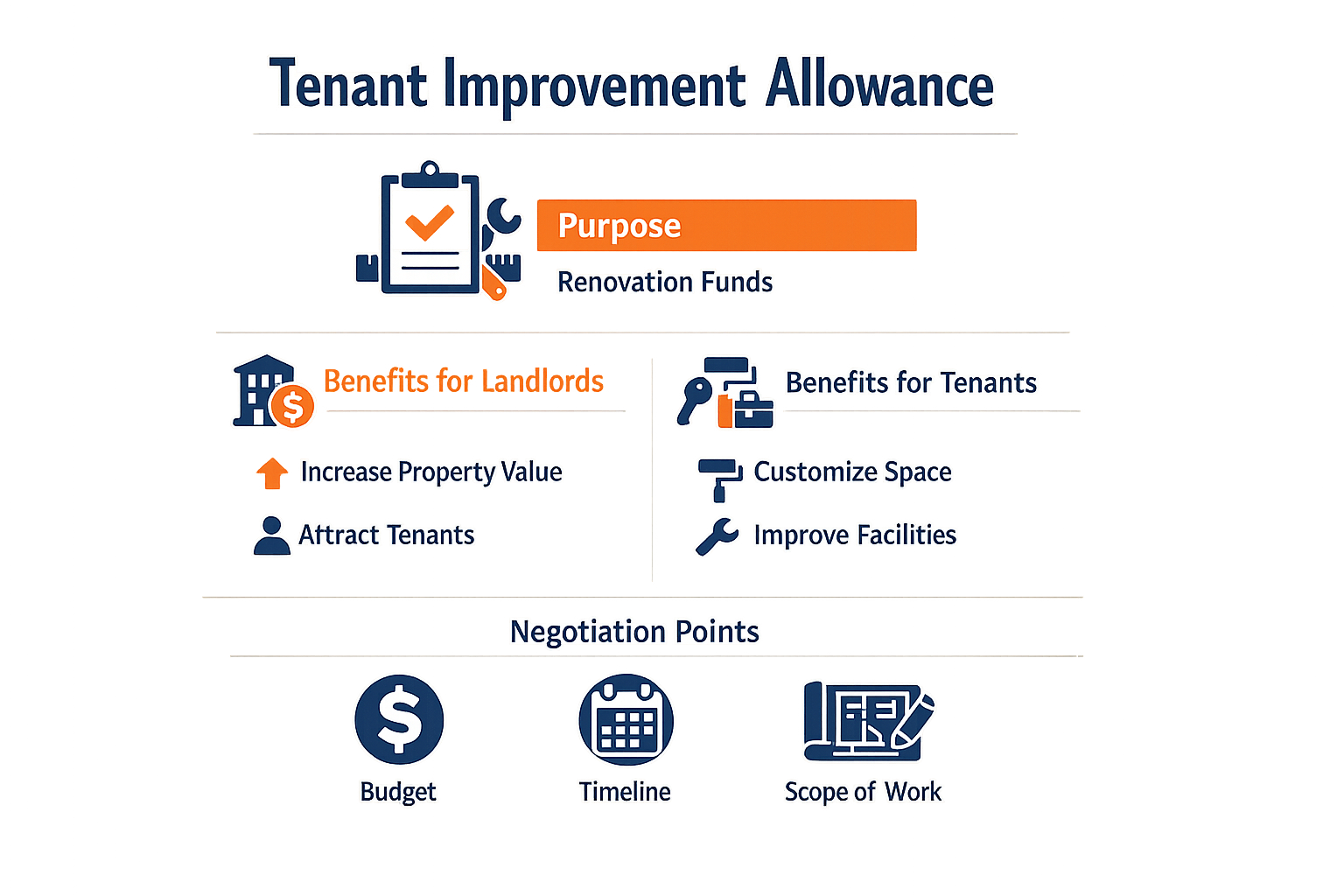
A tenant improvement allowance is a negotiated sum the landlord provides to customize commercial space for a tenant's use. The lease identifies the allowance amount, what it covers, and how disbursement occurs. The tenant typically engages contractors, submits invoices, and receives reimbursement up to the allowance cap. Anything beyond that cap is the tenant's responsibility.
The allowance exists because raw commercial space rarely meets an incoming tenant's operational needs. A medical office requires exam rooms and HIPAA-compliant partitions; a restaurant needs ventilation hoods and grease traps; a warehouse tenant may need dock levelers or racking anchors. The landlord agrees to fund part or all of that work to secure the lease.
How the Allowance Appears in the Lease
The lease states the allowance as a dollar figure—either a lump sum or a per-square-foot rate multiplied by the leased area. It also specifies what the allowance covers: structural modifications, electrical upgrades, plumbing rough-in, finishes, permits. Some leases exclude certain categories—furniture, equipment, or signage—so read the provision in full to know what qualifies.
Payment timing varies. Some landlords disburse the allowance only after the tenant completes the work and submits paid invoices. Others release funds in stages tied to construction milestones. A few leases credit the allowance against future rent instead of reimbursing cash. Each method shifts risk and cash-flow burden differently, so the structure matters as much as the amount.
Who Authorizes the Work
California Civil Code establishes that work is authorized when the owner requests it or agrees to it, or when a direct contractor, architect, or project manager with charge of the improvement authorizes it. In a tenant improvement scenario, the tenant acts as the party with charge of the improvement within the leased premises, but the landlord retains an interest in the real property. This means the tenant can direct contractors to perform the work, but the lease governs whether that work qualifies for allowance reimbursement and whether it requires landlord pre-approval.
Many leases require the tenant to submit plans, obtain landlord consent, and use approved contractors before starting work. If the tenant proceeds without that approval, the landlord may refuse reimbursement even if the work itself was competent and code-compliant. The lease controls the authorization chain, not the contractor's license or the permit itself.
Documentation and Reimbursement
To claim the allowance, the tenant submits invoices, lien releases, and proof of payment. The landlord reviews those documents to confirm the work matches the approved scope and the invoiced amounts are reasonable. If an invoice is generic or lacks detail, the landlord may request a breakdown before releasing funds.
Some leases require the tenant to provide as-built drawings, final inspection sign-offs, or certificates of occupancy before the landlord disburses the final allowance tranche. Retain every document: the signed lease, the approved plans, change orders, contractor licenses, permits, invoices, lien releases, and inspection reports. If a dispute arises, the party with the clearer paper trail prevails. For more detail on calculating and managing these amounts, see How to Calculate Tenant Improvement Allowance Effectively.
Why Tenant Improvement Allowance Matters
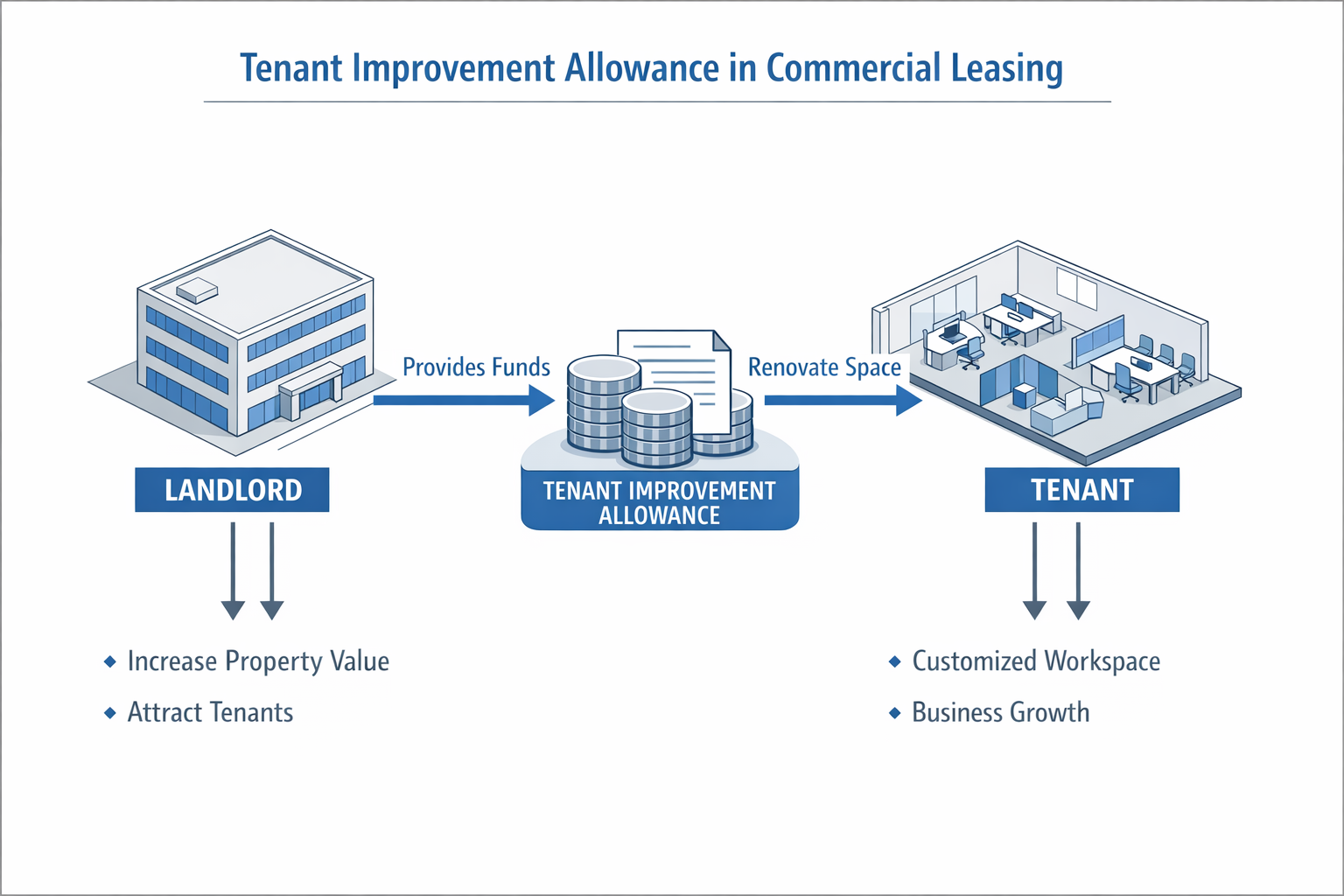
The tenant improvement allowance is a negotiated provision that shapes the commercial lease from both sides of the transaction. For the tenant, the allowance determines how much capital the landlord will contribute toward customizing the space to meet operational requirements. For the landlord, the allowance is a tool to attract tenants, differentiate the property, and establish the scope of work that will be authorized under the lease.
Impact on Lease Negotiations
The allowance amount directly influences the tenant's ability to occupy the space without incurring substantial upfront costs. A higher allowance reduces the tenant's initial capital outlay, making the lease more attractive and potentially shortening the time to occupancy. Conversely, a lower allowance shifts more financial responsibility to the tenant, which may require the tenant to scale back improvements or seek alternative financing.
From the landlord's perspective, the allowance is a competitive factor. Properties in markets with high vacancy rates often feature more generous allowances to secure tenants quickly. The landlord must balance the allowance against the lease term, rental rate, and the expected return on the investment in improvements. A well-structured allowance can lead to longer lease commitments and higher tenant retention.
Documentation and Compliance Considerations
The lease must specify who authorizes the work, what documentation the tenant must provide, and how the allowance will be disbursed. California Civil Code provisions governing works of improvement establish that work is authorized when it is requested or agreed to by the owner, or when it is authorized by a direct contractor or other person having charge of the work. This means the lease should clearly identify the party with authority to approve scope changes and additional costs.
Tenants must retain records of all expenditures, invoices, and lien releases to demonstrate that the allowance was applied to the agreed scope of work. Landlords, in turn, must verify that the work complies with applicable building codes and that all required permits were obtained. Disputes often arise when the tenant submits documentation that does not match the approved scope or when the landlord withholds disbursement because the tenant failed to provide required lien releases.
Functional and Financial Outcomes
A properly negotiated and administered tenant improvement allowance enhances the functionality of the space, allowing the tenant to configure the premises for specific operational needs. This customization can improve tenant satisfaction and reduce the likelihood of early lease termination. For the landlord, a well-executed improvement program can increase the property's value and marketability, particularly if the improvements are adaptable to future tenants.
The allowance also affects the landlord's cost recovery strategy. Some leases amortize the allowance into the rental rate over the lease term, while others treat it as a one-time capital contribution. The structure of the allowance — whether it is a per-square-foot amount, a fixed dollar sum, or a reimbursement cap — determines how the landlord accounts for the expense and how the tenant budgets for the build-out.
For more details on how to structure and calculate these allowances, see How to Calculate Tenant Improvement Allowance Effectively.
How Tenant Improvement Allowance Works
The mechanics of a tenant improvement allowance begin with the lease negotiation. The landlord offers a dollar amount per square foot or a lump sum, and the tenant proposes a scope of work. That scope defines what the allowance covers — structural changes, electrical upgrades, finishes — and what it excludes. The lease provision states whether the allowance is a reimbursement after completion, a direct payment to contractors, or a reduction in base rent over the term.
The agreement identifies who holds the construction contract. When the tenant holds the contract, the tenant selects the contractor and submits invoices for reimbursement. When the landlord holds the contract, the landlord engages the contractor and the tenant approves the scope. Either structure satisfies the lease, but the obligated party differs. The tenant who holds the contract retains the documentation and produces it on demand; the landlord who holds the contract retains it and produces it to the authority having jurisdiction when required.
Establishing the Allowance Amount
The allowance amount appears in the lease as a fixed sum or as a rate per rentable square foot. A fixed-price allowance sets a ceiling; overruns are the tenant's responsibility. When the contract price for the work is not fixed, the lease may reference a guaranteed maximum price or require a good faith estimate of the reasonable value of the work. That estimate becomes the baseline for reimbursement, and the tenant submits change orders against it.
The lease specifies which improvements the allowance covers. California Civil Code defines a work of improvement broadly: construction, alteration, repair, demolition, seeding, sodding, filling, leveling, or grading. The definition includes landscaping and site preparation, not only interior finishes. The lease provision lists the included categories and the excluded categories separately. When a tenant proposes work outside the included list, the landlord may approve it as an amendment or decline it, and the tenant proceeds at the tenant's expense.
Negotiation and Documentation
Negotiation centers on three variables: the allowance amount, the scope of covered work, and the reimbursement mechanism. The tenant requests an allowance sufficient to complete the build-out; the landlord offers an amount that reflects market conditions and the length of the lease term. A longer term justifies a higher allowance because the landlord amortizes the cost over more years of rent. A shorter term compresses the payback window, and the landlord reduces the allowance or declines it entirely.
The reimbursement mechanism appears in the lease as a schedule. The tenant submits invoices with supporting documentation — contractor's invoice, lien release, proof of payment — and the landlord reimburses within a stated number of days. The lease may require the tenant to submit a final reconciliation showing the total cost and the total reimbursement. When the allowance exceeds the actual cost, the lease states whether the tenant retains the surplus or whether it reverts to the landlord. When the actual cost exceeds the allowance, the tenant funds the difference and retains the record of that payment.
For guidance on how allowances are calculated in practice, see How to Calculate Tenant Improvement Allowance Effectively.
Payment Structures
The lease offers three payment structures: reimbursement after completion, direct payment to contractors, or rent abatement. Under reimbursement, the tenant pays the contractor and submits the invoice for repayment. Under direct payment, the landlord pays the contractor and the tenant has no out-of-pocket cost. Under rent abatement, the landlord reduces the monthly rent by an amount that equals the allowance over a stated number of months.
Reimbursement requires the tenant to carry the cost temporarily. The tenant funds the work, obtains lien releases, and submits the package to the landlord. The landlord verifies the documentation and issues payment within the window stated in the lease — commonly fifteen to thirty days. Direct payment eliminates the tenant's temporary funding obligation, but it requires the landlord to verify progress and approve each payment before it is made. Rent abatement spreads the allowance over time and reduces the tenant's cash outlay, but it does not provide upfront capital for construction.
The lease states which structure applies. The tenant who accepts reimbursement must have sufficient working capital to bridge the gap between payment to the contractor and reimbursement from the landlord. The tenant who lacks that capital negotiates for direct payment or rent abatement. The landlord who offers direct payment retains control over contractor selection and payment timing; the landlord who offers reimbursement delegates that control to the tenant.
Compliance and Record Retention
The completed work must satisfy the building code as adopted locally. The tenant or the landlord — depending on who holds the construction contract — obtains the necessary permits and arranges for inspections. The authority having jurisdiction issues a certificate of occupancy or a final inspection approval when the work complies. That certificate closes the permit, and the party who obtained the permit retains it for the life of the improvement.
When the work includes fire protection, electrical, or mechanical systems, the lease may require ongoing maintenance and inspection records. The tenant who installs a fire alarm retains the annual inspection reports and the five-year certification. The landlord who installs a sprinkler system retains the internal assessment and the test records. The lease assigns that obligation explicitly, and the obligated party produces the records when the authority having jurisdiction requests them.
Best Practices for Tenant Improvement Allowance
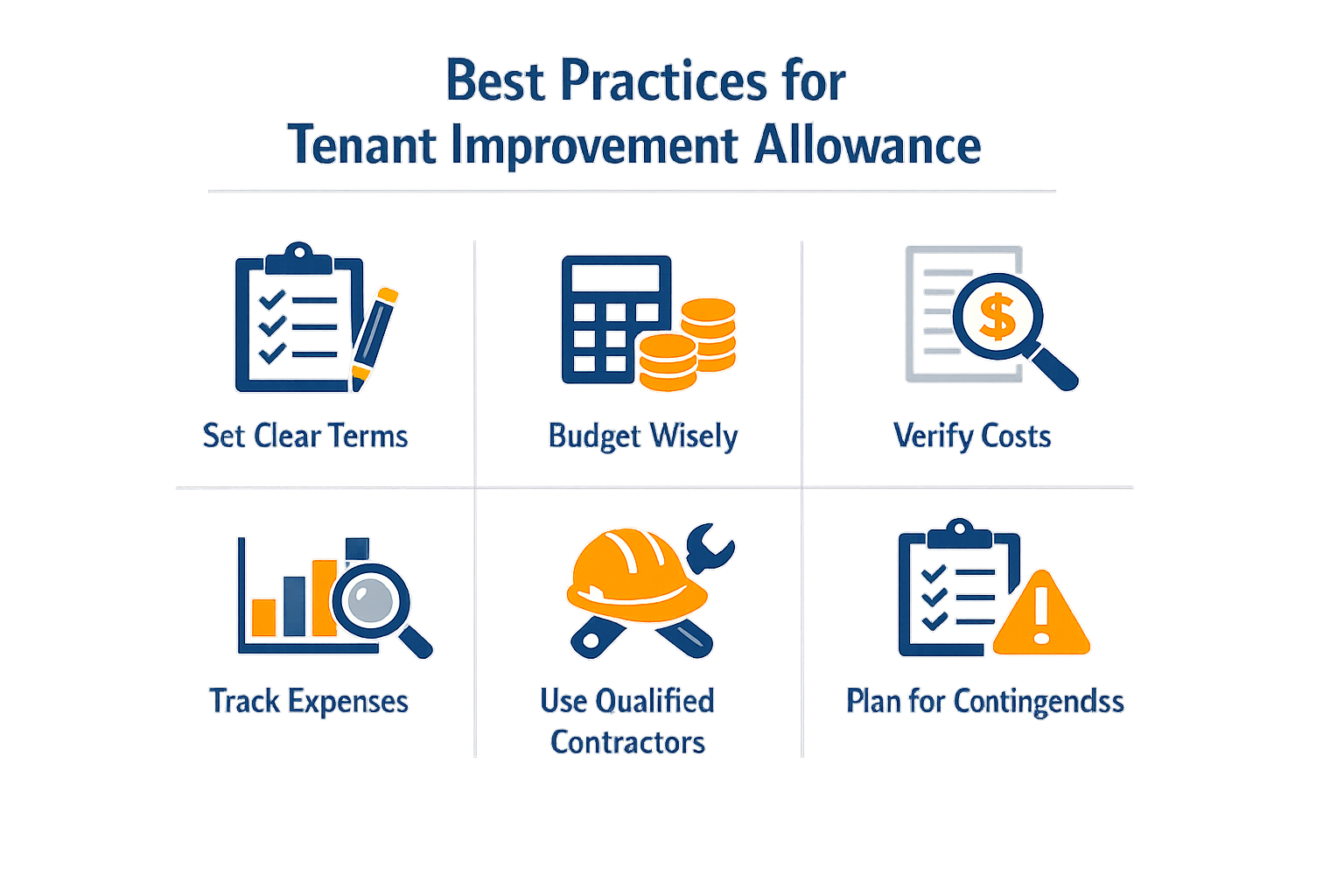
The tenant improvement allowance is a negotiated provision, and its value depends on what the agreement says and what the documentation proves. Both the owner and the tenant benefit when the scope is defined in writing, the authorization path is clear, and the records close the loop between what was approved and what was built.
Define the Scope Before Work Begins
Work is authorized for a work of improvement when it is provided at the request of or agreed to by the owner, or when authorized by a direct contractor, subcontractor, architect, project manager, or other person having charge of all or part of the work. The agreement should state which improvements are covered by the allowance, whether the allowance is a fixed sum or a reimbursement cap, and who approves change orders. A general description of "tenant improvements" invites disputes; a line-item attachment listing permitted work by category or trade does not.
The definition of "work of improvement" includes construction, alteration, repair, demolition, or removal of a building, as well as seeding, sodding, or planting of real property for landscaping purposes. When the allowance covers landscaping or site work in addition to interior build-out, state that explicitly and allocate a separate amount to each category. If the tenant proposes work that falls outside the stated scope, the owner may approve it as an additional item or decline it without breaching the allowance provision.
Establish the Authorization and Payment Path
The agreement should name the party who authorizes work to proceed, the party who receives invoices, and the party who disburses allowance funds. When the owner pays the contractor directly, the tenant submits an invoice and a lien release from the contractor; the owner verifies that the work matches the approved scope, then disburses the allowance amount or the invoice total, whichever is less. When the tenant pays the contractor and seeks reimbursement, the owner receives a paid invoice, a lien release, and any inspection or permit closeout documentation required by the lease.
The presence of mechanics liens can significantly impact property management and leasing, as they may force owners to pay twice or face the sale of their property. To avoid that outcome, the owner may require that the tenant provide a payment bond or that all contractors furnish conditional and unconditional lien releases at each payment milestone. The lease should state the release requirement and the consequence of noncompliance—typically suspension of further allowance disbursements until the release is provided.
Retain Documentation That Closes the Provision
The owner retains the lease, any allowance amendment, the approved scope attachment, all invoices, all lien releases, and any permit or inspection signoff that the jurisdiction required. The tenant retains the same set, plus the contractor's proposal, any change-order approvals, and the contractor's license verification at the time the agreement was signed. If a dispute arises over whether the allowance was exhausted or whether specific work was covered, the party with the complete record prevails.
When local code requires an inspection or permit for the improvement, the closeout documentation becomes part of the allowance record. The owner may not disburse the final allowance payment until the tenant provides evidence that the jurisdiction closed the permit and that no violations remain open. If the tenant improvement triggers a fire-life-safety inspection—such as when the build-out alters egress paths or adds occupancy load—the owner should confirm that the inspection report shows compliance and that any required follow-up items were completed within the window the code allows.
For guidance on related compliance intervals and documentation, see Fire Extinguisher Inspection Requirements: Monthly and Licensed.
Separate the Allowance from Other Lease Obligations
The tenant improvement allowance is a separately priced provision. It is not rent, and it does not offset rent unless the lease states that it does. When the tenant defaults on rent, the owner may not withhold allowance disbursements that are otherwise due; when the tenant fails to complete improvements by the agreed date, the owner may not accelerate rent or terminate the lease unless the lease grants that remedy for that specific breach.
If the lease permits the owner to recapture unused allowance funds, state the recapture deadline and the notice procedure. If the lease requires the tenant to repay allowance funds upon early termination, state the amortization schedule and whether the repayment obligation survives lease termination. These provisions are enforceable when they are written, priced separately, and signed by the obligated party.
Attach a one-page allowance exhibit to the lease that states the total amount, the covered scope, the authorization path, the disbursement procedure, and the documentation required for each payment. Reference the exhibit by letter or number in the lease's improvement clause, and have both parties initial the exhibit.
The tenant or the owner—depending on who contracts directly with the builder—verifies that the contractor holds an active license in the classification required for the work. Retain a copy of the license verification and the date it was checked.
The agreement should state whether conditional or unconditional releases are required, and at what payment percentage they are due. The party disbursing funds does not release payment until the required release is in hand.
Common Mistakes in Tenant Improvement Allowance Agreements
Tenant improvement allowance agreements contain specific provisions that govern what the owner pays, when the tenant receives it, and who retains documentation. Misreading these provisions creates failures that surface during disputes, audits, or property transfers. The mistakes below appear frequently in commercial lease negotiations and often remain undetected until a compliance question or payment dispute forces both parties to examine what the agreement actually says.
Failing to Identify the Obligated Party
An agreement that names "Landlord" without identifying the legal entity creates ambiguity when the property changes hands or when the tenant seeks to enforce the allowance. The provision should name the entity that holds title or the entity that executes the lease, and a personal guarantee block should appear separately if an individual backs the obligation. When an agreement lists only a trade name or a property management company, the tenant may discover that the entity named is not the one that can authorize payment or that the entity dissolved before the work began.
Similarly, the tenant entity must be identified with precision. If the lease names an individual but the improvement contract names a corporation, the allowance provision may not cover the work performed. Verify that the entity receiving the allowance is the same entity that signs the lease and the same entity that will execute contracts with the licensed agencies performing the work.
Confusing Reimbursement Timing with Approval Timing
Many allowance provisions state that the owner reimburses the tenant after the work is complete and after the tenant submits documentation. The tenant interprets this as automatic payment upon submission; the owner interprets it as payment after the owner approves the documentation. The provision should state the approval window explicitly: the number of days the owner has to review submitted invoices, the form of approval required, and what happens if the owner does not respond within that window.
When the provision permits the owner to withhold payment pending final inspection or certificate of occupancy, the tenant must understand that reimbursement does not occur until the authority having jurisdiction closes any open violations. If the work triggers a code compliance issue, the allowance may not be paid until that issue is resolved, even if the tenant completed the work and submitted all invoices on time. Understanding how to calculate tenant improvement allowance helps clarify these timing expectations before disputes arise.
Omitting Documentation Requirements
The agreement should state what documentation the tenant must retain and produce to receive reimbursement. At minimum, this includes invoices from licensed contractors, proof of payment, lien releases, and any permits or inspection reports required by the local jurisdiction. When the provision says only "submit invoices," the owner may later demand additional records that the tenant did not retain, blocking reimbursement until the tenant reconstructs the documentation.
Some agreements require the tenant to submit a final reconciliation that lists every expenditure, every invoice, and every payment, with supporting records attached. If the provision does not describe the reconciliation format, the tenant may submit a summary that the owner rejects as insufficient. Ask for the reconciliation template in writing before the work begins, and confirm that the format satisfies the owner's internal approval process.
Retain all records for the full lease term plus any extension or renewal period. If the lease permits the owner to audit the allowance expenditures, the tenant must produce the records on demand, and missing documentation can result in repayment of the allowance or offset against future rent.
Allowing Scope Creep Without Amendment
The original allowance provision defines the scope of work the owner will reimburse. When the tenant expands that scope without amending the agreement, the additional work may not be covered. If the lease states that the allowance covers "interior partitions and finishes" and the tenant later adds HVAC modifications, the owner is not obligated to reimburse the HVAC work unless the parties execute a written amendment.
Scope creep also occurs when the tenant interprets a general category too broadly. An allowance for "electrical upgrades" may cover new circuits and lighting but not a backup generator or fire alarm modifications. Before authorizing any work that falls outside the original scope, request written confirmation that the owner will reimburse it. If the owner declines, the tenant pays for that work separately and does not include it in the allowance reconciliation.
Ignoring Lien Waiver and Release Provisions
California law permits contractors and material suppliers to file mechanics liens against the property when they are not paid, even when the tenant hired them and the owner had no direct contract with them. An allowance agreement should require the tenant to obtain unconditional lien releases from every contractor and supplier before the owner disburses the final allowance payment. When the agreement omits this requirement, the owner may pay the tenant in full, only to face a mechanics lien months later from a subcontractor the tenant failed to pay.
The tenant must also understand that a mechanics lien can attach to the tenant's leasehold interest or to the property itself, depending on the scope of the work and the language in the lien claim. If a lien attaches to the property, the owner may withhold rent or terminate the lease, and the tenant may be required to bond off the lien or pay it directly to avoid default.
Misunderstanding What "Separately Priced" Means
When an allowance provision states that certain items are separately priced or separately reimbursed, the tenant must obtain line-item invoices that break out those items individually. A single lump-sum invoice that does not itemize the work may not satisfy the provision, even if the total amount is within the allowance cap. If the agreement requires separate pricing for demolition, rough-in, and finish work, the contractor's invoice must show those categories separately, and the tenant must verify that the contractor's scope aligns with the allowance provision before the work begins.
Separately priced also means that the tenant cannot shift costs from one category to another without the owner's written approval. If the allowance allocates $10,000 to flooring and $5,000 to paint, and the tenant spends $12,000 on flooring and $3,000 on paint, the owner may reimburse only the amounts specified in the original provision, leaving the tenant responsible for the $2,000 flooring overage.
Failing to Address Change Orders and Overruns
Construction work frequently generates change orders when the contractor encounters unforeseen conditions or when the tenant requests modifications mid-project. The allowance agreement should state whether change orders are reimbursable and, if so, what approval process applies. When the provision is silent, the owner may refuse to reimburse any change order costs, treating them as tenant-initiated scope changes outside the original agreement.
Cost overruns present a similar issue. If the allowance is a fixed dollar amount and the actual cost exceeds that amount, the tenant is responsible for the excess unless the agreement provides otherwise. Some provisions include a contingency percentage or a shared-cost arrangement for overruns, but these must be negotiated and documented before the work begins. A verbal understanding that the owner will "cover reasonable overruns" is not enforceable and will not survive a payment dispute.
Neglecting Compliance with Local Code Adoption
Tenant improvements must comply with the building, fire, and accessibility codes as adopted locally, and the allowance provision should state which party is responsible for ensuring compliance. When the agreement is silent, disputes arise over who pays for code-required upgrades that were not in the original scope. If the local jurisdiction requires fire sprinkler modifications to support the tenant's new layout, and the allowance provision does not address fire protection systems, the tenant may be required to pay for those modifications separately.
Similarly, if the work triggers a requirement to bring existing building systems into compliance with the current code edition, the cost of that compliance work may fall outside the allowance. The tenant should confirm in writing whether the allowance covers only the tenant's desired improvements or whether it also covers code compliance upgrades mandated by the local authority having jurisdiction.
Frequently Asked Questions about Tenant Improvement Allowance
Who authorizes the work under a tenant improvement allowance?
Work is authorized when it is requested by or agreed to by the owner, or when it is provided or authorized by a direct contractor, subcontractor, architect, project manager, or other person having charge of all or part of the work of improvement. The authorization determines who is obligated on the agreement and what documentation the owner must retain. Before you authorize any improvement work, establish in writing which party holds the authorization authority and what approval steps the lease requires.
Does the allowance attach to the property or to the lease?
The allowance itself is a lease provision — it does not attach to real property. However, the completed work of improvement does attach to the property. A lien attaches to the work of improvement and to the real property on which the work is situated, including as much space about the work as is required for the convenient use and occupation of the work. This distinction matters when the lease terminates early or when ownership transfers mid-term.
What happens if the tenant does not use the full allowance?
The lease provision controls. Some agreements permit the tenant to apply unused funds to rent or operating expenses; others treat the allowance as a use-it-or-lose-it benefit that expires at the end of the improvement window. Read the provision to the end — what the lease says about unused funds is what governs, not what a summary or a prior lease provided.
Can the landlord require the tenant to use a specific contractor?
The lease may require the tenant to select from a pre-approved contractor list, or it may permit the tenant to propose any licensed contractor subject to the landlord's reasonable approval. Either remedy satisfies the lease if it is stated in the agreement. What the lease does not permit is a landlord-imposed contractor change after the tenant has selected and the lease permits free choice, absent a documented failure to meet licensing or insurance requirements.
How is the allowance amount determined?
The allowance is separately priced in the lease, either as a per-square-foot figure or as a lump sum. It reflects negotiation between the parties and may be influenced by market conditions, the condition of the space as delivered, and the length of the lease term. For guidance on calculating the appropriate allowance for your space, see How to Calculate Tenant Improvement Allowance Effectively.
What documentation must the owner retain?
Retain the lease provision that establishes the allowance, all change orders, invoices from licensed contractors, lien waivers, and any inspection reports required by the authority having jurisdiction. If the work triggers a permit, retain the permit, the final inspection sign-off, and any certificate of occupancy. The owner performs the retention obligation even when the tenant manages the contractor relationship.
What if the actual cost exceeds the allowance?
The tenant pays the excess unless the lease provides otherwise. Some leases permit the landlord to advance additional funds as a loan to be repaid through higher rent; others require the tenant to fund any overage directly. The agreement provides the answer — not the whole provision, but the specific clause addressing cost overruns.
Can the allowance be used for non-structural improvements?
Yes, if the lease permits it. Allowances commonly cover both structural modifications and non-structural items such as fixtures, finishes, and equipment. The lease defines what qualifies as an eligible improvement. If the provision is silent on a category, request written confirmation from the landlord before you authorize that work.
Conclusion on Tenant Improvement Allowance
The tenant improvement allowance is a defined allocation within the lease, and every term that governs its use matters. When the lease permits two paths — owner-directed work or tenant-directed work — both satisfy the provision, but the documentation requirements differ. Retain the contract, the scope, and the final invoice showing how the allowance was applied. If a dispute arises, the record you produce determines what the agreement actually says.
When local adoption of building and fire codes varies, the edition matters. A tenant improvement that satisfies one edition may not satisfy another, and the authority having jurisdiction enforces the edition adopted locally. Before authorizing work, confirm which edition governs the property, and ensure the contractor's scope references that edition. If the inspection report and the invoice do not match, establish who is permitted to close the discrepancy — the tenant, the contractor, or the owner.
For further guidance on the tax treatment of these allowances, see Tenant Improvement Allowance Tax Treatment: Guide for Property Owners.
In my role at Licensed For, instances have occurred where an owner submits an inspection report that doesn't match the accompanying invoice, highlighting discrepancies that need resolution to maintain compliance. Reading provisions in full often uncovers compliant paths that summaries omit. Attention to that detail — what the agreement provides, what the standard requires, and what the record actually shows — is what separates a clean close from a prolonged dispute. The allowance is a tool; the documentation is what makes it enforceable.