
Introduction to Tenant Improvement Allowance
A tenant improvement allowance is a dollar amount the landlord agrees to contribute toward alterations, installations, or other construction within the leased premises. The lease provision names the allowance, states the permitted uses, and assigns responsibility for costs that exceed it. What the allowance covers is not a matter of industry custom or verbal understanding — the lease controls, and the lease must be read in full before any work is authorized.
The phrase "tenant improvement" appears in lease agreements, but California statute uses the term "work of improvement," defined to include construction, alteration, repair, demolition, addition, seeding, sodding, planting, filling, leveling, and grading. Site improvement is separately defined to include demolition, drilling test holes, grading, construction of public utilities, and preparation for further improvements. Both categories create lien rights for the parties who perform or supply them, and those lien rights attach to the property regardless of whether the tenant or the landlord authorized the work.
When a lease provides a tenant improvement allowance, the tenant typically selects a contractor, submits plans, and requests landlord approval. The landlord may approve the scope, the contractor, or both, and that approval determines which entity the contractor may pursue if payment fails. Under California Civil Code Part 6, Chapter 4, Article 1, work is authorized when it is provided at the request of or agreed to by the owner, or when it is provided or authorized by a direct contractor, subcontractor, architect, project manager, or other person having charge of all or part of the work. The statute does not distinguish between tenant-authorized work and owner-authorized work for purposes of lien attachment — both create exposure.
The allowance amount is separately priced from base rent, and the lease states whether it is a reimbursement, a direct payment to the contractor, or a credit against future rent. The lease also states whether unused allowance reverts to the landlord or remains available to the tenant for future work. These terms are not negotiable after the lease is signed, and they are not implied by the presence of an allowance figure in the economic summary. Read the provision that defines "Tenant Improvement Allowance" or "TI Allowance," and read the section that governs alterations or improvements. Both sections control, and where they conflict, seek clarification in writing before you authorize work.
Understanding how tenant improvement allowance works in practice requires distinguishing between the allowance itself and the full cost of the improvement. The allowance is a cap, not a budget. If the contractor's bid exceeds the allowance, the lease assigns the overage to one party, and that assignment is binding. If the lease is silent, the tenant bears the overage, because the tenant authorized the work. If the landlord agreed to pay all costs up to a stated maximum, the lease must say so explicitly, and the tenant must retain that provision in writing.
The lease may require the tenant to obtain lien waivers, to name the landlord as an additional insured, to post a bond, or to complete the work within a stated interval. These requirements protect the landlord from mechanic's liens and from code violations that remain open past the tenant's occupancy. They are not suggestions — they are conditions precedent to the landlord's obligation to fund the allowance. If the lease requires a waiver and the tenant does not obtain it, the landlord may withhold payment, and the contractor may file a lien. The lien attaches to the property, and the landlord must then pay to release it or defend the claim in court.
The significance of a tenant improvement allowance in commercial leasing is that it shifts construction cost from tenant to landlord in exchange for a longer lease term, higher base rent, or both. The allowance is an economic concession, and like all concessions, it is priced into the deal. The lease does not create a construction budget — it creates an obligation, and that obligation is limited to what the provision permits. Before you approve a contractor's proposal, establish what the allowance covers, who pays the overage, and what documentation the lease requires you to produce.
Problem Statement: Misunderstandings Around Tenant Improvement Allowance
The tenant improvement allowance appears in the lease as a dollar figure, and the agreement typically permits the tenant to perform work within that budget. The provision does not, however, define what constitutes a covered improvement, nor does it establish who holds title to the improvement once installed. Tenants frequently assume the allowance covers every modification necessary to operate their business, while landlords assume the allowance applies only to work that remains affixed to the building at lease termination. Neither assumption is stated in most standard lease forms.
The agreement may reference a construction budget or a scope of work, but those documents often arrive after lease execution. By the time the tenant receives the budget, the allowance figure is fixed, and the work list exceeds the allowance. The tenant then faces a choice: reduce the scope, pay the overage out of pocket, or negotiate an increase. The lease rarely specifies which party controls that decision, and the tenant improvement provision typically does not include a dispute resolution mechanism for scope disagreements.
Common Points of Confusion
The allowance figure itself is negotiable, but the lease does not usually explain how it was calculated or what unit cost assumptions it reflects. A tenant may receive a $50-per-square-foot allowance without knowing whether that figure assumes builder-grade finishes, code-minimum systems, or something more robust. The provision permits the landlord to approve or reject proposed work, but it does not define the approval standard or the timeline within which the landlord must respond. The tenant may submit plans and wait weeks for feedback, during which construction schedules slip and costs rise.
Another frequent misunderstanding involves the mechanics lien risk. The lease may require the tenant to pay contractors directly, but it does not always clarify who is responsible if a contractor records a lien against the property. California law permits anyone who improves property but is not paid to record a mechanics lien. If the tenant hires a contractor and the contractor remains unpaid, the lien attaches to the landlord's property, even though the landlord was not party to the contract. The tenant improvement provision rarely addresses lien waivers, payment bonds, or the documentation the landlord requires before releasing allowance funds.
The timeline for completing tenant improvements is another area where the lease language and the operational reality diverge. The provision may state that the tenant must complete the work within a certain number of days after lease commencement, but it does not account for permitting delays, material lead times, or contractor availability. The tenant may assume the allowance includes design fees, permit fees, and inspection costs, while the landlord assumes those are tenant expenses outside the allowance. The lease does not always specify which party pays for what, and the tenant improvement provision does not reference a detailed cost breakdown.
Who Controls the Work
The lease typically requires the landlord to approve the contractor, the plans, and the scope of work, but it does not define the approval criteria or the consequences of disapproval. The tenant may select a licensed contractor and submit compliant plans, only to have the landlord reject them for reasons unrelated to code compliance or building integrity. The provision does not establish whether the landlord's approval can be withheld arbitrarily or whether the landlord must act reasonably. In practice, the tenant has little recourse if the landlord delays or denies approval, because the lease does not include a deadline or a remedy for landlord inaction.
The question of who owns the improvements after installation is another common source of conflict. The lease may state that all improvements become the property of the landlord upon installation, but it does not clarify whether the tenant can remove trade fixtures or specialized equipment at lease termination. The tenant may install custom millwork, built-in shelving, or proprietary systems, assuming those items are removable, while the landlord assumes everything affixed to the building remains in place. The tenant improvement provision does not distinguish between structural improvements, which clearly remain with the building, and tenant-specific installations, which may or may not be removable.
For a detailed explanation of how the allowance functions within the lease structure, see How Does Tenant Improvement Allowance Work: Tenant Improvement.
Solution Steps: Clarifying What Tenant Improvement Allowance Covers
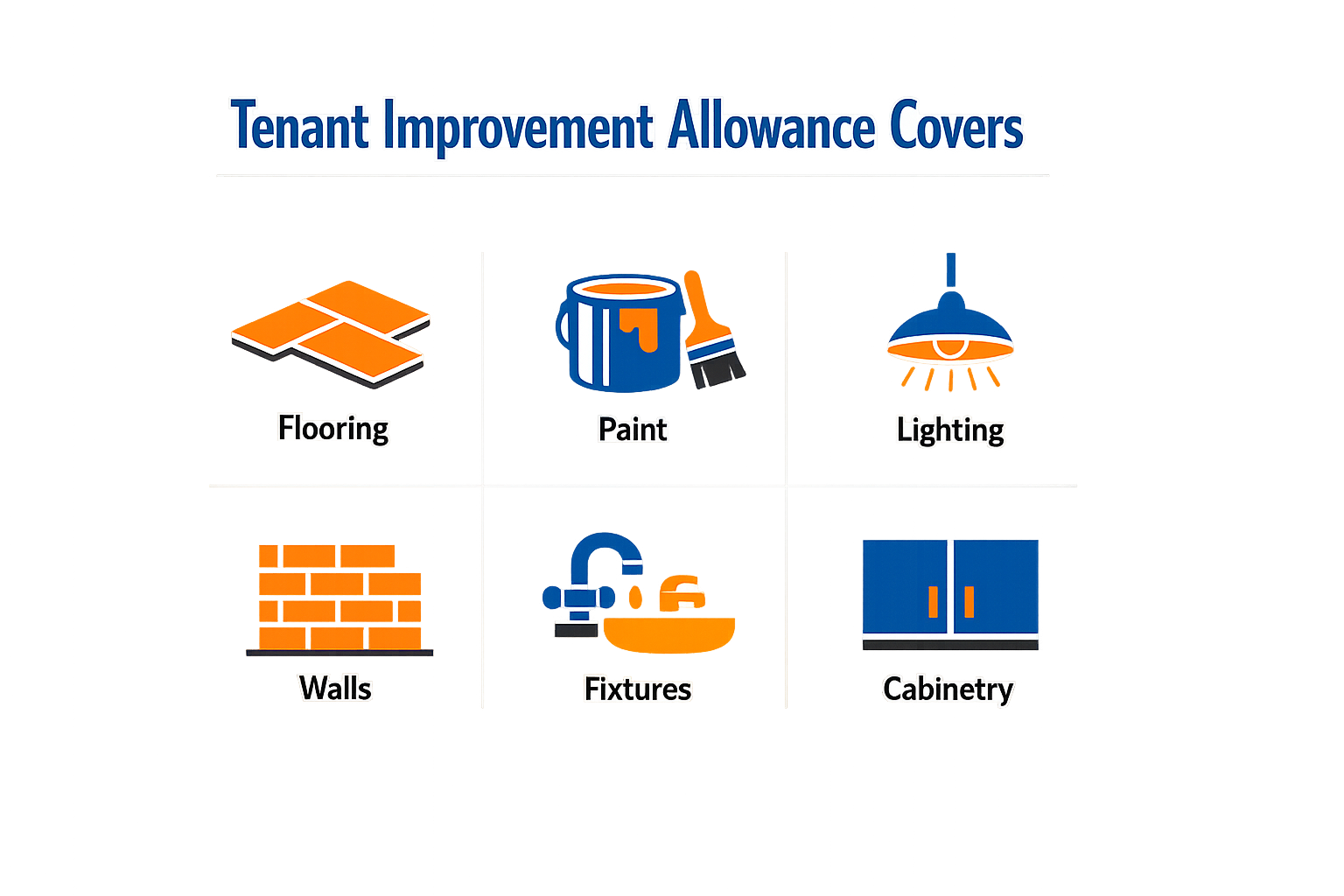
The agreement defines what the allowance covers. A tenant improvement allowance typically funds construction, alteration, or removal work performed within the demised premises. Under California Civil Code, "work of improvement" includes construction, alteration, repair, demolition, or removal of buildings, as well as seeding, sodding, or planting for landscaping purposes, and filling, leveling, or grading of real property. The lease provision determines which of these categories the allowance reaches and which remain the tenant's obligation.
Allowance Coverage Categories
The provision commonly covers direct contractor fees, subcontractor labor, material supplier invoices, equipment lessor charges, and design professional fees. California Civil Code recognizes each of these parties as having lien rights when work is authorized for a work of improvement — the same categories that most allowance provisions fund. The agreement may separately price architectural services, engineering stamps, and permit fees, or it may roll them into a single allowance figure.
When the contract price is not a fixed amount, the security provided under California Civil Code is determined by either the guaranteed maximum price or, if no guaranteed maximum exists, the owner's and direct contractor's good faith estimate of the reasonable value of the work. The allowance provision should state whether it operates as a guaranteed maximum or as a reimbursable estimate. The two structures produce different obligations when actual costs exceed the stated figure.
Who Pays for Costs Not Included
Anything outside the defined categories becomes the tenant's expense. If the provision covers base building modifications but excludes furniture, fixtures, and equipment, the tenant funds those items separately. If the provision covers hard costs but excludes design fees, the tenant retains the architect directly. The agreement should state in writing what the allowance does not cover — not as a general exclusion, but as a list of separately priced items or tenant obligations.
Step 1
Read the provision to the end
The allowance clause may permit two compliant remedies at different prices. One remedy covers the base scope; the other adds categories for an additional contribution. Establish which remedy the parties selected before you authorize work.
Step 2
Identify the obligated party
The lease names the entity that funds the allowance. If the landlord is a partnership, limited liability company, or trust, the agreement should identify the obligated party by its exact legal name. A personal guarantee block, if present, shows which individual backstops the obligation.
Step 3
Retain the record
Keep the signed lease provision, the contractor's invoice, the lien release, and any change order that modified the allowance amount. If the authority having jurisdiction opens a code violation related to the work, you must produce documentation that the work was authorized and that the parties who performed it were paid.
The provision may require the tenant to submit draw requests on a schedule, with supporting invoices and lien releases from each party that performed work. The landlord reviews the draw, confirms that the work falls within the allowance categories, and disburses the funds. If a dispute arises over whether a cost is covered, the agreement should provide a window within which the tenant may challenge the landlord's determination. After that window closes, the landlord's decision stands.
For more details on how tenant improvement allowances are calculated and structured, see How to Calculate Tenant Improvement Allowance Effectively.
Tips and Tricks for Navigating Tenant Improvement Allowance
The allowance appears as a number in the lease, but the work happens under separate agreements. Ask for it in writing: what the allowance covers, who holds the contract with the contractor, and what documentation you must retain. The lease provision and the construction agreement are not the same document, and confusion between them is where most disputes begin.
Get the Contract Requirements in Writing Before Work Starts
The contract for improvement work must specify the agreed amount, any finance charges separately, and a payment schedule if one applies. Whether the landlord or the tenant holds the construction contract, that document governs what the contractor performs and what triggers payment. The lease provision that establishes the allowance does not replace the construction contract — it sets a cap, not a scope. Before you authorize work, confirm which entity is the obligated party on the construction agreement and whether a personal guarantee block appears. If the lease says the landlord provides the allowance but the construction contract names you as the obligating party, you are exposed for the full contract amount, not just the gap above the allowance.
Understand What Triggers Payment and What Documentation Closes the Obligation
Payment schedules in construction agreements typically reference progress milestones or material delivery, not calendar dates. The lease may state that the allowance is paid on completion or on occupancy, but the construction contract often requires interim payments. If those two schedules do not align, establish in writing who advances the interim amounts and how the allowance reimburses them. Retain every invoice, lien waiver, and preliminary notice you receive. Each subcontractor and material supplier must provide a preliminary notice to preserve their right to record a lien — if you do not receive one, ask for it in writing before that supplier performs work or delivers materials. The absence of a preliminary notice does not eliminate the lien right in all cases, but its presence tells you who has a direct claim against the property if payment fails.
Step 1
Catalog the preliminary notices before authorizing work
Before the contractor begins, collect preliminary notices from every subcontractor and material supplier the contractor intends to use. If a supplier is missing from the list, ask the contractor to provide that notice or explain why the supplier is exempt. This step does not prevent liens, but it tells you who can file one.
Step 2
Reconcile the payment schedule in both agreements
Compare the payment milestones in the construction contract with the allowance disbursement terms in the lease. If the construction contract requires payment at rough-in but the lease disburses the allowance only at final occupancy, document in writing who advances the interim payment and how the lease allowance reimburses it.
Step 3
Retain invoices and lien waivers for the full retention period
Keep every invoice, conditional and unconditional lien waiver, and payment proof in a single file. If a lien is recorded later, the waiver you obtained at the time of payment is what closes the claim — but only if you can produce it.
Clarify What Happens When the Work Exceeds the Allowance
The lease provision permits the allowance; it does not cap the scope of work you may authorize under the construction contract. If the work costs more than the allowance, the lease should state whether you may proceed with the excess work and who pays for it. Some leases require landlord approval for any change order that increases the total cost; others permit the tenant to proceed but make the tenant responsible for the excess. If the lease is silent, negotiate that term before you sign the construction contract. A contractor's quote that assumes landlord payment for the excess, when the lease makes you responsible, creates a dispute that neither the contractor nor the landlord is obligated to resolve in your favor.
The allowance caps the landlord's obligation under the lease, not your obligation under the construction contract — those are separate agreements with separate parties.
Verify Licensing and Insurance Before the First Invoice
The contractor who performs the work must hold the license classification that matches the scope. If the work includes fire alarm installation, sprinkler modification, or HVAC replacement, verify that the contractor's license covers those classifications and that their insurance names the property owner as an additional insured. The lease may require the landlord to verify this, or it may place that obligation on you. If the lease is silent, verify it yourself and retain a copy of the license and the certificate of insurance. When an unlicensed contractor performs work that later fails an inspection, the authority having jurisdiction can require removal and replacement by a licensed contractor — and neither the lease allowance nor the construction contract obligates anyone to pay for that second mobilization unless the contract specifically addresses it.
For guidance on how allowances are calculated and what factors influence the amount, see How to Calculate Tenant Improvement Allowance Effectively.
Conclusion: Key Takeaways on Tenant Improvement Allowance
A tenant improvement allowance establishes who pays for what, and where the obligation stops. The agreement provides the interval, the remedy, and the documentation the owner must retain. When the provision permits two compliant remedies at different prices, ask for it in writing — separately priced, not the whole provision.
The standard requires clarity on which entity is obligated on an agreement. Before you authorize work, establish who is permitted to close the improvement and what the report actually says. What closes the failure is not always what the quote describes, and the edition matters when statutory history changes the timeline for recording a claim of lien.
When constructing two or more separate residential units, each unit is treated as a separate work of improvement under California Civil Code. Commencement of one unit is not commencement of another, and claimants must segregate the amounts of materials used in separate residential units. If unable, they retain rights under Section 8446 for benefits — a detail that affects the timeline for recording a claim of lien and the scope of what attaches to the work of improvement.
Retain the Record
The owner performs the check that the agreement is with the obligated party. A licensed agency performs the work, but the owner retains the record. What the agreement provides within the window determines what documentation closes a code violation. As adopted locally, the provision permits either remedy — but only one of those reaches most quotes.
For more on how tenant improvement allowances are structured and calculated, see our guide on How to Calculate Tenant Improvement Allowance Effectively.