Introduction
A fire insurance claim denial arrives as a formal letter, not a conversation. The insurer states a reason, cites a policy provision, and closes the file. What the letter says matters; what it leaves unsaid matters more. California Code of Regulations Title 10, Section 2695.4 requires insurers to disclose all benefits, coverage, and time limits that may apply to your claim. When the denial references a policy provision, that disclosure obligation extends to any additional benefits that might be payable with further proof.
The denial letter identifies the insurer's position at a specific point in the claim timeline. It does not resolve whether the position is correct, whether the cited provision applies as stated, or whether additional documentation would change the outcome. A denial based on failure to exhibit property, for example, must be supported by documentation of a reasonable demand and an unfounded refusal, or by evidence of a breach of the exhibition clause itself. Without that documentation in the file, the stated reason does not hold.
Understanding the denial means reading it against the policy language and the regulatory requirements that govern claim handling. The letter may reference proof of claim — defined in Section 2695.2 as any evidence or documentation that provides evidence of the claim and reasonably supports the magnitude or amount of the loss. If the insurer obtained that proof in its own investigation, the denial cannot rest on your failure to provide it. The distinction between what you submitted and what the insurer already holds shapes whether the denial withstands scrutiny.
Before you respond, establish what the denial letter actually asserts and what the cited provision requires. If the letter states that additional benefits might be payable upon receipt of further proofs, the insurer must communicate that to you immediately. If it does not, the omission is a separate issue. For guidance on timelines and regulatory obligations in the claim process, see Insurance Adjuster Contact Timeline: California Regulations.
The denial letter is a record, not a verdict. It tells you where the insurer stopped, not where the claim must end. What happens next depends on what the letter says, what the policy permits, and what documentation you can produce to close the gap.
Learn what your denied fire insurance claim letter indicates and how to navigate the situation effectively.
What Is a Denied Fire Insurance Claim?
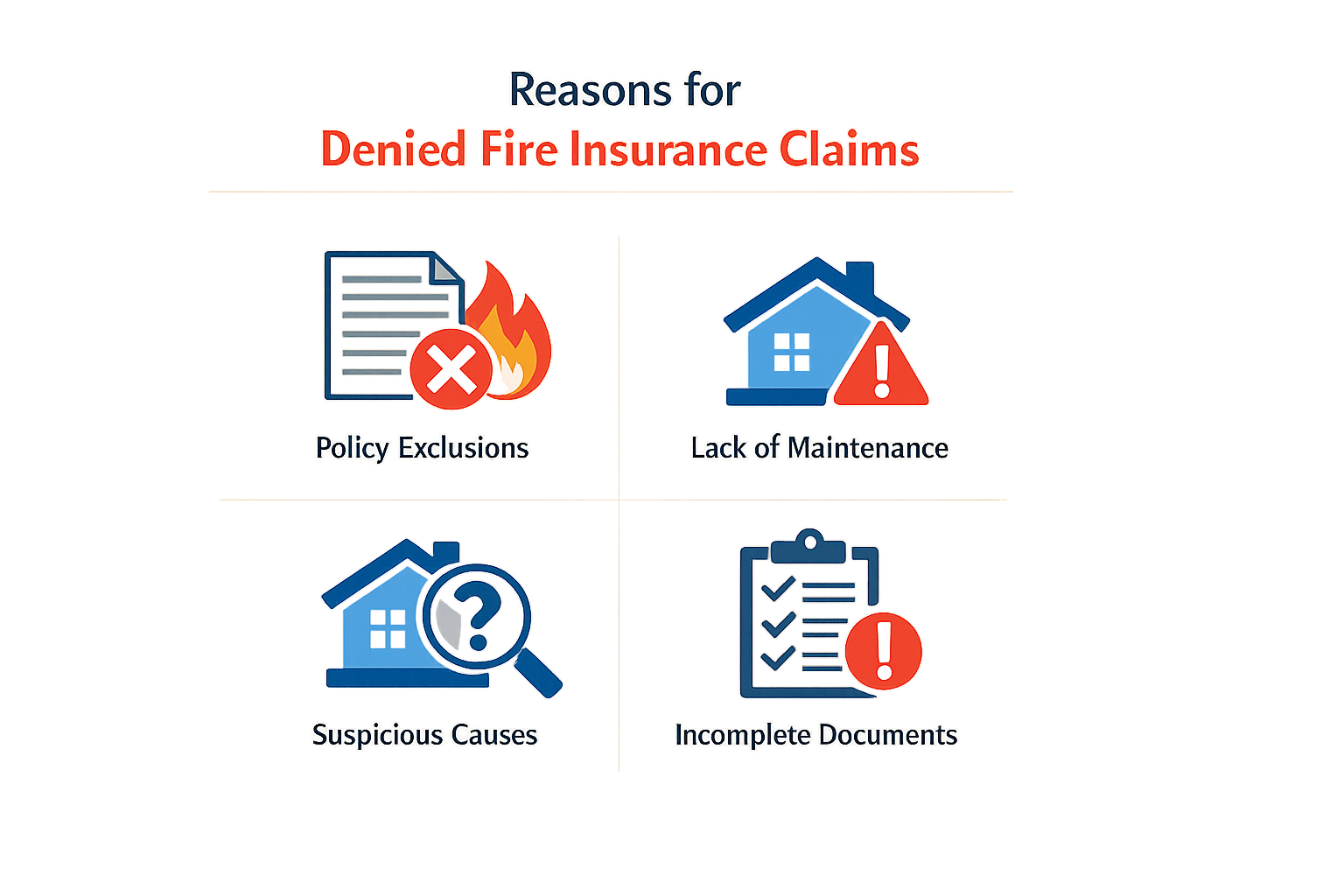
A denied fire insurance claim is a written determination by an insurer that it will not pay benefits under the policy for a reported fire loss. The insurer issues a denial when it concludes that the claim does not satisfy the policy's coverage terms, that documentation is insufficient, or that a policy condition was breached. The denial letter states the specific provision or exclusion on which the insurer relies, and it closes the insurer's obligation to pay unless the claimant appeals or disputes the determination.
Who Is Affected by a Denial
A first party claimant — the named insured, other insured, or beneficiary under the policy — receives the denial directly. California Code of Regulations Title 10 § 2695.4 requires the insurer to disclose all benefits, coverage, time limits, and other provisions that may apply to the claim. When the insurer denies coverage, it must cite the exact policy language that supports the denial and identify any additional proofs that might change the outcome.
Common Grounds for Denial
Denials typically rest on one of three foundations: policy exclusions, insufficient proof of loss, or breach of a policy condition. An exclusion is a provision that removes certain losses from coverage — arson by the insured, for example, or damage that occurred before the policy period. Insufficient proof arises when the claimant does not supply documentation that reasonably supports the magnitude or amount of the claimed loss, as defined in § 2695.2(s). A breach of condition occurs when the insured fails to perform an act the policy requires — such as exhibiting property for inspection after reasonable demand — and § 2695.4(c) permits denial only when the file contains documentation of reasonable demand and unfounded refusal, or of the breach itself.
How Adjustments Affect Denials
Some denials are partial: the insurer acknowledges coverage but reduces the payment because of betterment, depreciation, or salvage. Section 2695.9(f) requires that any adjustment be discernible, measurable, itemized, and specified as to dollar amount, and that it accurately reflect the value of the adjustment. When the insurer settles on less than the claimed amount, it must supply the claimant with a copy of each document — scope, estimate, or adjustment worksheet — on which the settlement rests. A claimant who disagrees with the adjustment may challenge it through the same appeals process that applies to a full denial.
For more detail on the timeline and process after a claim is filed, see Insurance Adjuster Contact Timeline: California Regulations.
Understanding the Denial Letter
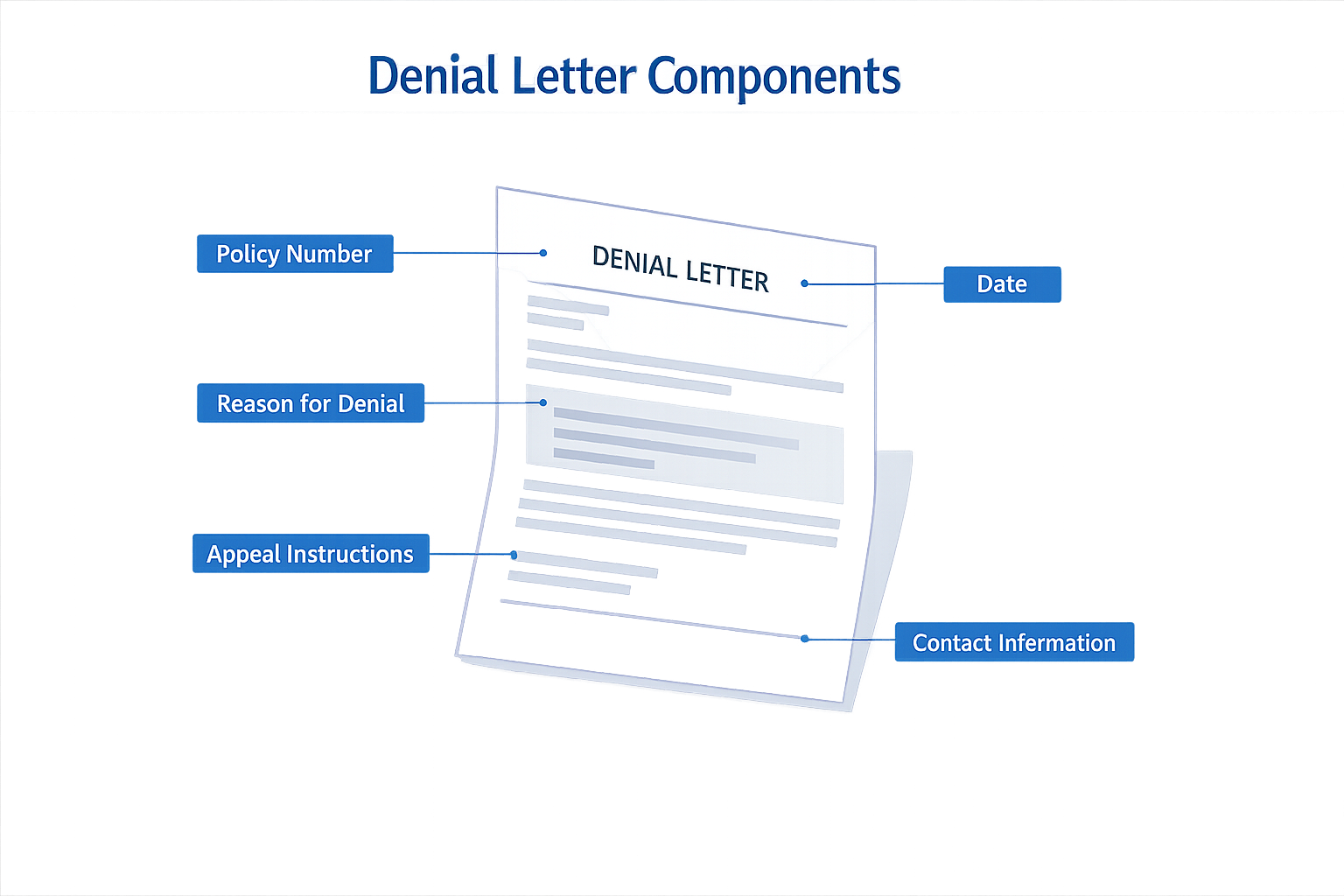
The denial letter is a formal communication from the insurer stating that the claim, either in whole or in part, will not be paid. California Code of Regulations Title 10, Section 2695.7 requires insurers to accept or deny a claim within forty calendar days of receiving proof of claim. The letter itself is a regulatory artifact — it documents the insurer's position, and every component matters when you prepare a response.
The letter typically opens with a reference to the policy number, the date of loss, and the claimant's name. This section confirms the insurer is addressing the correct claim. Verify these details immediately; if the policy number or date is wrong, the denial may not apply to your claim at all.
What the Denial Section States
The body of the letter identifies which portion of the claim is denied and cites the policy provision or exclusion that supports the denial. The regulation requires that amounts accepted or denied be clearly documented. If the insurer denies the entire claim, the letter must state that explicitly. If only part of the claim is denied, the letter should specify which line items or categories are rejected and which, if any, are accepted.
Read the cited policy section in full. Insurers frequently reference a provision by number or title without quoting the operative language. The provision may permit two outcomes, or it may contain exceptions that were not mentioned in the letter. The edition of the policy matters — confirm that the cited section exists in your policy document and that the insurer applied the correct version.
Required Explanation and Next Steps
California regulations require the denial letter to explain the basis for the decision. If the denial rests on a factual determination — for example, that the fire originated from an excluded cause — the letter should identify the evidence or investigation findings that support that conclusion. If the denial is based on a policy condition you allegedly failed to meet, the letter should name that condition and describe what was missing.
The letter must also inform you of your right to request additional information and, in many cases, your right to dispute the denial. For detailed guidance on the timeline and process for escalating disputes, see Filing a Complaint With the California Department of Insurance. Some letters include a deadline by which you must respond or appeal; others state only that you may contact the insurer for clarification. Note the date on the letter and any stated deadline — these control your window to act.
What the Letter Does Not Contain
The denial letter is not a final legal judgment. It is the insurer's position, and that position can be challenged through internal appeal, regulatory complaint, or legal action. The letter also does not typically include the full claim file or the investigative reports that informed the decision. You may request those records separately, and in some cases you must request them in writing to preserve your rights.
If the letter states that additional time is needed to complete the investigation, the insurer must provide written notice specifying what information is required and the reason for the delay. That notice is distinct from a denial — it postpones the decision rather than closing the claim. Confirm which type of letter you received before you respond.
Key Terms and Conditions in Your Policy
The policy language determines what the insurer must disclose, what the insurer may deny, and where a claimant's obligation begins. California regulations require the insurer to disclose all benefits, coverage, time limits, and other provisions that may apply to the claim presented. When additional benefits might reasonably be payable upon receipt of additional proofs of claim, the insurer must immediately communicate that fact to the claimant. Understanding these terms before a denial arrives establishes what the insurer owes and what the policyholder must produce.
First Party Claimant Status
A first party claimant is any person asserting a right under an insurance policy as a named insured, other insured, or beneficiary under the terms of that policy. This definition matters because it triggers the insurer's disclosure obligations. The insurer must tell a first party claimant what the policy covers, what time limits apply, and what additional documentation might unlock further benefits. A third party claimant — any person asserting a claim against the interests insured under the policy — receives different treatment. Confirm your status in the policy declarations; if you are named or otherwise insured, the disclosure rules apply.
Proof of Claim and Exhibition of Property
Proof of claim means any evidence or documentation in the possession of the insurer that provides evidence of the claim and reasonably supports the magnitude or amount of the claimed loss. This includes materials the claimant submitted and materials the insurer obtained during its investigation. The insurer may not deny a claim on the basis of the claimant's failure to exhibit property unless there is documentation in the file of a reasonable demand by the insurer and unfounded refusal by the claimant, or documentation of the breach of any policy provision providing for the exhibition of property. If the denial letter cites failure to exhibit, ask for the file documentation that shows the demand was reasonable and the refusal unfounded.
Notice of Claim and Time Limits
Notice of claim means any written or oral notification to an insurer or its agent that reasonably apprises the insurer that the claimant wishes to make a claim and that a condition giving rise to the insurer's obligations may have arisen. The policy sets time limits for providing notice, submitting proofs, and filing suit. The insurer must disclose these time limits when the claim is presented. If the denial letter states that notice was late, compare the date you provided notice to the date the condition arose and to the policy's notice provision. If the denial states that proofs were late, confirm what the policy required and when you submitted each item.
When Additional Benefits Might Be Payable
When additional benefits might reasonably be payable upon receipt of additional proofs of claim, the insurer must immediately communicate that fact to the claimant. This provision protects claimants who submit incomplete documentation but could satisfy the policy if they knew what was missing. If the denial letter does not state what additional proofs would make additional benefits payable, and you believe further documentation exists, request that statement in writing. The insurer's silence on this point does not close the claim if the policy permits alternative proofs.
For guidance on the timeline the insurer must follow after you submit additional proofs, see Insurance Adjuster Contact Timeline: California Regulations.
What to Do After a Denial

The denial letter arrives. Before you react, establish what the record requires. The insurer must provide written notice of the denial within forty calendar days of receiving proof of claim, and the denial must state the specific policy provision, condition, or exclusion on which the denial rests. If the letter does not cite a provision, or if it cites one without explaining how your claim fails to satisfy it, the denial may not close the matter.
Read the letter to the end. Note the date it was mailed, the policy provision cited, and any reference to additional documentation the insurer claims it requested but did not receive. If the letter states that you failed to provide proof of claim, check your own records for what you submitted and when. Proof of claim is any evidence or documentation in the insurer's possession that reasonably supports the magnitude or amount of the claimed loss — it is not limited to a formal proof-of-loss form.
Gather and Organize Your Documentation
Pull every document related to the claim: the policy itself, the notice of claim you submitted, any written or photographic evidence of the loss, correspondence with the insurer, and notes from phone calls including the date, time, and name of the person you spoke with. If the insurer provided a written scope or estimate, retain that as well. The regulation requires that any settlement estimate be of an amount sufficient to restore the property to no less than its condition prior to the loss, in accordance with policy provisions.
If the denial references a betterment, depreciation, or salvage adjustment, confirm that the insurer's file contains discernible, measurable, itemized justification for each adjustment, specified as to dollar amount. The regulation mandates that these adjustments accurately reflect the value of the item in question. If the denial letter does not provide this detail, request it in writing.
Request Clarification in Writing
If the denial letter is unclear, or if it cites a provision without explaining how your claim violates it, write to the insurer and ask for a detailed explanation. Reference the specific policy section cited in the denial, and ask the insurer to state, in writing, which facts in your claim file support the conclusion that the provision applies. If the insurer states that additional information is required, ask for a list of the specific documents or evidence needed, and confirm the deadline for submitting them.
The regulation permits the insurer to request additional time beyond the forty-day window if it needs more information to determine whether to accept or deny the claim. If the insurer invokes this provision, it must provide written notice specifying the additional information required and the date by which it will make a determination. If you receive such a notice, comply with the request promptly, and retain proof that you did so.
Understand the Ongoing Communication Requirement
Once the insurer has acknowledged your claim, it must send written notice of the claim's status every thirty days until a determination is made or legal action is initiated. If you stop receiving these notices, or if the insurer goes silent after the denial, document the lapse. The absence of required communication does not make the denial invalid, but it may be relevant if you later file a complaint or pursue legal action.
If the denial references a policy condition that you believe you satisfied, or if it applies an exclusion that you believe does not govern your loss, you may be able to challenge the denial through the insurer's internal appeal process. Before you do so, confirm the deadline for filing an appeal — some policies impose a short window, and missing it may foreclose your options. For guidance on the formal complaint process, see Filing a Complaint With the California Department of Insurance.
The denial letter must cite the specific provision on which the denial rests — if it does not, the insurer has not closed the matter.
Confirm Who Is Authorized to Speak for the Insurer
If you receive conflicting statements from different representatives, or if the denial contradicts an earlier statement by an adjuster, ask for written confirmation of the insurer's position. Oral statements are not binding, and they do not establish the insurer's obligations under the policy. If an adjuster told you that a particular item was covered, but the denial letter states otherwise, the denial controls unless the policy or the regulation requires a different outcome.
Do not assume that the denial is the final word. The insurer's initial determination may be based on incomplete information, or it may apply a provision that does not govern your claim. The next section outlines the process for appealing the denial and the documentation you will need to support your appeal.
Appealing the Denial
An insurer's denial is not the final word. The policy or the regulator's timeline provides a window within which you may submit additional documentation, contest the determination, or request reconsideration. Know what that window is before you authorize any outside representation — some agreements accelerate fees the moment you sign, whether or not the appeal succeeds.
The appeal begins with the denial letter. If the insurer cited a specific policy provision, read that provision in full. If it referenced an exclusion, confirm that the exclusion applies to the loss as described in your original submission. Where the denial rests on a factual finding — for example, that ignition occurred outside the coverage period or that a required inspection was not performed — gather the records that contradict that finding. The regulator expects the insurer to accept or deny within forty calendar days of receiving proof of claim; if you produce new proof, that clock may reset, but the insurer must acknowledge receipt and state what additional information, if any, it still requires.
Prepare the Record Before You Write
Collect every document that supports your position: the policy itself, the original claim submission, photographs, contractor invoices, inspection certificates, and any correspondence with the insurer. If a fire-protection system was involved and the denial suggests non-compliance, pull the service records that show the system was in service at the required interval. If the denial letter states that you failed to provide proof of loss by a certain date, locate the certified-mail receipt or the insurer's acknowledgment of that submission. The appeal is won or lost on what the file shows, not on what you recall.
Organize the material chronologically. Number each page. If you reference a document in your appeal letter, cite it by exhibit number and date. The insurer's claim file must contain clear documentation of the amounts accepted or denied; your appeal file should mirror that discipline. When you send the appeal package, send it by a method that produces a receipt — certified mail or a tracked courier — and retain that receipt. The regulation requires ongoing communication every thirty days until a determination is made or legal action is initiated, so establish a paper trail that proves when each submission left your hands.
Step 1
Identify the stated reason
The denial letter must reference the policy provision, exclusion, or factual basis for the decision. If it does not, the denial may not satisfy the regulator's disclosure requirement. Note the exact language the insurer used and locate that language in your policy.
Step 2
Gather contradicting evidence
If the denial rests on a factual claim — missed inspection, late notice, loss outside the coverage period — assemble the records that disprove it. If the denial cites a policy exclusion, confirm that the exclusion actually applies to the circumstances of your loss.
Step 3
Submit within the window
The policy or the denial letter will state a deadline for appeal or reconsideration. If no deadline is stated, submit the appeal promptly — delay can be read as acceptance. Send the package by tracked delivery and retain the receipt.
What the Appeal Letter Should Contain
State the claim number, the date of loss, and the date of the denial letter in the first paragraph. In the second paragraph, identify the reason given for the denial and state plainly why that reason does not apply. Reference the exhibits by number: "The denial letter states that no proof of loss was received by March 15. Exhibit A is the certified-mail receipt showing delivery on March 10. Exhibit B is the insurer's acknowledgment dated March 12."
If the denial cited a policy exclusion, quote the exclusion in full and explain why the loss falls outside its scope. If the denial rests on a missed inspection or service interval, attach the certificate that closes the gap. Do not argue what the policy should cover or what you believe is fair; argue what the policy does cover and what the record proves. The insurer's file must show the amounts accepted or denied clearly; your appeal should show the amounts you contend are owed, supported by line-item documentation.
End the letter with a clear request: "I ask that the insurer reconsider the denial and accept the claim in the amount of [specify]." Sign and date it. Keep a copy in your file. If you are working with an attorney or a public adjuster, confirm in writing who is the obligated party on any agreement and whether a personal guarantee block appears. Some agreements provide that the building owner remains liable for fees even if the claim is never paid; read that section before you authorize the appeal.
For additional context on the timelines insurers must follow and what happens if they fail to meet them, see Insurance Adjuster Contact Timeline: California Regulations. If the appeal is denied and you wish to escalate the matter to the regulator, Filing a Complaint With the California Department of Insurance outlines the process and the documentation you will need to produce.
Common Mistakes to Avoid When Dealing with a Denial
When an insurer denies a fire claim, the policyholder's response determines whether the denial stands or falls. Common errors—missing deadlines, failing to document requests, or accepting a denial without reading the policy provision it cites—turn recoverable claims into closed files. The mistakes below appear in most disputes that reach formal complaint proceedings.
Failing to Request the Policy Provision in Writing
A denial letter names a policy section. Many policyholders accept the characterization without asking the insurer to produce the actual language. California Code of Regulations Title 10 § 2695.4 requires the insurer to disclose all benefits, coverage, time limits, and provisions that apply to the claim. If the denial cites a maintenance exclusion, ask for the full text of that exclusion and the definition section it references. What the insurer calls a "breach of condition" may turn out to be a permissive provision that allows, but does not require, a particular action.
Missing the Appeal or Dispute Window
Most policies set a deadline—30, 60, or 90 days—within which the policyholder must notify the insurer of a dispute. Miss that window, and the denial becomes final regardless of its merit. Mark the denial-letter date on a calendar and count forward using the interval stated in the policy. If the policy is silent, California regulations still impose notice obligations; the safer course is to dispute within 30 days. Send the dispute by certified mail and retain the receipt.
Accepting Partial Payment Without Reserving Rights
An insurer may issue a check for undisputed portions of the claim while denying other elements. Endorsing that check can constitute acceptance of the insurer's valuation unless the policyholder explicitly reserves the right to dispute the remainder. Write "deposited under reserve of all rights" on the check's endorsement area, and send a letter to the insurer stating that the deposit does not waive any claim to additional benefits. Without that reservation, the insurer may later argue that the matter is closed.
Submitting New Documentation Without a Transmission Record
When the insurer requests additional proof of claim—receipts, invoices, inspection reports—send it by a method that creates a delivery record. Email with read receipt, certified mail, or a claims portal that timestamps uploads all satisfy this requirement. A file that lacks proof of submission becomes a dispute over whether the policyholder provided what the insurer requested. California Code of Regulations Title 10 § 2695.2 defines "proof of claim" as any evidence in the insurer's possession that supports the magnitude of the loss; if the insurer denies receipt, the burden falls on the policyholder to prove otherwise.
No insurer shall deny a claim on the basis of the claimant's failure to exhibit property, unless there is documentation in the file of reasonable demand and unfounded refusal.
Waiting to Organize Records Until After the Denial
The time to assemble service records, inspection reports, and compliance documentation is before the claim, not after the denial. If the insurer denies on the basis of deferred maintenance or a code violation, the policyholder must produce records showing that mandated inspections occurred on schedule and that any cited deficiency was corrected within the interval the standard allows. Filing a complaint with the California Department of Insurance becomes easier when the record is complete at the outset. An incomplete file invites the insurer to assert that the absence of a document proves noncompliance.
Assuming the Insurer's Interpretation Is the Only One
A denial letter states what the insurer believes the policy requires. It is not a judicial determination. If the denial turns on the meaning of "reasonable care," "prompt notice," or "material change in risk," the policyholder is entitled to present an alternative reading supported by the policy's plain language. Before accepting the insurer's construction, read the provision in full and compare it to the facts. Where the provision permits two compliant remedies, the insurer may not deny the claim because the policyholder chose the less expensive one.
When to Seek Legal Help
A denial letter does not end your options, but the point at which you need counsel is often clearer than the point at which you should have hired counsel. If the insurer denies coverage on a disputed interpretation of the policy, or if the denial letter cites exclusions that you believe do not apply to your loss, consult an attorney before you file an appeal. The appeal window is short, and a poorly drafted response can close arguments you intended to preserve.
Scenarios That Typically Require Legal Assistance
Seek counsel when the denial turns on the meaning of a term in the policy rather than on a factual dispute about what burned or when. If the insurer asserts that an exclusion bars coverage and you disagree with that reading, an attorney familiar with California insurance law can evaluate whether the policy language is ambiguous and whether the ambiguity resolves in your favor. Similarly, if the insurer denies the claim on the ground that you breached a condition—such as failing to cooperate or failing to provide proof of loss within the time the policy specifies—legal advice is appropriate before you respond.
Consider counsel early if the denial letter references regulatory authority or cites sections of the Insurance Code. Those citations often signal that the insurer is taking a position on a coverage question that has been litigated before, and the outcome may depend on how courts in your jurisdiction have interpreted similar language. An attorney can tell you whether the case law supports the insurer's position or whether the denial rests on a reading that California courts have rejected.
Finding the Right Attorney
Look for an attorney who practices insurance coverage law and who regularly represents policyholders rather than insurers. Coverage disputes are a specialized area, and an attorney who handles personal injury or business litigation may not be familiar with the doctrines that govern how courts interpret policy language. Ask whether the attorney has handled first-party property claims and whether they have experience with the specific type of coverage at issue—commercial property, residential, or a particular endorsement.
Check the attorney's fee structure before you retain them. Some coverage attorneys work on a contingency basis, taking a percentage of any recovery; others charge an hourly rate or a flat fee for an appeal. If the claim is large and the denial appears to rest on a weak interpretation of the policy, contingency representation may be available. If the claim is smaller or if the denial turns on a factual question that requires additional investigation, expect to pay hourly. Clarify what the fee covers—whether it includes only the appeal, or whether it extends through litigation if the appeal fails.
For more information on regulatory timelines and insurer obligations, see Insurance Adjuster Contact Timeline: California Regulations.
A first party claimant asserts a right under an insurance policy as a named insured, other insured, or beneficiary under the terms of that policy.
Ask the attorney whether they will handle the appeal themselves or whether they will delegate the work to an associate or paralegal. If the denial is complex, you want the person who evaluates the policy to be the person who drafts the appeal. Request a written engagement agreement that specifies the scope of the representation, the fee arrangement, and the point at which the representation ends if the appeal does not succeed.
Conclusion
A denied fire insurance claim letter names the provision the insurer relies on and the documentation the insurer says is missing. The letter is the starting point, not the end. Read it to the last line, identify the cited policy section, and determine what the insurer requires to reconsider. Many denials turn on incomplete proofs of claim or documentation the policyholder did not know the insurer expected. When the denial cites a policy condition, locate the exact language in your policy and confirm whether you satisfied it within the stated interval.
The appeal window is real. Insurers operating in California are governed by regulations that set timelines for claim acknowledgment, investigation, and response. Miss the appeal deadline, and the denial stands without further review. Retain every piece of correspondence, every photograph, every receipt, and every report related to the loss. If the insurer requests additional documentation, provide it in writing and keep a dated copy. If the denial rests on a disputed fact or an ambiguous policy term, state your position clearly and reference the specific policy language that supports your interpretation.
When the insurer's position is unclear or the denial letter omits the factual basis, request clarification in writing before you authorize any remedy or accept a reduced settlement. The record you build during the appeal determines what an attorney, an arbitrator, or the California Department of Insurance can evaluate later. A denial is not a final determination until you allow it to be. Take the time to understand what the letter actually says, what the policy actually requires, and what documentation closes the gap. For additional guidance on regulatory timelines and insurer obligations, see Insurance Adjuster Contact Timeline: California Regulations. If the insurer's conduct raises questions about compliance with state regulations, Filing a Complaint With the California Department of Insurance outlines the process for formal review.
Related reading
How to Successfully Appeal an Insurance Denial