
Introduction to Mechanics Liens
A mechanics lien is a legal claim recorded against real property when someone who improved that property has not been paid. The claim attaches to the property itself, creating an encumbrance on title that must be resolved before the property can be sold or refinanced. California Civil Code establishes that a person who provides work authorized for a site improvement has a lien right under the mechanics lien statute.
The mechanics lien exists to protect contractors, subcontractors, material suppliers, and laborers who add value to property. When an owner contracts for construction, repair, or improvement work, the law assumes that the property itself should secure payment for that work. If payment fails, the unpaid party may record a lien, and that lien remains on title until it is satisfied, released, or extinguished by court order.
Property owners receive statutory warning of this risk. California Business and Professions Code requires contractors to include a mechanics lien warning in certain contracts: "Anyone who helps improve your property, but who is not paid, may record what is called a mechanics lien on your property." That warning signals the property owner's exposure—even when the owner has paid the general contractor, a lien from an unpaid subcontractor or supplier can still attach to the property. For more information on handling disputes with service providers, see Filing a Complaint With the California Department of Insurance.
The lien process operates on strict timelines. The claimant must record the lien within a specified period after the work is complete, and the lien expires if not enforced within a statutory window. These deadlines vary by project type and claimant role. An owner who understands the mechanics lien framework can evaluate contractor agreements, verify payment flows, and respond to lien filings with the documentation required to protect title.
Learn what a mechanics lien is, its purpose, and how it affects property ownership and contractor rights.
What Is a Mechanics Lien?
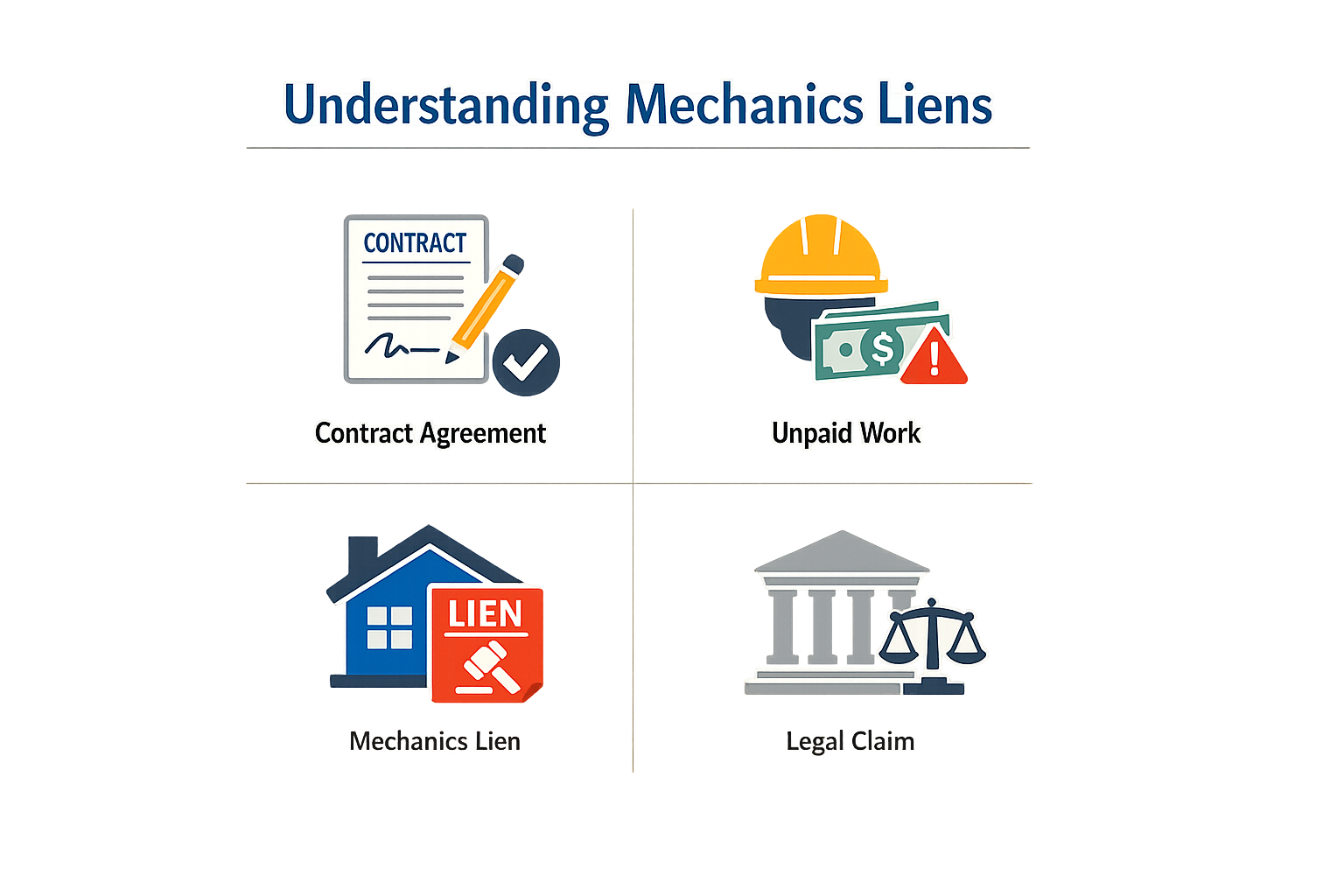
A mechanics lien is a statutory claim against real property, recorded to secure payment for labor, materials, or services provided in connection with a work of improvement or site improvement. The lien attaches to the property itself, not to the owner personally, and gives the claimant a legal interest that can be enforced through foreclosure if the debt remains unpaid. California Civil Code defines "lien" to include a lien of a design professional under Section 8302, a lien for a work of improvement under Section 8400, and a lien for a site improvement under Section 8402.
The mechanics lien right exists under Title 2 of Part 6, Division 4 of the California Civil Code. The statutory framework was added by Stats. 2010, Ch. 697, Sec. 20 (SB 189), effective January 1, 2011, and operative July 1, 2012. The statute provides that a person who provides work authorized for a site improvement has a lien right under the chapter. The lien does not arise automatically—it must be perfected by recording a claim of lien within the statutory period, and it expires if not enforced within the time the statute allows.
Who May Record a Mechanics Lien
The statute permits any person who provides work authorized for a site improvement to record a lien. This includes general contractors, subcontractors, material suppliers, equipment lessors, and design professionals. The key requirement is that the work was authorized—either by the property owner, by a contractor holding authority from the owner, or by operation of law. Work performed without authorization, or after a valid notice of cessation or completion has been recorded, may not support a lien claim.
The lien claimant need not have a direct contractual relationship with the property owner. A subcontractor who contracts with the general contractor, or a supplier who delivers materials to the subcontractor, may still record a lien against the owner's property. The lien reaches the property because the work or materials contributed to its improvement, and the statute treats the improvement itself as the security for payment.
What the Lien Secures
The lien secures the reasonable value of the work provided, up to the amount stated in the recorded claim of lien. It does not secure penalties, attorney fees, or other damages unless the statute or the underlying contract expressly permits those items to be included. The lien amount is limited by the contract price, if a contract exists, or by the reasonable value of the work, if no contract governs the transaction.
The lien also secures only work that is lienable under the statute. Preliminary services—such as feasibility studies, financing arrangements, or marketing—are not lienable unless they qualify as design professional services under Section 8302. Work performed after the statutory deadline for recording a lien, or after a notice of cessation or completion has been recorded and the statutory period has run, is not secured by the lien.
The Lien as a Cloud on Title
Once recorded, the mechanics lien appears in the chain of title and constitutes a cloud that must be cleared before the property can be sold or refinanced. Title insurers will not insure over an unreleased lien, and lenders will not fund a loan secured by property encumbered by a mechanics lien. The owner must either pay the lien, bond it off, or obtain a court order releasing it. If you're dealing with a lien claim and need to understand the timeline for resolving disputes with other parties, see our guide on Insurance Adjuster Contact Timeline: California Regulations.
The lien does not give the claimant possession of the property, and it does not permit the claimant to perform work or enter the property without the owner's consent. The lien is a security interest only—it must be enforced through a foreclosure action if the debt is not paid voluntarily. The foreclosure action is subject to the same statutory deadlines that govern the lien itself, and a lien that is not enforced within the statutory period expires by operation of law.
Why Mechanics Liens Matter
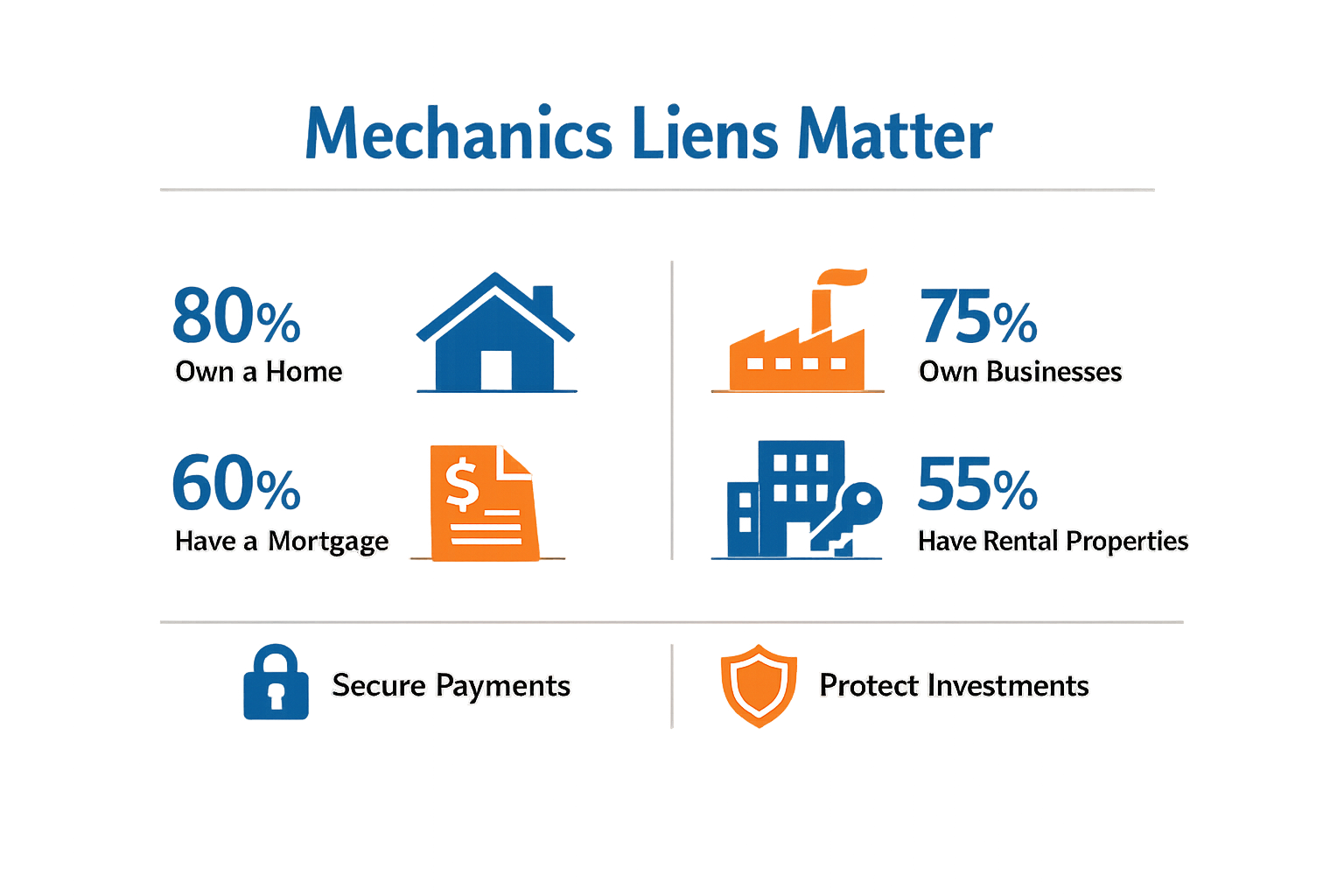
The mechanics lien exists to protect the rights of contractors, subcontractors, and material suppliers who provide authorized work for a site improvement. Under California Civil Code, a person that provides work authorized for a site improvement has a lien right — a statutory remedy that attaches payment obligation directly to the property rather than relying solely on the contracting party's creditworthiness.
For contractors and subcontractors, the lien is a last-resort collection tool. When payment disputes arise, the lien establishes a recorded claim against the property that survives ownership transfers and takes priority over many later-recorded interests. The lien does not guarantee payment, but it does create leverage: a property owner facing a valid lien may be compelled to resolve the dispute to clear title, refinance, or sell.
Why Property Owners Must Track Lien Exposure
Property owners face dual-payment risk. If a court finds a mechanics lien valid, the owner could be forced to pay twice — once to the direct contractor and again to satisfy the lien — or face the sale of the property to satisfy the claim. This exposure exists even when the owner paid the general contractor in full, if that contractor failed to pay downstream subcontractors or suppliers.
To enforce a lien, the claimant must have given preliminary notice to the extent required by statute and made proof of that notice. The preliminary notice requirement creates a paper trail: owners who receive these notices know which parties have potential lien rights and can take steps to verify payment before releasing final funds to the general contractor. For more on how insurance timelines and documentation requirements intersect with construction disputes, see Insurance Adjuster Contact Timeline: California Regulations.
The Lien Release Bond Alternative
An owner, direct contractor, or subcontractor affected by a recorded claim of lien that disputes its correctness or validity may obtain release of the real property by recording a lien release bond. The bond must be in an amount equal to 125 percent of the claim of lien or the amount allocated to the real property to be released. This remedy allows the property to be sold or refinanced while the underlying payment dispute proceeds separately.
The bond shifts the security from the real property to a surety, but it does not resolve the dispute. If the claimant prevails, the surety pays; if the claimant loses, the bond is released. The 125 percent requirement covers the claim plus anticipated costs and interest.
Why the Lien Matters in Service Agreement Disputes
Mechanics lien rights extend beyond new construction. Repair, maintenance, and alteration work on commercial buildings can all give rise to lien claims. When a service agreement dispute escalates — over scope, over completion, or over defects — the contractor's ability to record a lien changes the owner's calculation. The lien makes the dispute a title issue, not just a contract issue, and it compresses the owner's timeline to resolve or bond.
Owners who understand lien mechanics negotiate service agreements differently. They require preliminary notice waivers where statute permits, they demand conditional and unconditional lien releases at each payment milestone, and they retain a percentage of each payment until final completion and lien-release documentation is recorded.
How to File a Mechanics Lien
Filing a mechanics lien is a procedural act governed by statute. The claim must meet specific content requirements, be recorded within defined deadlines, and follow preliminary notice obligations. The steps below outline the filing sequence under California Civil Code provisions.
Preliminary Notice Requirement
Before a claimant can enforce a lien, the statute requires that preliminary notice be given to the extent required by the code and that proof of notice be made. This notice precedes the lien filing and establishes the claimant's right to later record a claim. Without compliant preliminary notice, the lien cannot be enforced — the filing itself may proceed, but enforcement is barred.
Content of the Claim
Step 1
Prepare the written statement
The claim of mechanics lien must be a written statement, signed and verified by the claimant. It must contain: a statement of the claimant's demand after deducting all just credits and offsets; the name of the owner or reputed owner, if known; a general statement of the kind of work furnished by the claimant; and the name of the person by whom the claimant was employed or to whom the claimant furnished the work.
Step 2
Verify accuracy of required elements
The statute permits some tolerance for error. Erroneous information relating to the claimant's demand, credits and offsets deducted, the work provided, or the description of the site does not automatically invalidate the claim of lien. However, material errors that prejudice an interested party or substantially mislead regarding the nature or extent of the claim can render the lien unenforceable. Accuracy in the demand amount, work description, and property description reduces dispute risk.
Recording the Claim
Step 3
Record with the county recorder
Once the written claim is prepared and verified, it must be recorded in the office of the county recorder for the county where the property is located. Recording creates the public encumbrance on title. The claim must be recorded within the statutory deadline — typically 90 days after completion of the work of improvement for most claimants, though deadlines vary by role and contract type.
Step 4
Serve notice of recordation
After recording, the claimant must serve a copy of the recorded claim on the owner and, where applicable, the direct contractor. This notice informs the affected parties that an encumbrance now appears on the property and triggers their opportunity to respond, dispute, or arrange payment.
Disputing or Releasing a Recorded Lien
An owner of real property or any interest in real property subject to a recorded claim of lien, or a direct contractor or subcontractor affected by the claim, may dispute the correctness or validity of the claim by obtaining a lien release bond. The bond releases the real property from the claim of lien and substitutes the bond as security. The principal on the bond may be the owner, the direct contractor, or another affected party.
For guidance on navigating disputes after a lien is recorded, see Filing a Complaint With the California Department of Insurance for context on formal complaint procedures in related regulatory matters.
| Step | Timing | Documentation Required |
|---|---|---|
| Preliminary notice | Before work completion | Proof of service |
| Claim preparation | Within 90 days of completion (typical) | Verified written statement |
| Recording | Within statutory deadline | Recorded claim |
| Notice of recordation | After recording | Copy of recorded claim |
Best Practices for Managing Mechanics Liens
Managing mechanics liens requires discipline at the front end of the contract, not scrambling when the filing window opens. The statute does not reward good intentions — it rewards documentation, verified lists, and payment schedules tied to proof of performance. Whether you are the owner paying the bills or the contractor managing subs, the best protection is a system that makes lien exposure visible before the first check clears.
Obtain a Complete List of Subcontractors and Suppliers
Before you authorize the first payment to the general contractor, require a written list of every subcontractor and material supplier expected to touch the project. The list should include names, addresses, and the scope each entity will perform. This is not a courtesy — it is a control mechanism. If a sub or supplier is not on the list, you have no advance notice of who might file a preliminary notice, and you cannot track whether they were paid.
Once you have the list, wait twenty days after each sub or supplier starts work before releasing payment to the general contractor. That twenty-day window allows preliminary notices to arrive and be recorded. If a notice arrives, you know someone is on the job and expects payment. If no notice arrives from a listed party, ask why. The absence of a notice does not eliminate lien rights for all claimants, but it narrows the field and gives you a clearer picture of who is owed what.
Verify Payment Before Releasing the Next Draw
Payment schedules tied to completion milestones are common, but they do not prevent liens if the general contractor pockets the draw and does not pay the subs. Before you release the next payment, require conditional lien releases from every sub and supplier who worked on the prior phase. A conditional release states that the claimant will waive lien rights upon receipt and clearance of the payment. Once the payment clears, obtain unconditional releases confirming that the waiver is final.
This two-step release process creates a paper trail that matches payments to work performed and verified waiver of lien rights. If a general contractor cannot produce releases, do not release the next draw. The statute permits you to withhold payment when you have a good-faith belief that subs have not been paid, and conditional releases give you the evidence to support that belief.
Record the Contract and Payment Terms in Writing
For owner-occupied single-family construction, the statute requires a written contract signed by both parties. The contract must include the contractor's name, address, and license number; approximate start and completion dates; and a description of the work and materials. These are not suggestions — they are statutory prerequisites. A contract that omits required elements may still bind the parties, but it complicates enforcement and gives both sides weaker positions if a lien dispute arises.
Even when the statute does not mandate a written contract, put the payment terms, scope, and schedule in writing. Verbal agreements leave both parties guessing about what was promised, when payment is due, and what constitutes completion. Written terms reduce disputes and provide a reference point when a preliminary notice or lien claim arrives. For guidance on managing contractor disputes and timelines in other contexts, see Insurance Adjuster Contact Timeline: California Regulations.
The statute rewards documentation, verified lists, and payment schedules tied to proof of performance.
Respond Promptly to Preliminary Notices
When a preliminary notice arrives, read it. The notice identifies the claimant, the person who hired them, and the property where the work is occurring. It does not create a lien, but it preserves the claimant's right to file one if payment fails. If the notice names a subcontractor you did not know was on the job, contact the general contractor immediately and ask why the sub was not on the original list. If the notice describes work outside the scope of your contract, determine whether the general contractor added scope without authorization.
A preliminary notice is a warning, not a crisis. Treat it as an opportunity to verify that your payment records match the work being performed and that the general contractor is distributing funds as agreed. If you wait until a lien is recorded to investigate, you have lost the window to correct payment failures before they escalate.
Understand the Difference Between Minor Errors and Material Defects
The statute permits certain errors in a mechanics lien claim without invalidating the lien. Erroneous information about the claimant's demand, credits and offsets deducted, the work provided, or the description of the site does not automatically void the claim. However, if the erroneous information prevents the owner or other interested parties from identifying the property or the claimant, or if it materially prejudices their ability to respond, the lien may be invalid.
This distinction matters when you receive a lien claim that contains mistakes. A misspelled street address or an incorrect lot number may not defeat the lien if the property is still identifiable. A claim that overstates the amount owed by a small margin may survive if the error does not mislead the parties. Before you assume a defective lien is unenforceable, consult the statute and determine whether the defect is material. Relying on a minor error to avoid payment is not a defense — it is a gamble.
Common Mistakes with Mechanics Liens
The mechanics lien process is a statutory remedy, and it operates by the letter of the code. A single missed requirement invalidates the entire claim, leaving the claimant without a lien and the property owner with a cloud on title that requires separate litigation to remove. The errors that close the most liens appear early — before the claimant records anything — and they cluster around preliminary notice, claim content, and timing.
Failure to Serve Preliminary Notice
A claimant may enforce a lien only if the claimant has given preliminary notice to the extent required by statute and made proof of notice. No preliminary notice, no lien — the claim is void regardless of the amount owed or the quality of the work. The notice must be served on the owner, the direct contractor, and the construction lender (if any) within the statutory window, and proof of service must be retained. The claimant who waits until payment is overdue to consider notice has already lost the lien.
Erroneous Information in the Claim of Lien
Erroneous information contained in a claim of lien relating to the claimant's demand, credits and offsets deducted, the work provided, or the description of the site does not automatically invalidate the claim. However, erroneous information that materially misleads a party to its prejudice does invalidate the lien. The line between a harmless error and a fatal one is drawn by the court, not by the claimant. A property description that identifies the wrong parcel, a demand that overstates the amount by more than the statutory tolerance, or a work description that names a different project — each of these can close the lien if the error prejudices a party's ability to respond.
The claim must be signed and verified by the claimant. An unsigned claim, a claim signed by someone without authority, or a claim with a defective verification is void. The recorder will accept the document, but the lien does not attach.
Filing Outside the Statutory Deadline
The claim of lien must be recorded within the statutory deadline measured from the date of completion or cessation of work. Miss the deadline by one day, and the lien is unenforceable. The claimant who relies on someone else's representation of the completion date — rather than verifying it independently — assumes the risk that the representation is wrong. The deadline does not extend because the claimant was unaware of it, because the owner promised to pay, or because the parties were negotiating. The statute runs regardless.
Claiming Work Not Included in the Direct Contract
A lien does not extend to work that is not included in a direct contract or a modification of that contract if the claimant had actual knowledge or constructive notice of the contract's provisions before providing the work. The subcontractor who performs extra work at the request of the direct contractor — without verifying that the direct contract authorizes it or that a written modification has been executed — may find that the work is not lienable. The filing of a contract or modification with the county recorder gives constructive notice to all claimants. Once filed, the claimant cannot claim ignorance.
The lien attaches only to work the owner agreed to pay for under the direct contract or a recorded modification — not to work the contractor ordered on its own authority.
Inflating the Lien Amount
The lien is a direct lien for the lesser of the reasonable value of the work provided or the price agreed to by the claimant and the person that contracted for the work. A claimant who inflates the demand beyond either of those amounts risks a finding that the entire lien is invalid. The lien is not an opportunity to add on disputed charges, unrelated claims, or speculative damages. It secures payment for work actually provided at the contract rate or, if no rate was agreed, at the reasonable value. The claimant who treats the lien as leverage to extract a settlement on unrelated disputes invites a motion to expunge and may face liability for wrongful lien.
Ignoring the Lien Release Bond Procedure
An owner of real property subject to a recorded claim of lien, or a direct contractor or subcontractor affected by the claim, may obtain release of the property by recording a lien release bond. Once the bond is recorded, the lien is released and the claimant's remedy is against the bond, not the property. The claimant who ignores the bond, continues to assert the lien against the property, and refuses to pursue the bond claim loses the ability to enforce either remedy. For more information on handling disputes with insurance-related timelines, see Insurance Adjuster Contact Timeline: California Regulations.
Not Enforcing the Lien Within the Statute of Limitations
Recording the claim of lien does not complete the process. The claimant must file an action to enforce the lien within 90 days of recording, or the lien expires by operation of law. The claimant who records the lien, waits for the owner to respond, and assumes the lien remains in force indefinitely will discover — when the owner moves to expunge — that the lien is already void. The statute of limitations is jurisdictional. No court will enforce a lien after the deadline, regardless of the merits.
Frequently Asked Questions about Mechanics Liens
Who can file a mechanics lien on my property?
Anyone who helps improve your property but is not paid may record a mechanics lien. This includes general contractors, subcontractors, material suppliers, equipment rental companies, and design professionals. The lien attaches to the property itself, not to the person who failed to pay. If a general contractor does not pay a subcontractor, that subcontractor may file a lien against the property owner even when the owner already paid the general contractor in full.
The statute does not require the claimant to hold a direct contract with the property owner. A supplier who delivered materials to a subcontractor, with no direct relationship to the owner, may still record a valid lien if the materials were incorporated into the improvement and payment was not received.
What happens if a mechanics lien is filed against my property?
The recorded lien creates a cloud on the title. It appears in public records and will surface during any title search, blocking refinancing and sale transactions until the lien is resolved. The lien does not immediately transfer ownership, but it gives the claimant a legal interest in the property that must be addressed.
If a court finds the lien valid, the property owner could be forced to pay twice or face the sale of the property to satisfy the lien. This outcome occurs when an owner pays a contractor who then fails to pay downstream parties. The lien claimant may foreclose on the lien through judicial process, leading to a forced sale if the debt remains unpaid.
How long does a mechanics lien last?
The duration depends on whether the claimant files a lawsuit to enforce the lien. Most states impose a deadline—commonly 90 days to one year after recording—by which the claimant must initiate a foreclosure action. If no lawsuit is filed within that window, the lien expires and loses enforceability. The recorded document remains in the public record, but it no longer encumbers the title.
Even after expiration, the claimant may still pursue payment through other legal remedies, such as breach of contract claims. The lien's expiration removes the security interest in the property but does not extinguish the underlying debt.
Can I remove a mechanics lien from my property?
A lien may be removed through payment, settlement, bonding, or court order. If the debt is paid in full, the claimant must record a release of lien, which clears the title. Many states permit the property owner to post a bond in the amount of the lien plus a statutory margin, which transfers the claimant's security interest from the property to the bond and allows transactions to proceed.
If the lien is invalid—filed late, improperly noticed, or based on work not performed—the property owner may petition the court for an order expunging the lien. This requires a judicial determination and typically involves attorney representation. A lien cannot be removed unilaterally by the property owner; the claimant or a court must act.
Do I need a lawyer to handle a mechanics lien?
Whether to retain counsel depends on the complexity of the claim and the amount at stake. Filing or defending against a mechanics lien involves statutory notice requirements, strict deadlines, and potential exposure to foreclosure. An error in procedure—such as missing a preliminary notice deadline or failing to serve required documents—can forfeit rights or defenses entirely.
For more information on managing disputes and understanding timelines in related property matters, see Insurance Adjuster Contact Timeline: California Regulations.
Property owners facing a recorded lien, and contractors or suppliers seeking to preserve lien rights, typically benefit from legal review before acting. The cost of early consultation is usually lower than the cost of correcting procedural mistakes after they occur.
Conclusion on Mechanics Liens
The mechanics lien is a statutory remedy that protects the rights of contractors and workers by ensuring they can claim payment for their services on a property. A person that provides work authorized for a site improvement has a lien right under California Civil Code provisions added in 2010, effective from January 1, 2011. The lien attaches to the property itself, not to the owner's general assets, and remains enforceable only when the claimant meets the filing intervals and notice provisions the statute prescribes.
Understanding the mechanics lien means knowing what the record must show: the preliminary notice within the statutory window, the claim of lien within the deadline after work stops, and the action to foreclose within the enforcement period. Each of these steps is separately required, and missing one closes the right. The lien does not operate as a judgment or a penalty — it is a security interest that permits foreclosure if the debt remains unpaid. The property owner retains the right to bond around the lien, to dispute it in court, or to pay it and pursue the obligated party separately.
For property managers and building owners, the mechanics lien is a compliance item that appears in title reports, loan conditions, and sale escrows. Retain the preliminary notices you receive, confirm that every contractor and subcontractor you authorize understands the notice requirement, and ask for lien releases in writing as each phase closes. If a lien is recorded, obtain a copy of the claim, verify the claimant's standing, and consult the statute for the deadline to respond. The lien is not a finding that you owe the money — it is a claim that must be resolved through payment, bond, or judicial determination.
The statutory framework is clear: the lien right exists to secure payment for work performed, and the procedural requirements ensure that all parties receive notice and an opportunity to respond. Whether you are a contractor protecting your payment rights or an owner managing lien risk, the mechanics lien operates on the same principle — the record must close the loop. If you're navigating related compliance questions, see Filing a Complaint With the California Department of Insurance for guidance on dispute resolution pathways. The lien is a tool, not a trap, and the statute provides the map.